
Headquarters San Francisco, California
Reporting mark SP
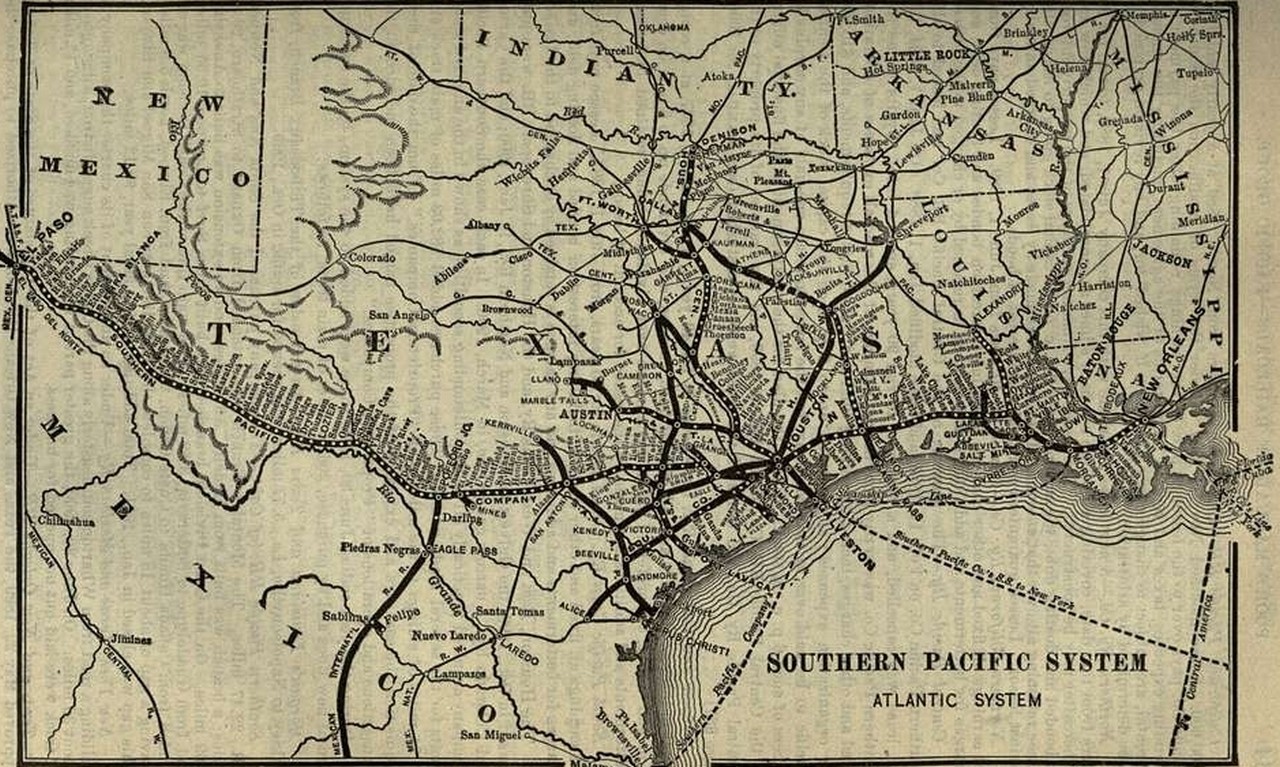
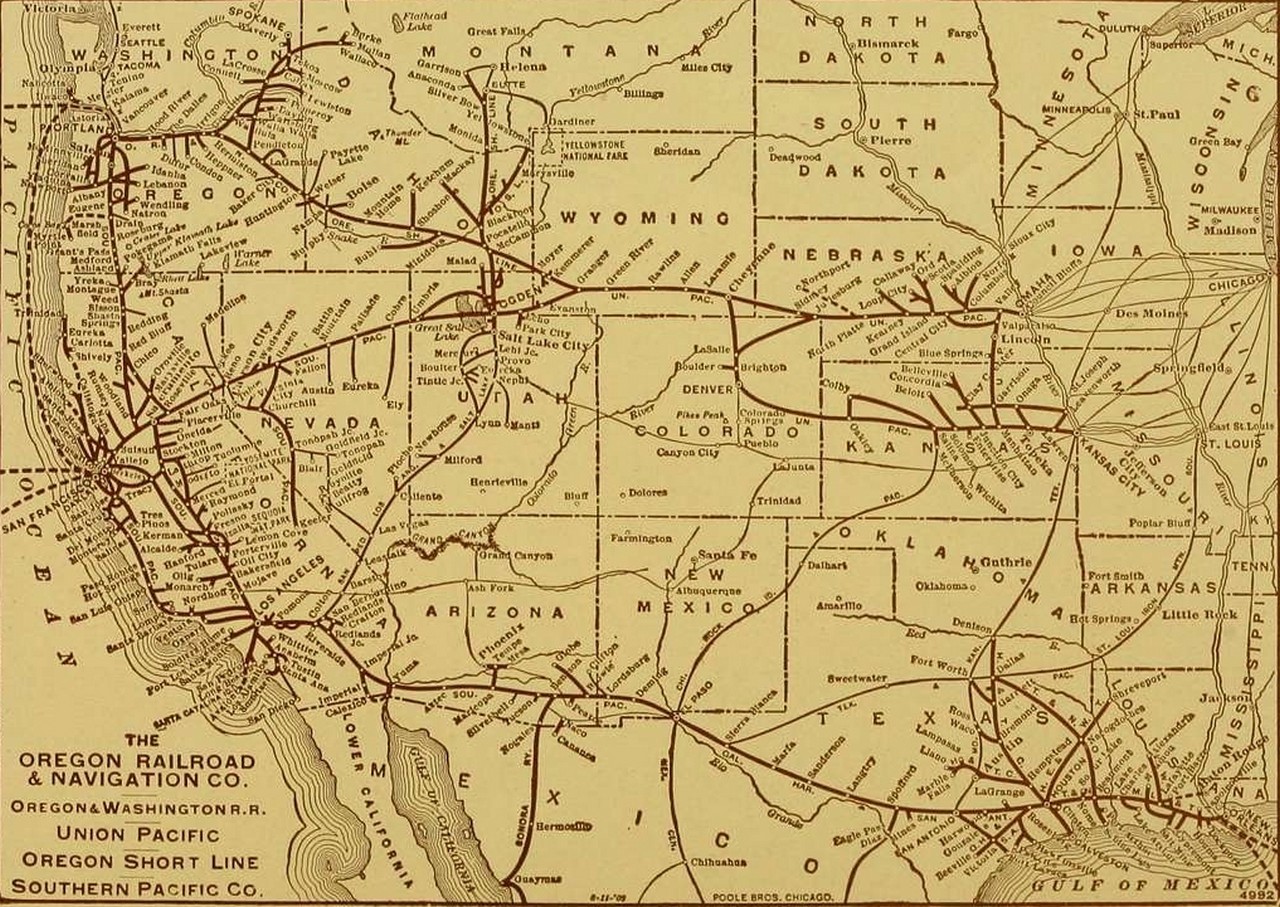
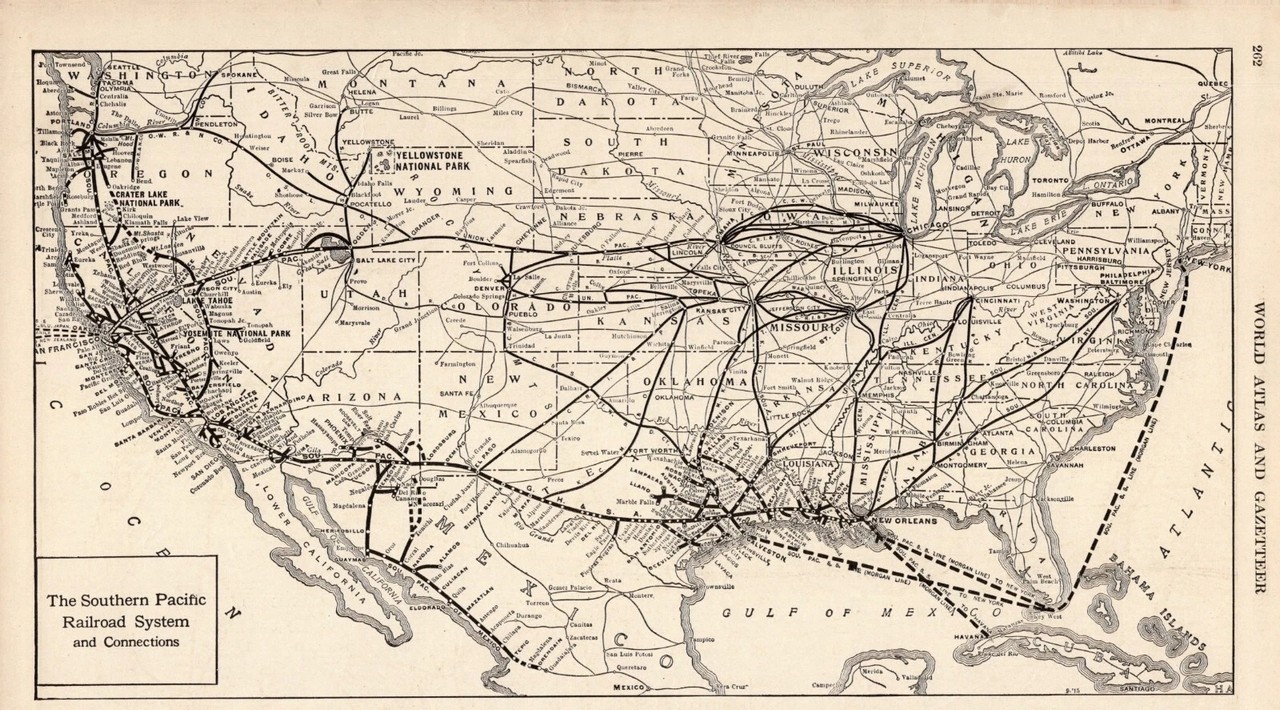
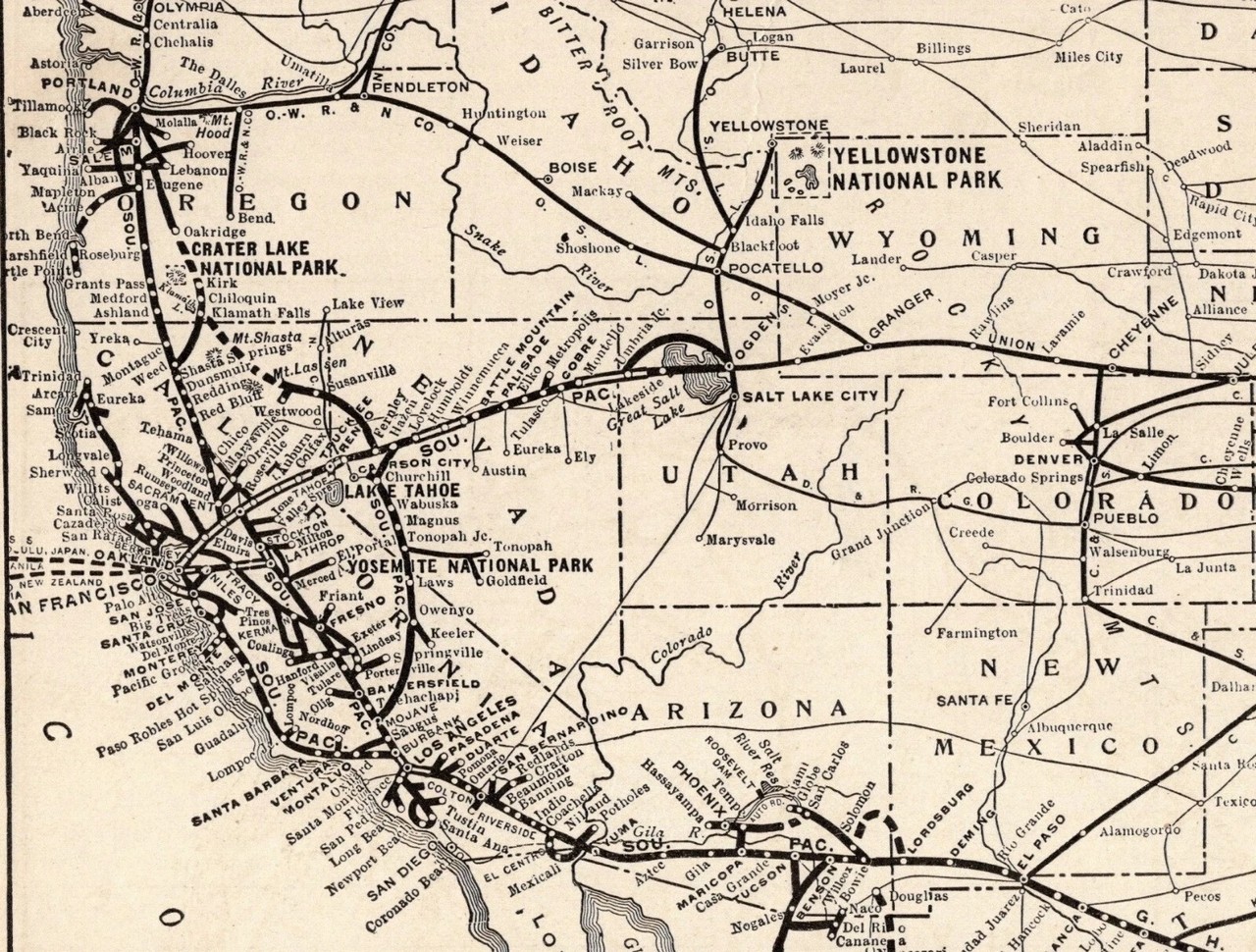
Locale Arizona, Arkansas, California, Colorado, Illinois, Kansas, Louisiana, Missouri, Nevada, New Mexico, Oklahoma, Oregon, Tennessee, Texas, Utah
Dates of operation 1865-1996
Predecessor Central Pacific Railroad
Successors Santa Fe Pacific Corporation Union Pacific Railroad
The original Southern Pacific began in 1865 as a land holding company. The last incarnation of the Southern Pacific, the Southern Pacific Transportation Company, was founded in 1969 and assumed control of the Southern Pacific system. The Southern Pacific Transportation Company was acquired in 1996 by the Union Pacific Corporation and merged with their Union Pacific Railroad.
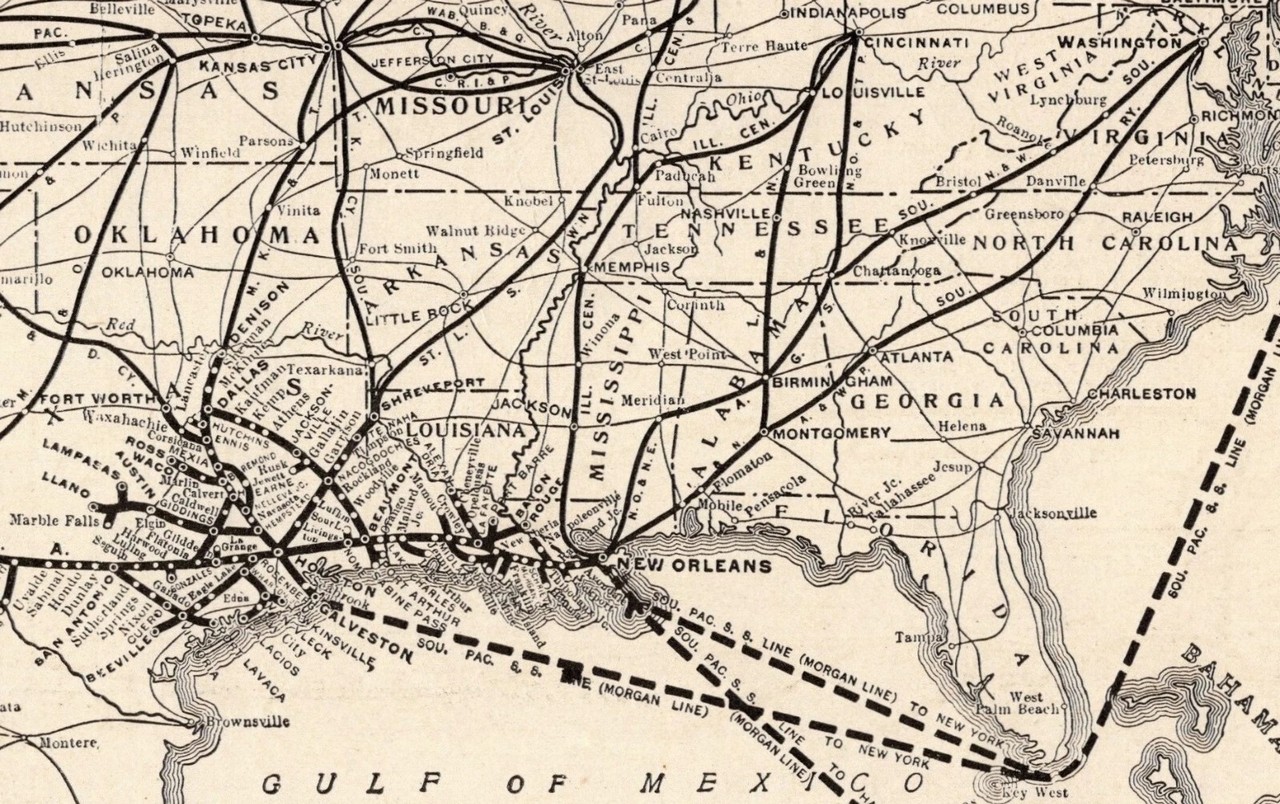
The Southern Pacific Railroad was replaced by the Southern Pacific Company and assumed the railroad operations of the Southern Pacific Railroad. In 1929, Southern Pacific/Texas and New Orleans operated 13,848 route-miles not including Cotton Belt, whose purchase of the Golden State Route circa 1980 nearly doubled its size to 3,085 miles (4,965 km), bringing total SP/SSW mileage to around 13,508 miles (21,739 km). The T&NO was fully merged into the SP in 1961. By 1996, years of financial problems had dropped Southern Pacific's mileage to 13,715 miles (22,072 km). The financial problems caused the Southern Pacific Transportation Company to be taken over by the Union Pacific Corporation; the parent Southern Pacific Rail Corporation (formerly Rio Grande Industries), the Denver and Rio Grande Western Railroad, the St. Louis Southwestern Railway and the SPCSL Corporation were also taken over by the Union Pacific Corporation. The Union Pacific Corporation merged the Denver and Rio Grande Western Railroad, the St. Louis Southwestern Railway and the SPCSL Corporation into their Union Pacific Railroad but did not merge the Southern Pacific Transportation Company into the Union Pacific Railroad. Instead, the Union Pacific Corporation merged the Union Pacific Railroad into the Southern Pacific Transportation Company on February 1, 1998; the Southern Pacific Transportation Company became the surviving railroad and at the same time the Union Pacific Corporation renamed the Southern Pacific Transportation Company to Union Pacific Railroad. Thus, the Southern Pacific Transportation Company became, and is still operating as, the current incarnation of the Union Pacific Railroad.
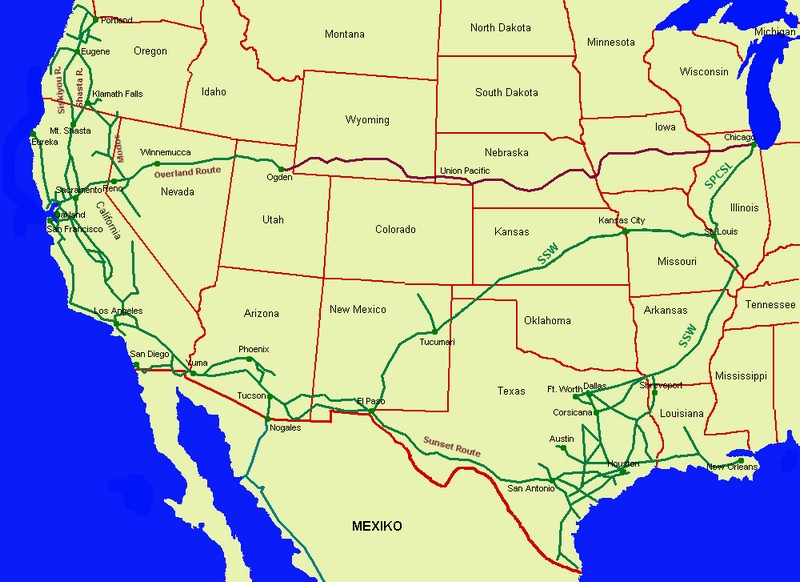
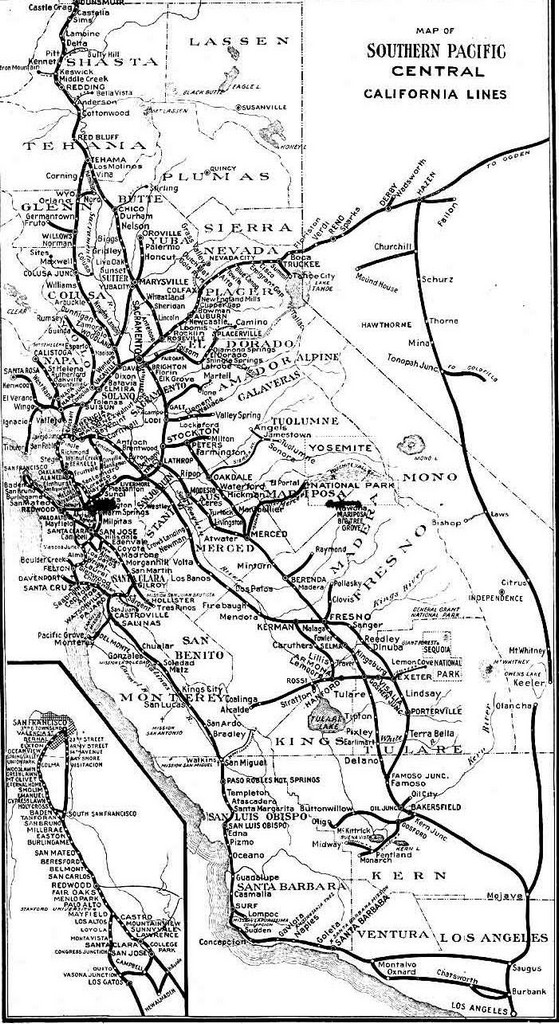
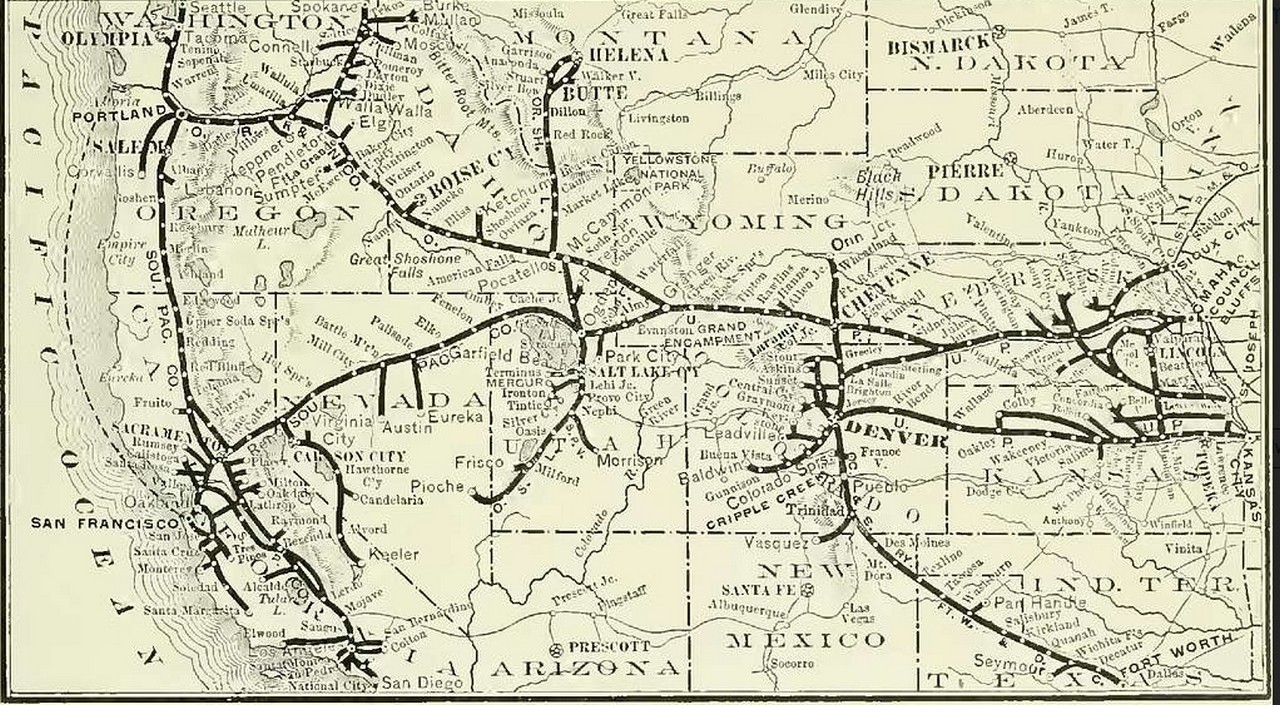
Central Pacific lines extended east across Nevada to Ogden, Utah, and reached north through Oregon to Portland. Other subsidiaries eventually included the St. Louis Southwestern Railway (Cotton Belt, reporting marks SSW), El Paso and Southwestern Railroad, the Northwestern Pacific Railroad at 328 miles (528 km), the 1,331-mile (2,142 km) Southern Pacific Railroad of Mexico, and a variety of 3 ft (914 mm) narrow-gauge routes.
The company was headquartered in the Flood Building in San Francisco's downtown shopping district in 1907. Ten years later, they moved into the historic 11-story, 65-metre (213 ft) Southern Pacific Building, also known as "The Landmark", located at One Market Street on the Embarcadero whose construction started in 1916. At its completion, the building's first floor was devoted to retail except for the portion facing the rear courtyard (opening to Mission Street), which was reserved for Southern Pacific. SP rented the second floor to a tenant, but occupied floors three through ten with various offices. For nearly a century, the building was topped with a large sign emblazoned with a gothic "S-P" marking the company's San Francisco roots.
The SP was known for its mammoth back shops at Sacramento, California, which was one of the few in the country equipped to design and build locomotives on a large scale. Sacramento was among the top ten largest shops in the US, occupying 200 acres of land with dozens of buildings and an average employment of 3,000, peaking at 7,000 during World War II. Other major shop sites were located at Ogden, Utah; Houston, Texas; and Algiers, New Orleans. After the 1906 earthquake destroyed much of San Francisco, including the SP shops there, new shops and yards were built six miles south of the city at Bayshore. The Alhambra Shops in Los Angeles consisted of 10 buildings and employed 1,500 but declined in importance when the Taylor Yard was built in 1930.
The SP was the defendant in the landmark 1886 United States Supreme Court case Santa Clara County v. Southern Pacific Railroad, which is often interpreted as having established certain corporate rights under the Constitution of the United States.
The Southern Pacific Railroad was replaced by the Southern Pacific Company and assumed the railroad operations of the Southern Pacific Railroad. In 1929, Southern Pacific/Texas and New Orleans operated 13,848 route-miles not including Cotton Belt, whose purchase of the Golden State Route circa 1980 nearly doubled its size to 3,085 miles (4,965 km), bringing total SP/SSW mileage to around 13,508 miles (21,739 km). The T&NO was fully merged into the SP in 1961.
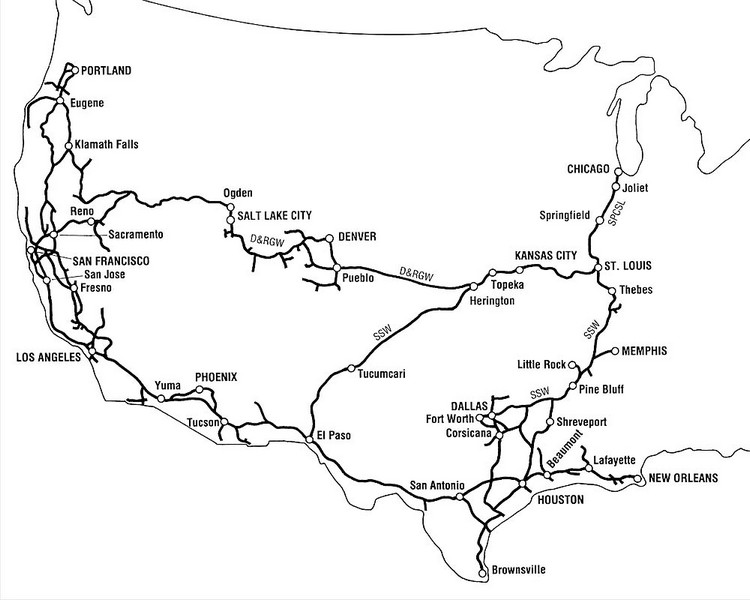
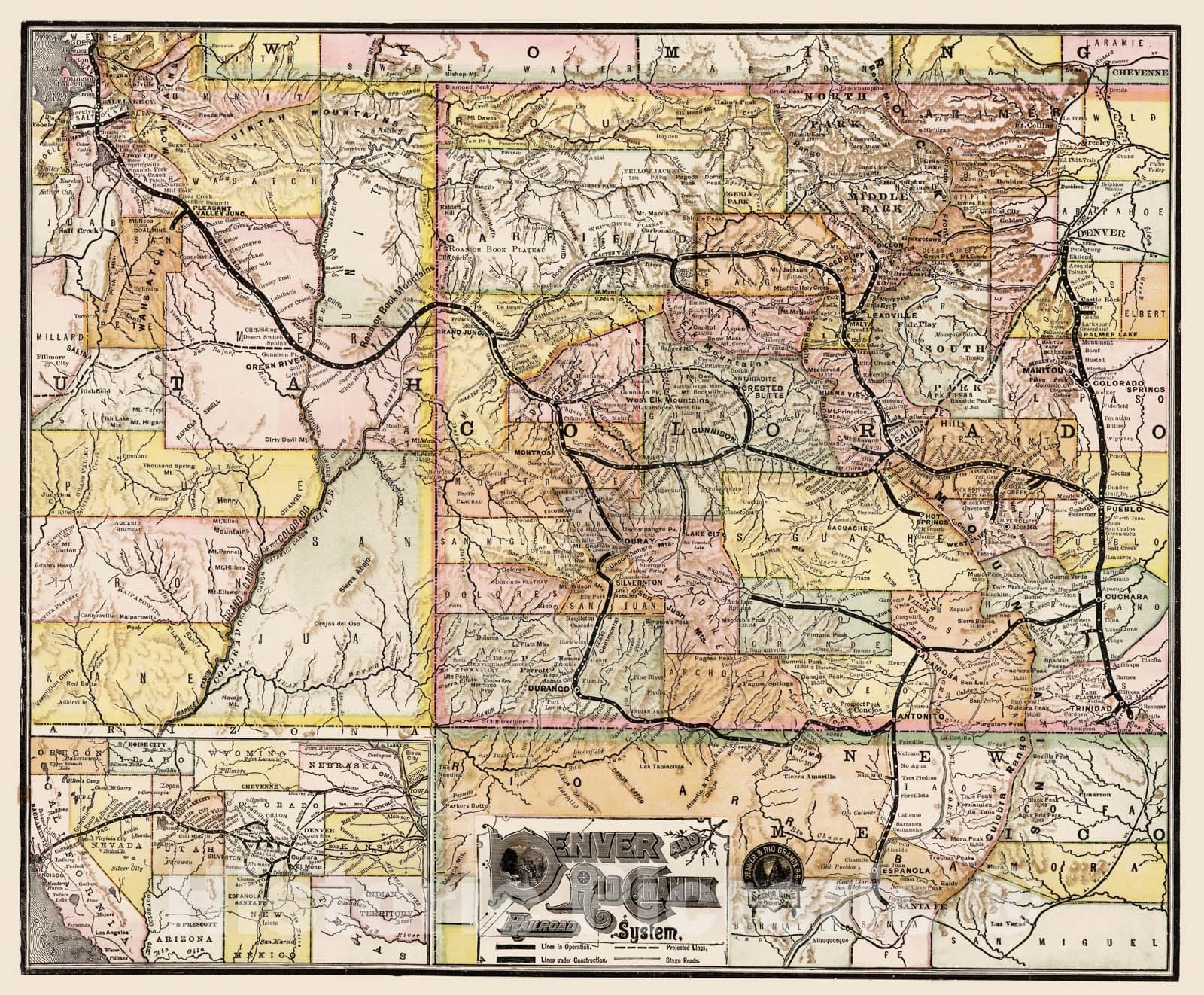
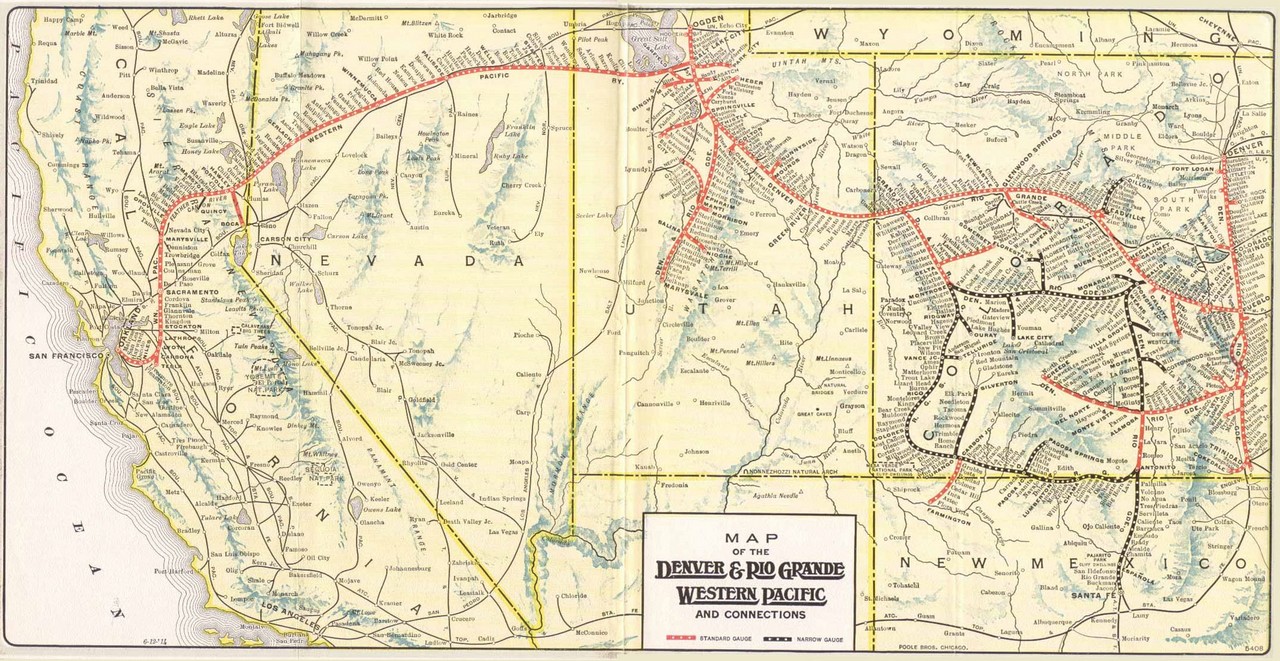
In 1969, the Southern Pacific Transportation Company was established and took over the Southern Pacific Company; this Southern Pacific railroad is the last incarnation and was at times called "Southern Pacific Industries", though "Southern Pacific Industries" is not the official name of the company. By the 1980s, route mileage had dropped to 10,423 miles (16,774 km), mainly due to the pruning of branch lines. On October 13, 1988, the Southern Pacific Transportation Company (including its subsidiary, St. Louis Southwestern Railway) was taken over by Rio Grande Industries, the parent company that controlled the Denver and Rio Grande Western Railroad (reporting marks D&RGW). Rio Grande Industries did not merge the Southern Pacific Transportation Company and the Denver and Rio Grande Western Railroad together, but transferred direct ownership of the Denver and Rio Grande Western Railroad to the Southern Pacific Transportation Company, allowing the combined Rio Grande Industries railroad system to use the Southern Pacific name due to its brand recognition in the railroad industry and with customers of both the Southern Pacific Transportation Company and the Denver and Rio Grande Western Railroad. A long time Southern Pacific subsidiary, the St. Louis Southwestern Railway was also marketed under the Southern Pacific name. Along with the addition of the SPCSL Corporation[a] route from Chicago to St. Louis, the former mainline of the Chicago, Missouri and Western Railroad that once belonged to the Alton Railroad, the total length of the D&RGW/SP/SSW system was 15,959 miles (25,684 km). Rio Grande Industries was later renamed Southern Pacific Rail Corporation.
By 1996, years of financial problems had dropped Southern Pacific's mileage to 13,715 miles (22,072 km). The financial problems caused the Southern Pacific Transportation Company to be taken over by the Union Pacific Corporation; the parent Southern Pacific Rail Corporation (formerly Rio Grande Industries), the Denver and Rio Grande Western Railroad, the St. Louis Southwestern Railway and the SPCSL Corporation were also taken over by the Union Pacific Corporation. The Union Pacific Corporation merged the Denver and Rio Grande Western Railroad, the St. Louis Southwestern Railway and the SPCSL Corporation into their Union Pacific Railroad but did not merge the Southern Pacific Transportation Company into the Union Pacific Railroad. Instead, the Union Pacific Corporation merged the Union Pacific Railroad into the Southern Pacific Transportation Company on February 1, 1998; the Southern Pacific Transportation Company became the surviving railroad and at the same time the Union Pacific Corporation renamed the Southern Pacific Transportation Company to Union Pacific Railroad. Thus, the Southern Pacific Transportation Company became, and is still operating as, the current incarnation of the Union Pacific Railroad.
Acadian
Apache
Argonaut
Arizona Limited
Beaver
Californian
Cascade
City of San Francisco
Coast Daylight
Coast Mail
Coaster
Coos Bay Limited
Del Monte
Fast Mail
Golden Rocket
Golden State
Grand Canyon
Hustler
Imperial
Inside Track Flyer
Klamath
Lark
Newsboy
Oil Fields Flyer
Oregonian
Overland
Owl Limited
Pacific Limited
Peninsula Commute
Loop Service
Rogue River
Sacramento Daylight
San Francisco Challenger
San Joaquin Daylight
San Jose Limited
Seashore Express
Senator
Shasta Daylight
Shasta Express
Shasta Limited
Shasta Limited De Luxe
Shore Line Limited
Starlight
Statesman
Sunbeam
Sunset Limited
Suntan Special
Tehachapi
West Coast
El Costeno
El Yaqui
