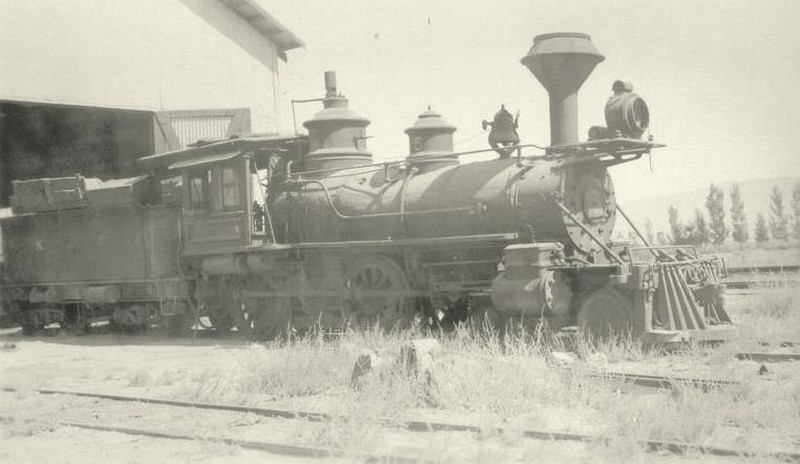
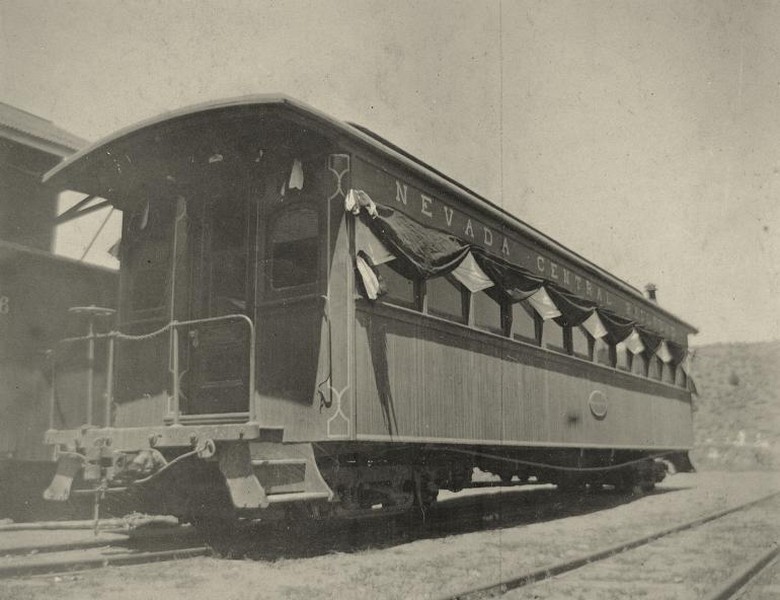

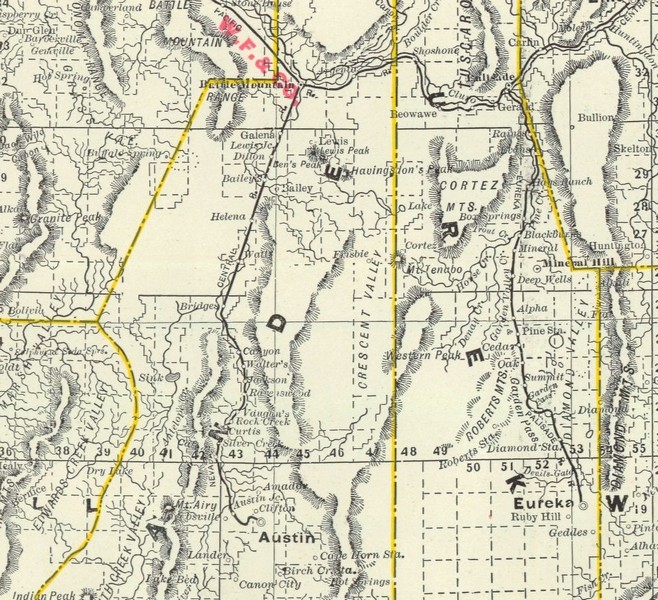
The Nevada Central Railroad (NCRR) wasn't started until 4½ years later. Anson Phelps Stokes, the grandson of the founder of the Phelps Dodge Corporation, and a partner in the mining company came to town. Stokes brought in General James H. Ledlie, a former Union officer in the Civil War. The crews went to work desperately, only to bring the line within 2 miles (3.2 km) of the Austin town limits with less than a day left before the deadline. A popular story states that an emergency meeting of the Austin Town Board extended the town limits by two miles and the last rails were laid just minutes before the deadline. However, historian Mallory Hope Ferrell finds no evidence in newspapers or court records to support this story (The railroad beat the deadline, but without needing a change in city limits). The line from Battle Mountain to Austin was 92 miles (148 km). Nevada Central was only profitable as long as the mines at Austin were operating at full capacity. Stokes' son, James Graham Phelps Stokes, was president of the NCRR from 1898 to 1938. By the middle 1930s most of the mines that generated traffic at Battle Mountain were shut down and boarded up and the NCRR had passed into receivership for the last time in 1938.
In 1871 the Manhattan Silver Mining Company had consolidated most of the claims. The company grew to have a lot of influence in the area and its secretary M.J. Farrell was the state senator for Lander County. Farrell estimated that building a railroad would result in transportation costs being cut in half.
He set out to fix the lack of a railroad with a controversial project, approved only after a bitter debate in the 1874 legislature, overriding the Governor's veto. The legislature authorized Lander County in 1875 to grant a $200,000 of its bonds as a subsidy to build a railroad, a time limit of five years was set to finish the project.
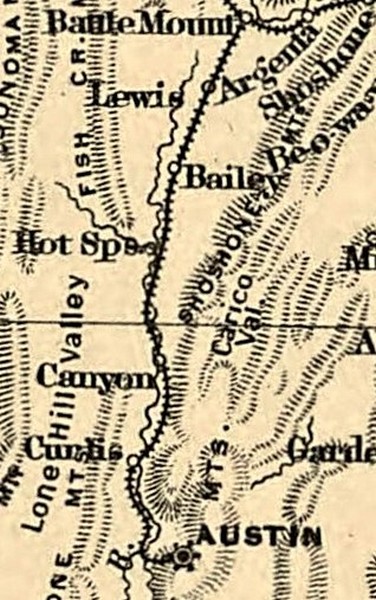
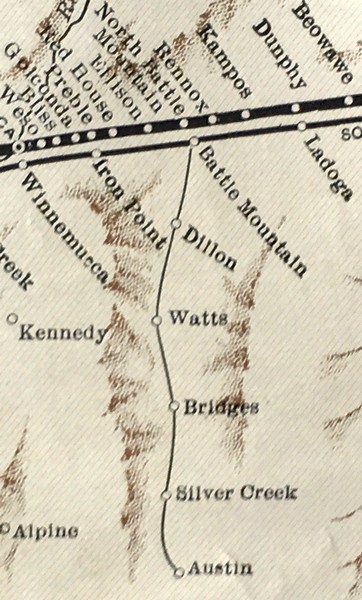
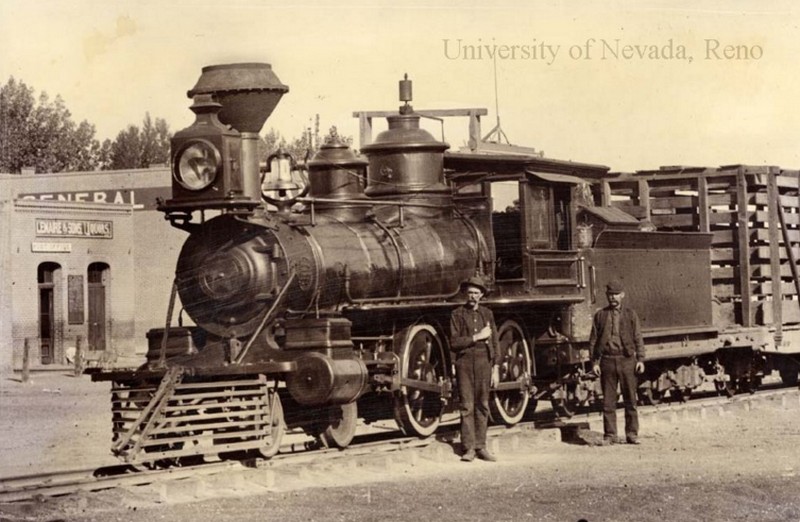
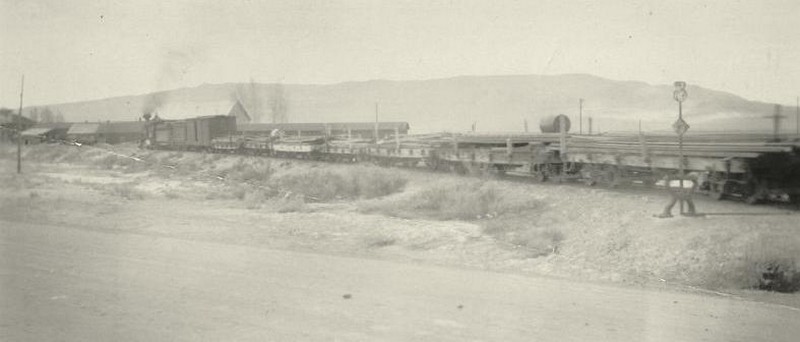
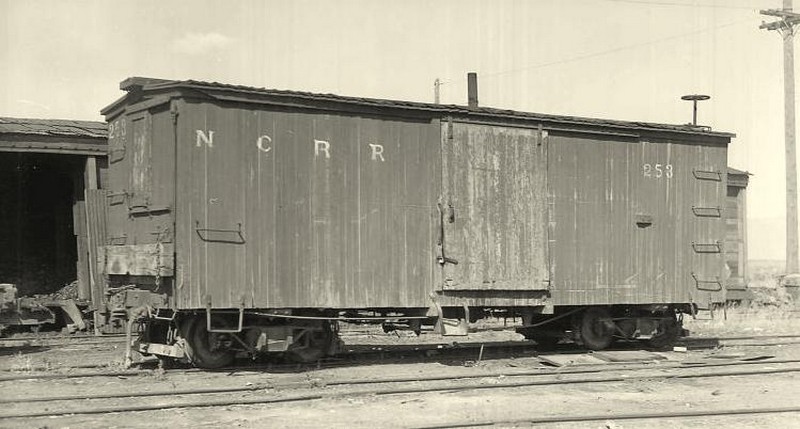
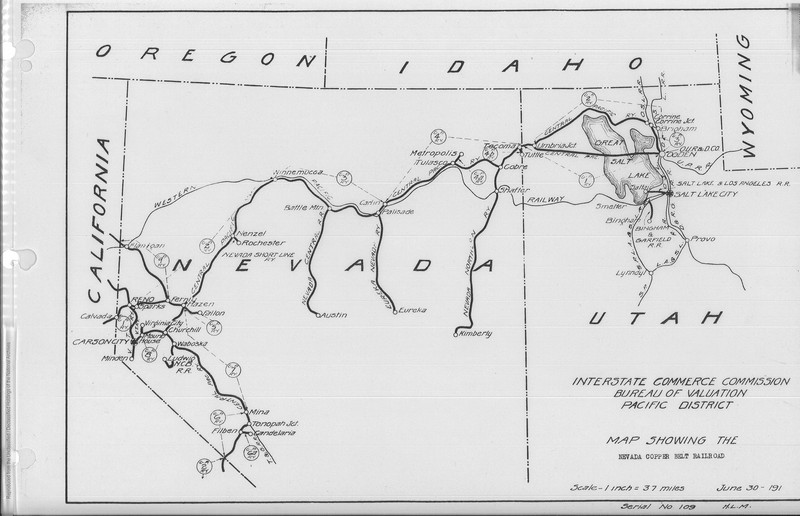
The Nevada Central Railroad (NCRR) wasn't started until 4½ years later. Anson Phelps Stokes, the grandson of the founder of the Phelps Dodge Corporation, and a partner in the mining company came to town. Stokes brought in General James H. Ledlie, a former Union officer in the Civil War. The crews went to work desperately, only to bring the line within 2 miles (3.2 km) of the Austin town limits with less than a day left before the deadline. A popular story states that an emergency meeting of the Austin Town Board extended the town limits by two miles and the last rails were laid just minutes before the deadline. However, historian Mallory Hope Ferrell finds no evidence in newspapers or court records to support this story (The railroad beat the deadline, but without needing a change in city limits). The line from Battle Mountain to Austin was 92 miles (148 km). Nevada Central was only profitable as long as the mines at Austin were operating at full capacity.
Stokes' son, James Graham Phelps Stokes, was president of the NCRR from 1898 to 1938. By the middle 1930s most of the mines that generated traffic at Battle Mountain were shut down and boarded up and the NCRR had passed into receivership for the last time in 1938.
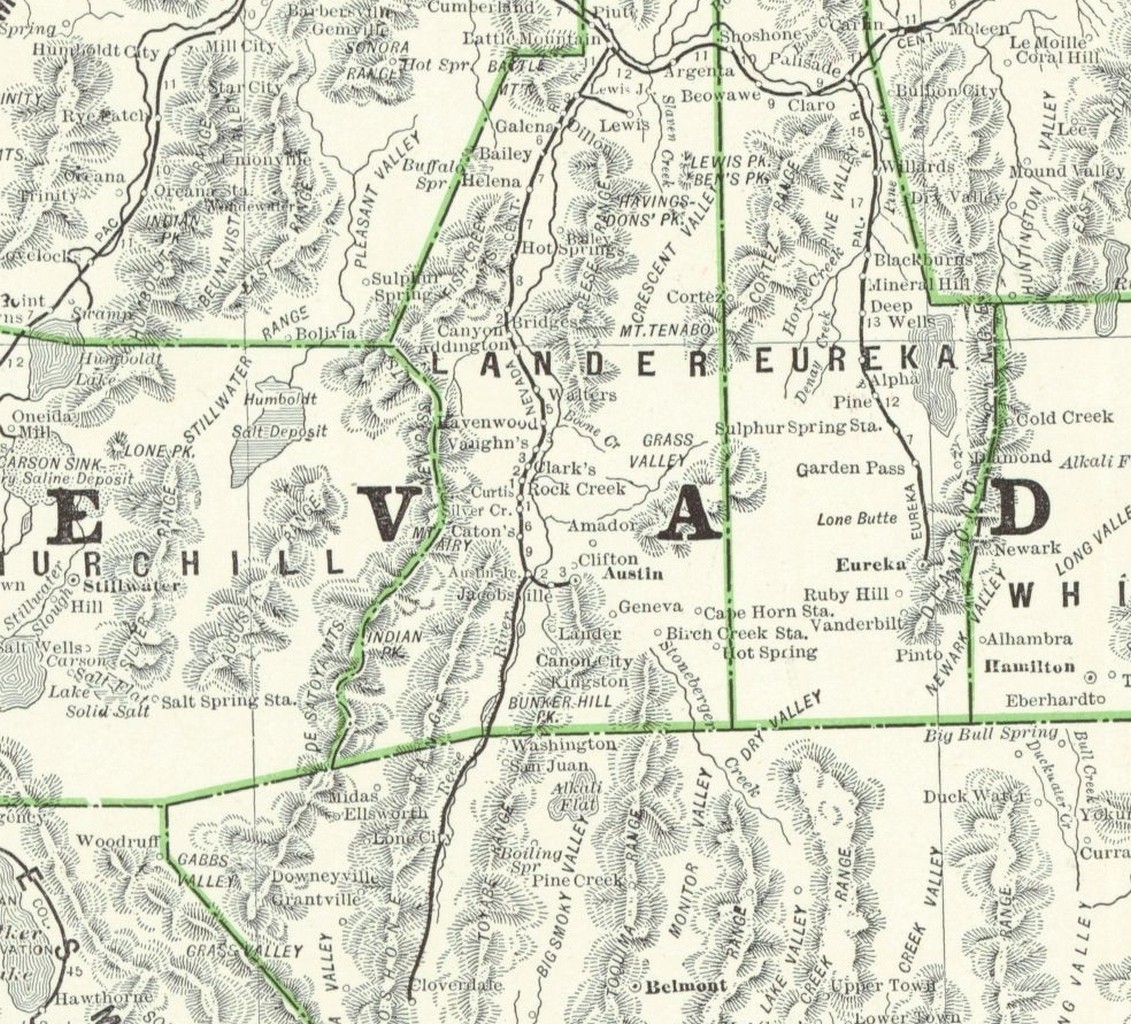
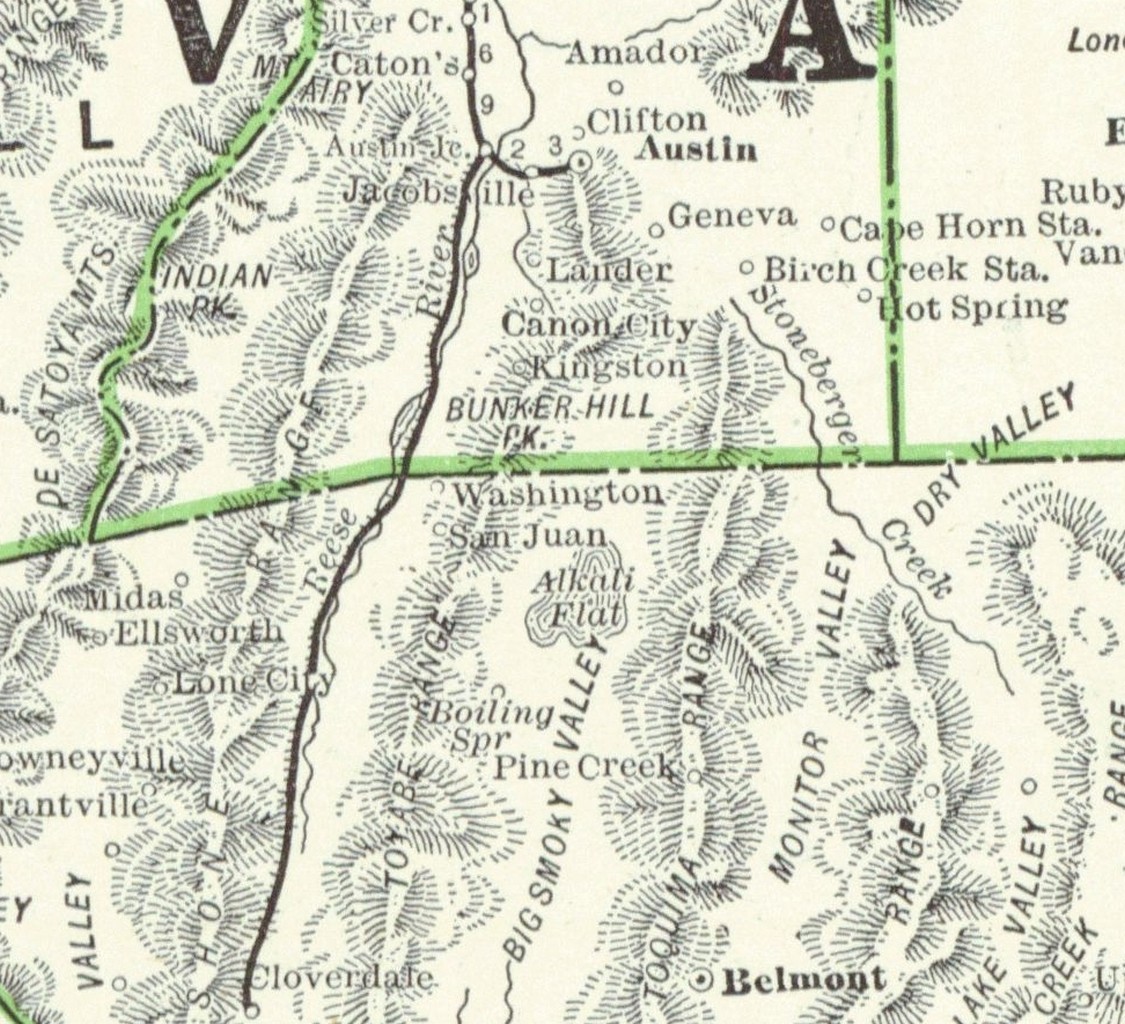
Cloverdale probably began as a stage station.
Wells, Fargo, & Co. have put on a line of stages between Belmont and Westgate, connecting with their Overland stages at the latter place for Virginia. These stages will run twice a week and convey freight and passengers. The time occupied upon the road between the two places will be about thirty hours. At present the changes will be at Cloverdale and Ellsworth. -Silver Bend Reporter -Gold Hill Daily News, May 28, 1867
Lots of people passed this way.
On the strength of a letter from Captain Rock, of Belmont, we stated, some two weeks since, that the body of E. H. Van Decar had been found near Cloverdale in Nye county, and brought to the town of Ione for internment. Another letter from the same source, under date of January 10th, states that the people of Ione were advised of the death of Mr. V. at Cloverdale, but declines going after the body becuase of the trouble of holding a Coroner's inquest. The Masons of Belmont, shocked at this heartlessness, sent two men t find and bury the body.These men found no corpse, but saw horses tracks and followed them some distance towards Lone Pine. There is a possibility of Mr. Van Decar being yet alive. -Gold Hill Daily News, January 14, 1871
They eventually got a post office, but it wasn't there for very long.
By the way, D.A. Bender of Carson received notice the other day that Mr. Woodburn has secured the opening of a post office at Cloverdale, Ny county, which is the first and only favor Nevada has had from the great Democratic Administration which was to bring us to the Millenium so fast. -The Daily Appeal, December 25, 1885
Good news for the cattle people
The Carson Tribune is informed by Judge Wells, who returned from Belmont last Friday, that the roads in the eastern part of Esmeralda and in the western part of Nye county are in very bad condition, owing to heavy rains and cloudbursts. The Judge says that the country between Sodaville and Belmont has had abundant rains, that the bunch grass and white sage are more abundant than ever known there, of excellent quality, and that the livestock are all as fat as seals. Stockmen and ranchers are jubilant and happy. Reno Gazette Journal, August 26, 1891
William Welsh was notified to immediately repair the damage to the wagon road between Cloverdale and Reese River, caused by overflowing water from an irrigation ditch on said Welsh's land. Tonopah Bonanza, October 14, 1905
While pretty, Cloverdale is fairly remote. Not much traffic out there nowadays.
"Extremely dangerous" men who beat and robbed Dale Stevens at his Cloverdale, Nye county ranch Wednesday night, are believed to be in Idaho. Reno Police and the Washoe County sheriff's office said this morning that they had no information on the bandits since Idaho authorities reported Friday night that they were closing in on the subjects. Victim Dale Steves, who lives at Cloverdale, 20 miles north of Tonopah, was beaten with a shotgun and robbed of $15. He was treated for scalp wounds ast the Nye county hospital, then released. -Reno Evening Gazette, August 2, 1952
September 1888 - October 13, 1899
NEWSPAPER None
