Silver City, Nevada

Unincorporated community

County -- Lyon


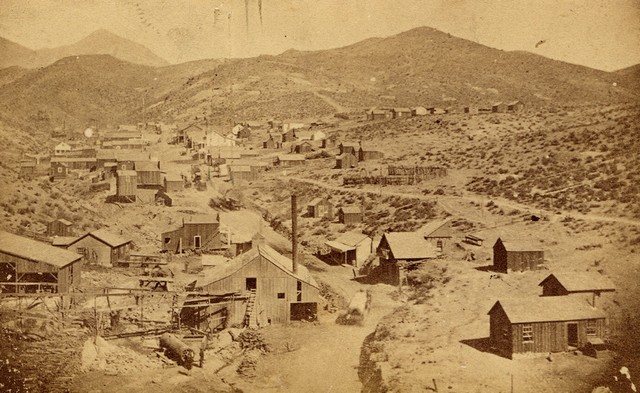
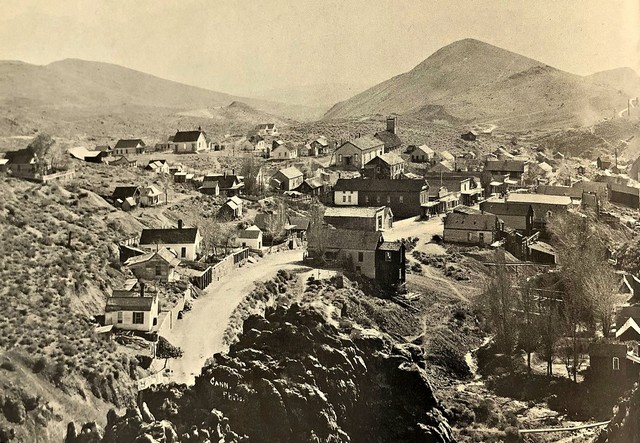
Silver City is a small residential community in Lyon County, Nevada, United States. Established in 1859, it developed as a mining settlement during the Comstock era and served as an important staging point between nearby mines and ore-processing mills along the Carson River. Although its mines never rivaled those of Virginia City or Gold Hill, Silver City played a supporting role in the Comstock mining economy. The town declined after 1869, following completion of the Virginia and Truckee Railroad, which bypassed the community.

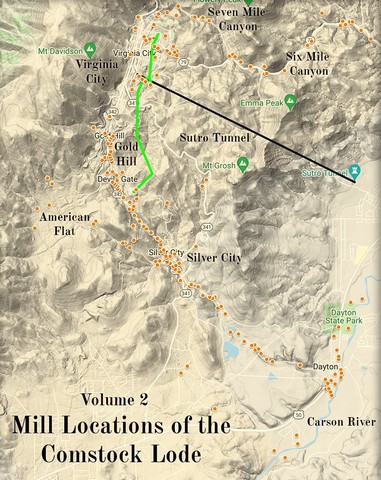
Silver City is a census-designated place (CDP) and small residential community in Lyon County, Nevada, United States, near the Lyon-Carson border. It is located in Gold Canyon, on Nevada State Route 342, approximately four miles (6.4 km) north of U.S. Route 50. The town is about two miles (3.2 km) south of Gold Hill and approximately 3.7 miles (5.9 km) south of Virginia City. The population was 111 in 2023.


History

Mining and Industry

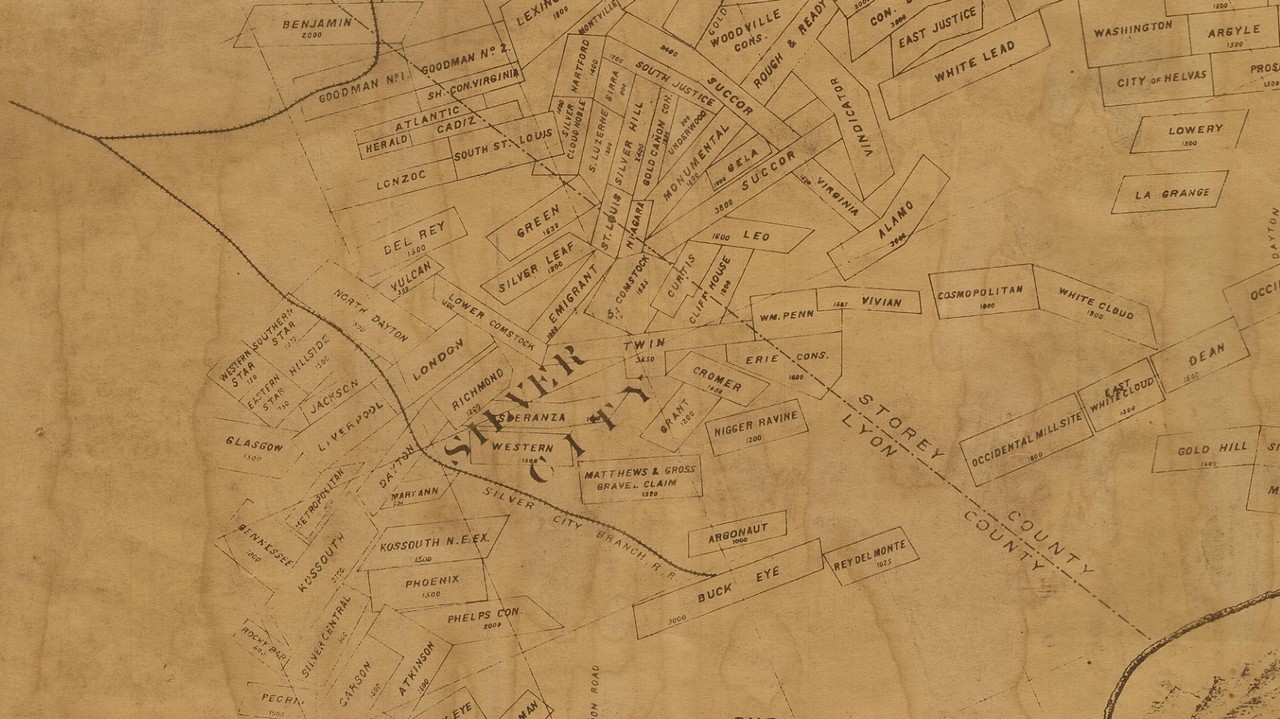
The Silver City mining district, initially known as the Devil's Gate district, was established on November 19, 1859, and named for the nearby Devil's Gate rock formation. The district covered a rectangular area measuring about 3.5 by 4 miles (5.6 by 6.4 km) and was located approximately two miles (3.2 km) from Dayton. Silver City is located near the center of the district. The first mining claim, the Wildcat, was recorded on November 24, 1859, and by January 1, 1860, more than 100 claims were recorded. Two of the district's most productive mines were the Dayton and the Daney.

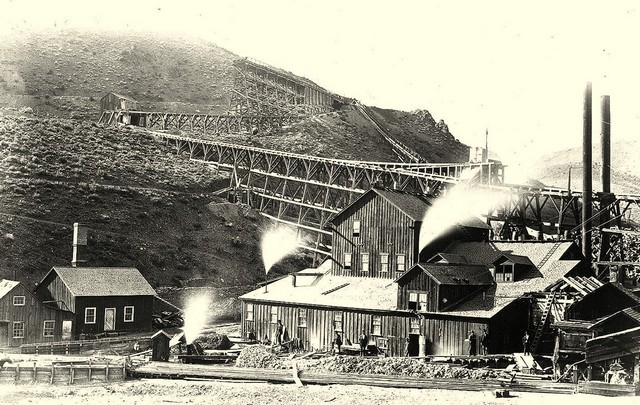
Silver City became an important mining and industrial settlement, serving as a milling and supply center for the mines of Virginia City, the Devil's Gate district and surrounding mining areas, and the ore-processing mills along the Carson River. Although the town hosted many productive mines during the 1860s and 1870s, none produced major ore bonanzas comparable to Virginia City and Gold Hill.

The town was the site of one of the first steam-powered quartz mills on the Comstock Lode, Paul's Pioneer Mill, which began operating in August 1860. The mill used a 40-horsepower engine and twelve 800-pound stamps, producing custom milling and crushing about 20 tons of rock per day.

The Nevada Foundry, the first and largest iron foundry in Nevada, was moved to Silver City from Johntown in 1864. It initially employed about 75 workers, increasing their number to 100 as demand grew. In 1872, a fire destroyed the foundry except for its outer walls. The owner, left with little but his patterns and tools, relocated his business to Virginia City and purchased the Fulton Foundry.


Town life and services

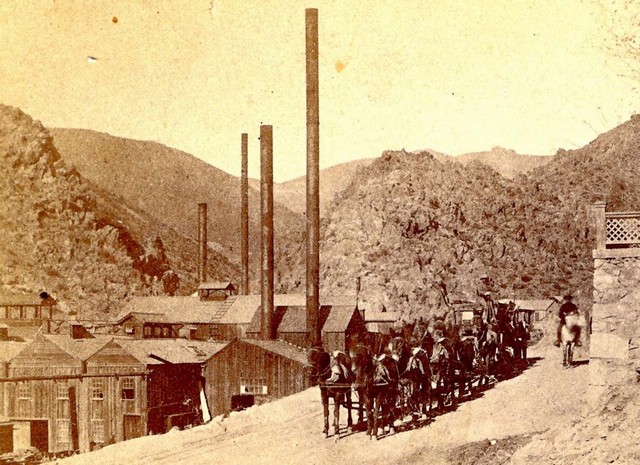
Silver City was among the earliest settlements in the Comstock region and was a thriving community by 1860. With an initial population of 564, the town soon had four hotels, several saloons, about 20 stores, boarding houses, and numerous residences. At its height, Silver City had a population of 1,200. The town also provided boarding facilities for animals used to haul ore-laden wagons between the Comstock mines and mills along the Carson River.

The Virginia and Truckee Railroad, which bypassed Silver City to the west, was completed in 1869. The railroad ended the town's role as an important freight center and contributed to its eventual decline.


Nearby settlements

Several small settlements and camps developed near Silver City during the Comstock mining boom. Devil's Gate was a short-lived settlement that served travelers and miners, with two hotels, several saloons, and shops during its peak years. Johntown was another early mining camp.

Devil's Gate

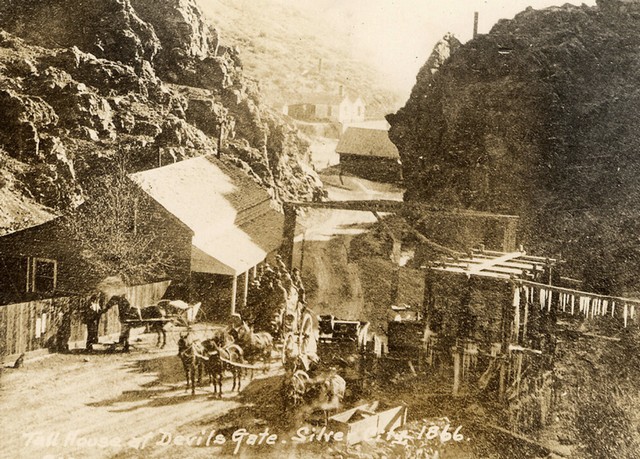
Devil's Gate marks the boundary line between Storey and Lyon Counties. Formed from metamorphic rock, the narrow canyon created a natural gateway in Gold Canyon. The site is located about 3.5 miles (5.6 km) south of Virginia City on State Route 341, at the entrance to Silver City. The important mining and service settlement developed adjacent to Devil's Gate after the discovery of silver in the area. During the Pyramid Lake War of May, 1860, residents of Silver City built a stone fort and wooden cannon on the eastern summit overlooking Devil's Gate for protection.

For several years, an official toll station operated at the gate, and the passage was widened in the mid-19th century when the outer rock face was removed by blasting to accommodate wagon traffic. The settlement had limited local resources and depended on activity in the Comstock mines for economic survival. At its peak, the town included two hotels, two stables, a brewery, an express office, a post office, a barber shop, two shoe shops, a blacksmith shop, a general merchandise store and several saloons.

Johntown

In the late 1850s, Johntown was the largest mining camp in the western Utah Territory. The settlement, established in 1853, was located about 1.5 miles (2.4 km) south of Silver City, approximately halfway between present-day Dayton and Silver City. Miners in the area used rudimentary placer mining tools to recover small quantities of gold from the 1850s until 1860. When miners from Johntown discovered gold in the hills of Gold Canyon in 1859, they became the first miners at Gold Hill, and many relocated there to establish the new settlement. Johntown subsequently declined as population and mining activity shifted to the new camp.


A branch of the historic Virginia & Truckee Railroad supplied quartz reduction and silver mills in Silver City, Nevada, with tools, supplies, etc. Silver City served as a key processing area in Gold Canyon, featuring early reduction works like Paul's Pioneer mill and later the Donovan Mill. Impact of the V&T: While the main Virginia & Truckee Railroad line bypassed the immediate center of Silver City after its completion in 1869 causing an initial economic shift away from wagon-freighting-local spurs and branch operations continued to service the canyon's active quartz mills and transport heavy freight. Decline: As local Comstock mining slowed and truck competition grew, the broader V&T system faced severe financial losses, ending its historic operations in 1950.


Silver City, Nevada

1859 Silver City was established
1861 Population reached 1,200 people
1869 Decline of Silver City after the V&T (Virginia and Truckee) Railroad was built


History of the newspaper Lyon County Times

Lyon County was one of the original counties created when the Nevada Territory was organized in 1861, and it encompassed the booming mining towns along Gold Canyon where gold and silver were first discovered in Nevada before the great Comstock strikes in 1859. These towns experienced the boom and bust common in the early bonanza days and their newspapers came and went accordingly. The travels of the Lyon County Times, the county’s paper of record, reflect the transient nature of these towns and their residents along the Comstock. The newspaper moved from Silver City to Dayton, the county seat, and finally, to Yerington, the site of the new county seat after the courthouse in Dayton burned down in 1911.

Following the demise of the Lyon County Sentinel, which operated from 1864 to 1866, Lyon County had no newspaper of record, until July 4, 1874, when Frank A. Kenyon issued a new paper, which he called the Lyon County Times. Based in Silver City, Kenyon, its sole proprietor and editor, published a tri-weekly consisting of 24 columns, most filled with advertisements. From 1875 to 1877, Harry J. Norton joined Kenyon as associate editor. Famed Nevada newspaper writer Dan de Quille [William Wright] wrote of Silver City in his 1876 western classic, The History of the Big Bonanza:

At Silver City, about five miles below Virginia City, on Gold Canyon, are a considerable number of fine mills, in all of which steam is the motive power. A branch of the Virginia & Truckee Railroad runs to Silver City and supplies these mills with ore, wood, and all other articles required. Near the town are several mines - the Silver Hill, Dayton, Kossuth, Daney, and Buckeye . . . and a southern continuation of the Comstock is supposed to pass through the ground on which the village stands. It is already a lively camp, boasts a tri-weekly newspaper - the Lyon County Times - and should the hopes of the mining companies now at work in the vicinity be realized, will soon be one of the leading mining towns of the state.

The ambitions of the town of Silver City were reflected in the newspaper, which quickly increased in size. In 1876, the Lyon County Times began publishing as a daily, only to cut back to a tri-weekly after three months, and to a semi-weekly by 1877. Kenyon sold the paper in 1878 and sailed to Guatemala and died en route. The paper was sold again, but by 1880, the town could no longer support a newspaper, and in December 1880 the owner, John M. Campbell, moved the press to Dayton, where he continued the Lyon County Times as a four-page Republican weekly. Fred W. Fairbanks joined Campbell as a partner in 1883 and took over as sole proprietor and editor in 1885. Fairbanks continued publishing the Times in Dayton until 1901 when he moved the paper to the more populous Yerington. Fairbanks remained the editor until he sold the paper in 1907 to R. Leslie Smith who changed its name to the Yerington Times. The latter passed through the hands of a number of owners until J.A. McCarthy took it over in 1919; he ran the Times until its final suspension in 1932.


Disclaimer: We search for HISTORY as a hobby. Endless souces. Much can come from others neverless endless sources. Does this website sell anything ? NO Donations ? NO. This is non-commercial. I consider my websites under copyright. Again..no money here !! Educational.


go back