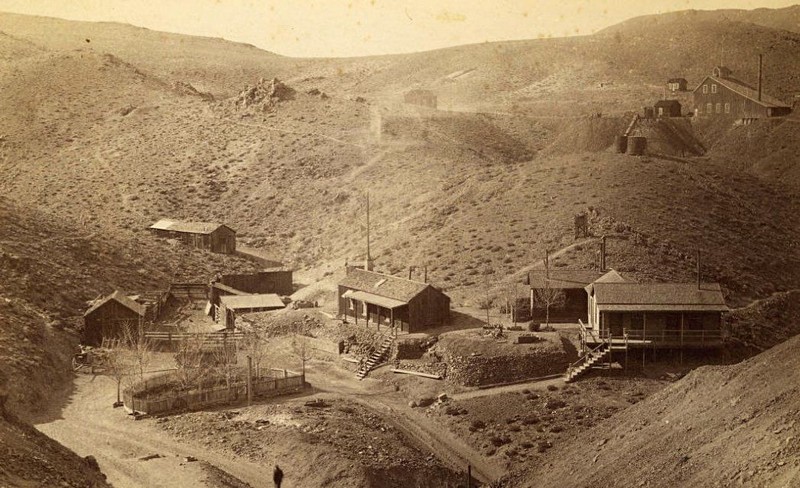
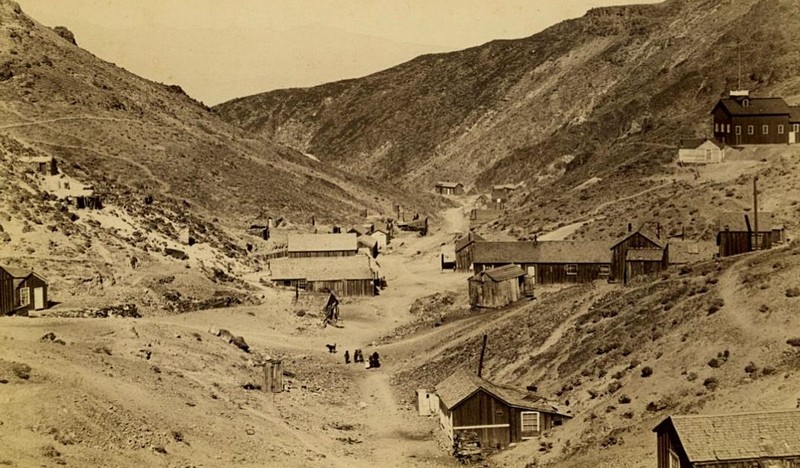
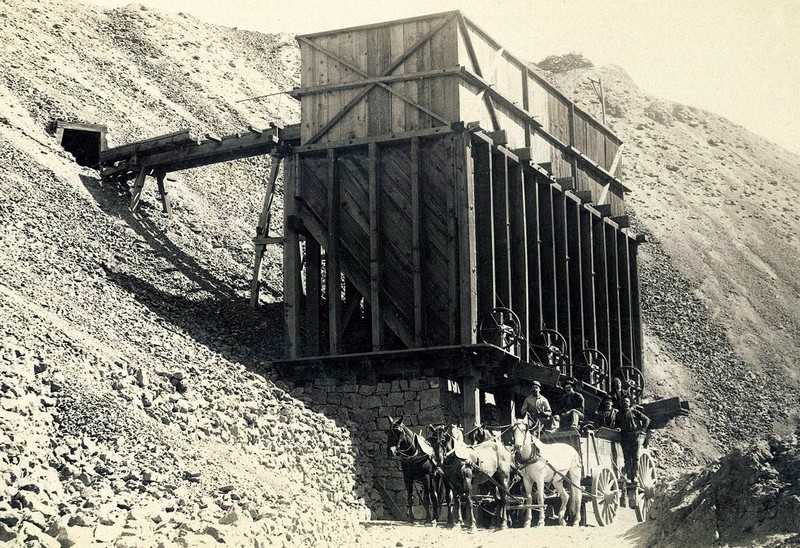
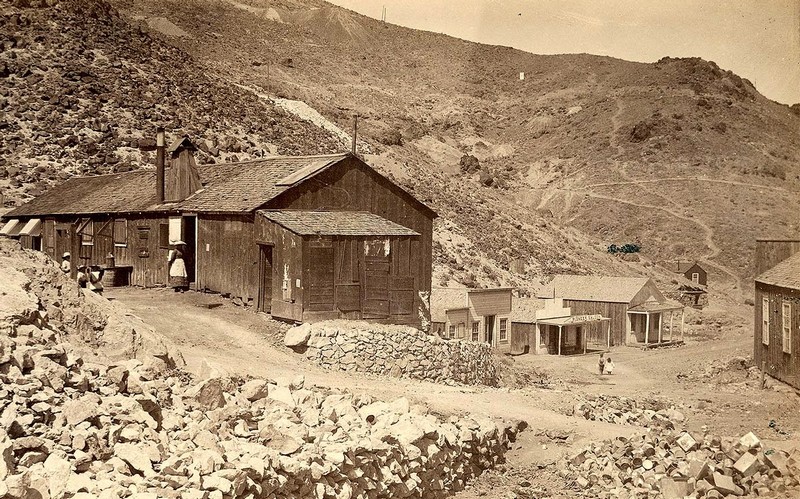
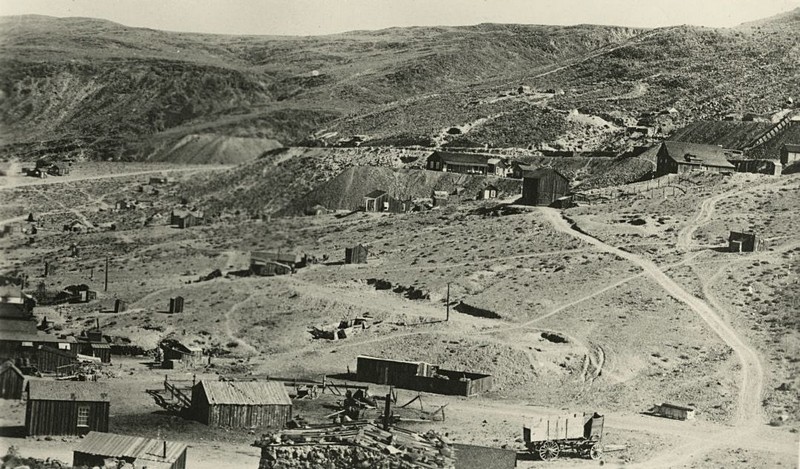
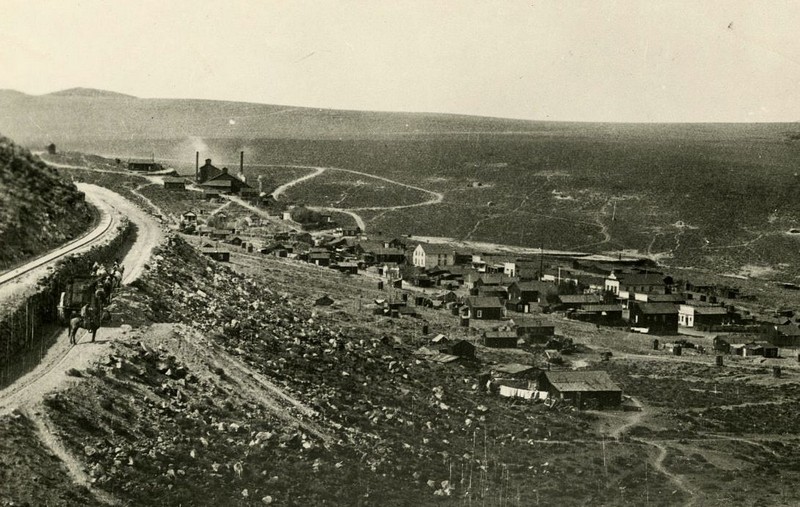
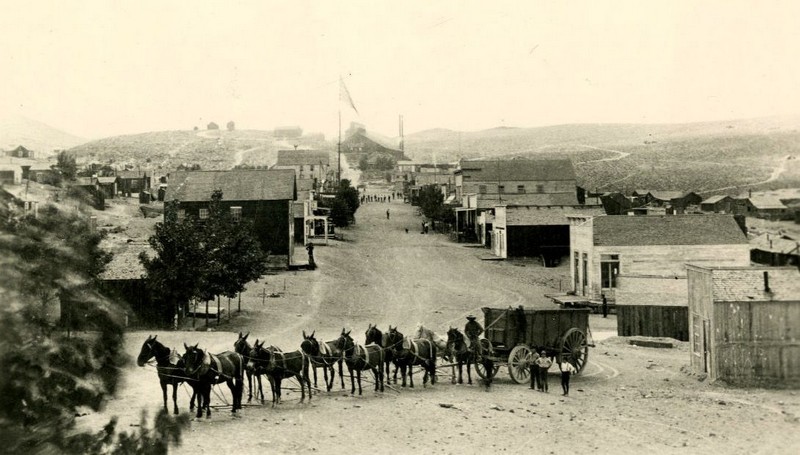
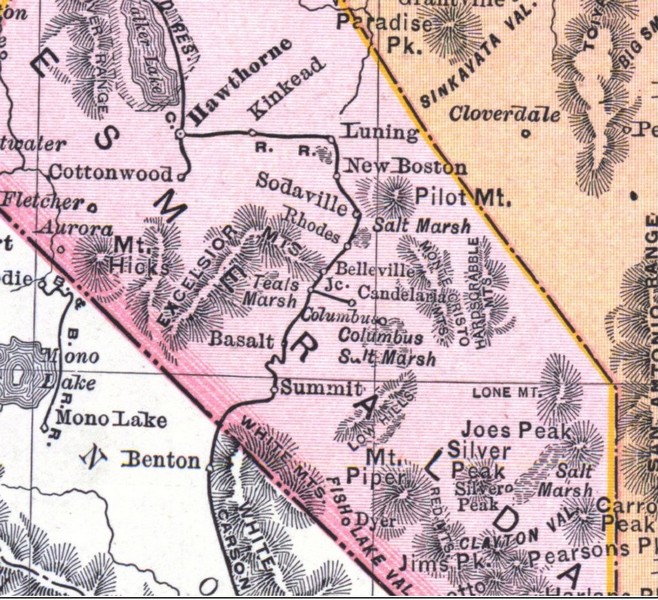
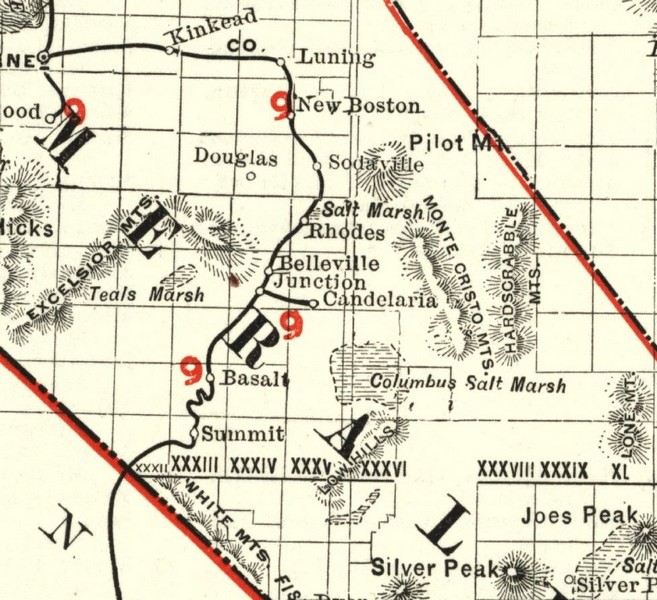
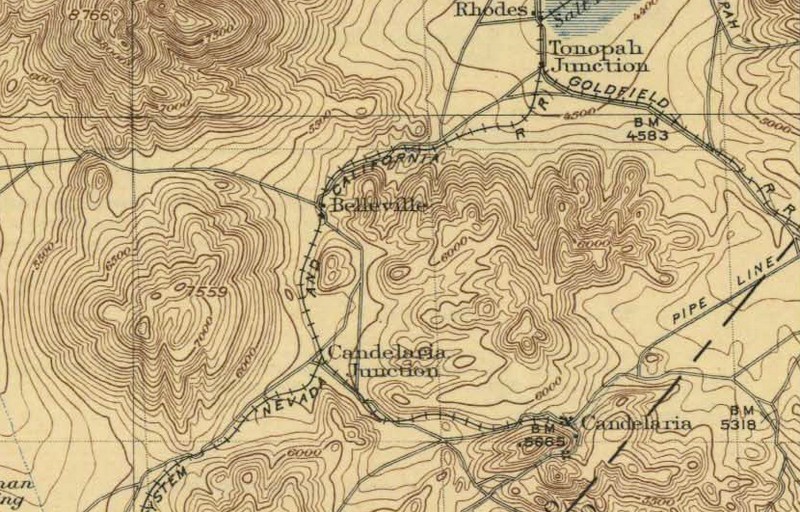
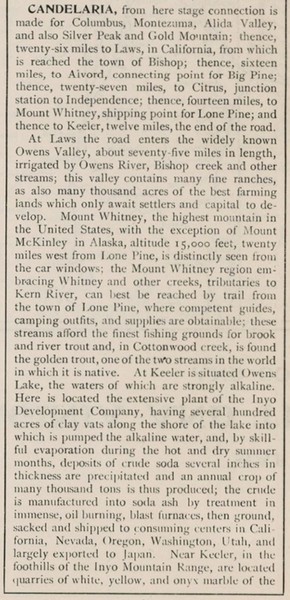
Candelaria's first post office (spelled Candelara) opened August 18, 1876 and within the next month the town boasted two hotels, eleven saloons, testaurants, livery stables, and several other businesses. Freight was hauled to Wadsworth, 120 miles away, by way of the Wadsworth-Columbus Freight Route. As a result, manufactured goods were expensive.
From 1876 and well into the 1880s, the Northern Belle averaged $1 million in production each year. In 1880, Candelaria was recorded as the largest town in Esmeralda County and from 1881=83 the mines peaked. The town of 1500 was home to a bank, telegraph office, school, lumber companies, stores, two breweries, three doctors, lawyers, and over twenty-four saloons. A newspaper, the True Fissure, ran from 1880-1886. On November 23, 1882, the post office gained the 'i', officially becoming Candelaria.
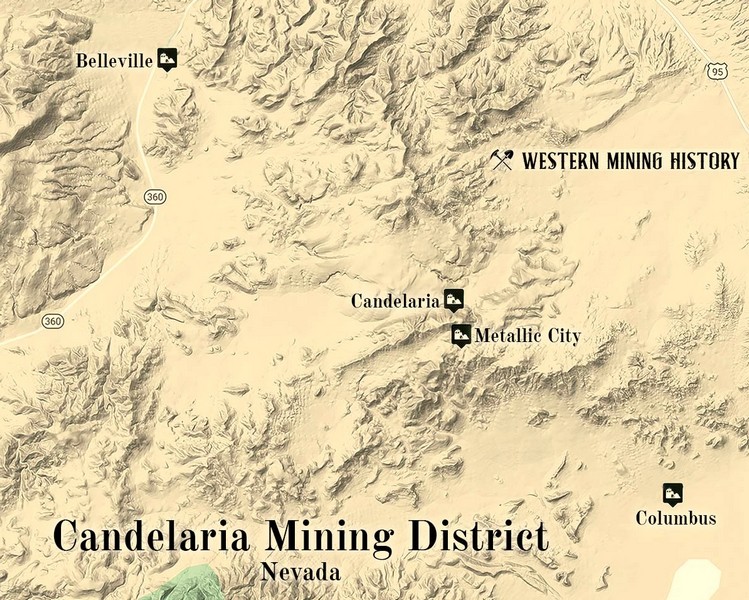
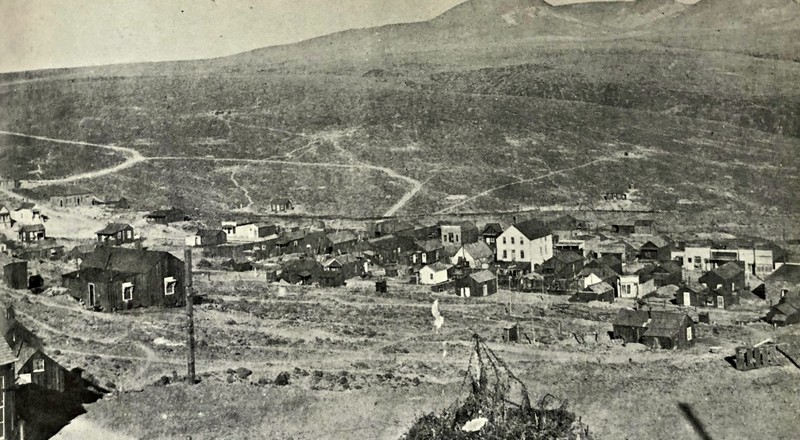
Just above Candelaria in Pickhandle Gulch, another small camp formed in 1876. Known originally as Pickhandle Gulch, the camp was renamed Metallic City, or just Metallic, in 1879. Metallic held its own post office from January 4, 1880 to July 7, 1881 and during its tenure reached a population of 300 and had a decent business district of its own.
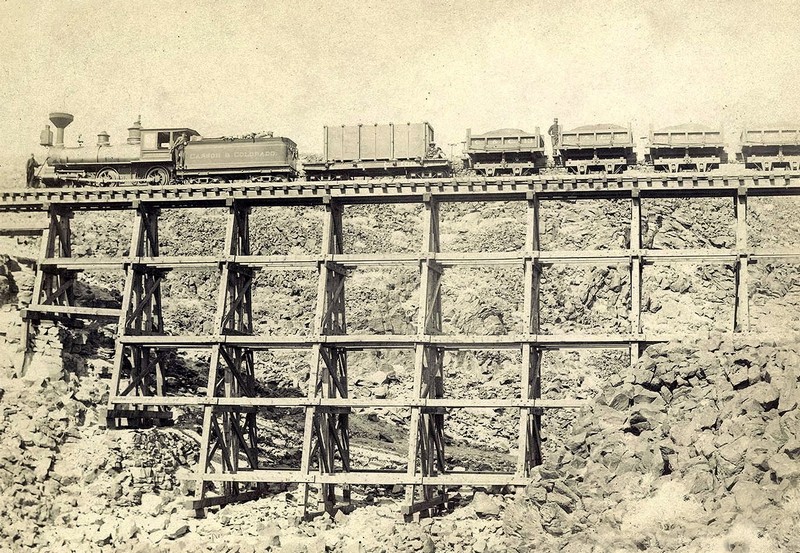
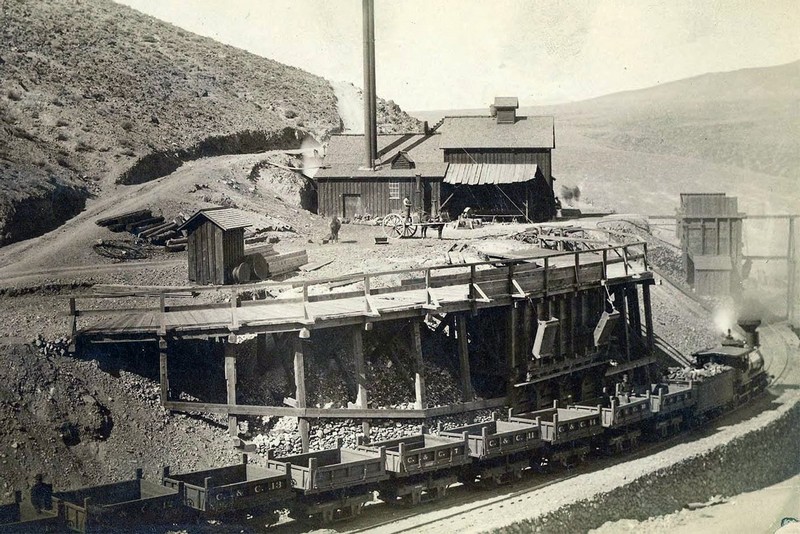
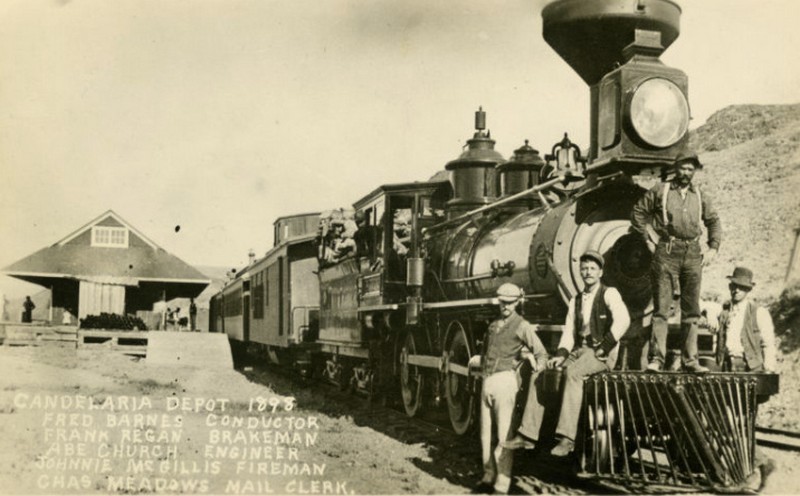
In February 1882, the Carson & Colorado Railroad's first trained pulled into Candelaria and it seemed that the town would remain prosperous. Unfortunately, a fire in 1883 destroyed part of town. In 1884, amidst legal problems, the Northern Belle and Holmes mines were consolidated, and in 1885 production dropped 50% as a result of a summer-long strike. Candelaria's decline was on the horizon.
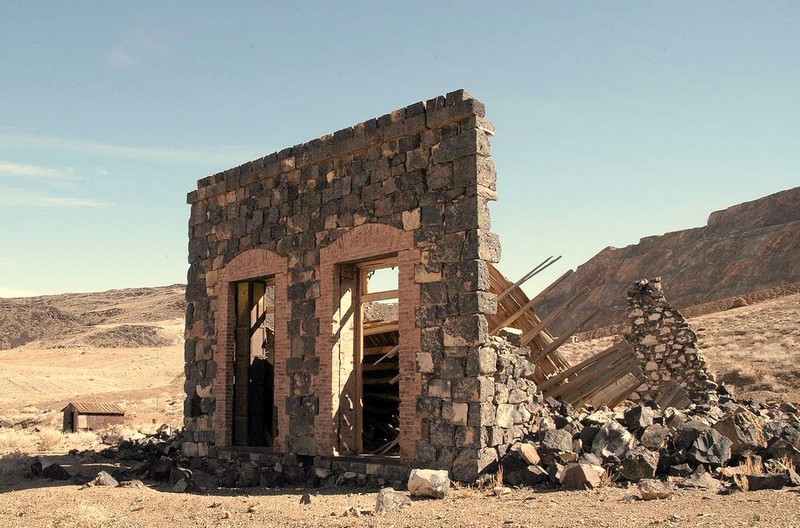
The camp saw a revival in 1890, enough so to support another newspaper, the Chloride Belt. This lasted until 1892, when after over $20 million had been removed, Candelaria faded. Small revivals continued into the 20th Century, and in 1919 the Candelaria Mines Company consolidated the most important mines. Candelaria finally lost its post office on January 31, 1939. Throughout the later part of the 20th Century, a large open pit mine was operated at the site, closing in 1999. These operations spared the Candelaria townsite, but obliterated Metallic City and the surrounding mines. For years, impressive stone ruins remained of the Esmeralda Bank building and the Tarpey Store, but they were devastated by a 6.5 earthquake centered just 12 miles away on May 15, 2020.
Settled around 1876, Metallic City peaked in the years 1880 and 1881 with a few hundred residents, and during this brief period the town had a post office. It was said to have a store, barbershop, and five saloons.
Candelaria, with its foster sister, Metallic City, near the head of Pickhandle Gulch, contains a population of perhaps 700 or 800, divided in a proportion of four to one, Candelaria being the greater. Situated on the southern slope of the Candelaria range, or "mountains," the larger place has two prominent natural advantages, viz: good drainage and proximity to the prominent mines. Its disadvantages are dearth of water and a north side location. Metallic City is pretentious, but is in the "gulch" and has no room to spread itself. Candelaria is not at present a bustling town, though its business is on the increase, and its prospects very favorable.
As the population grew, there was not enough water available to support mining and the populated settlement. "The stamp mill in Candelaria had to operate as a dry mill, which spread toxic dust throughout the area. Unlike other camps where a wet milling process was used, Candelaria miners suffered from an extremely high incidence of "miners consumption" (respiratory disease). Inhabitants of the area breathed in the fine particulate dust created by the dry stamping process, which brought about respiratory tract infections and diseases which often ended in death".
The Northern Belle produced and shipped approximately $15 million in silver. The town had two hotels, numerous stores, multiple saloons, doctors and lawyers and other businesses. The post office was named Candalara from August 1876 until November 1882 and then named Candelaria from November 1882. In 1882, the completion of the Carson and Colorado Railroad to Candelaria helped to alleviate the water shortage. With available water, the town continued to thrive for ten years. In 1893 an economic depression in the U.S. halted investment in the mines and many of the mines closed. After that, the town was declined with the post office closing in January 1935.
