Reporting mark WP
Locale Western United States
Dates of operation 1903-1983; 43 years ago
Successor Union Pacific Railroad
In 1982, the Western Pacific was acquired by the Union Pacific Corporation and it was merged into the Union Pacific Railroad.
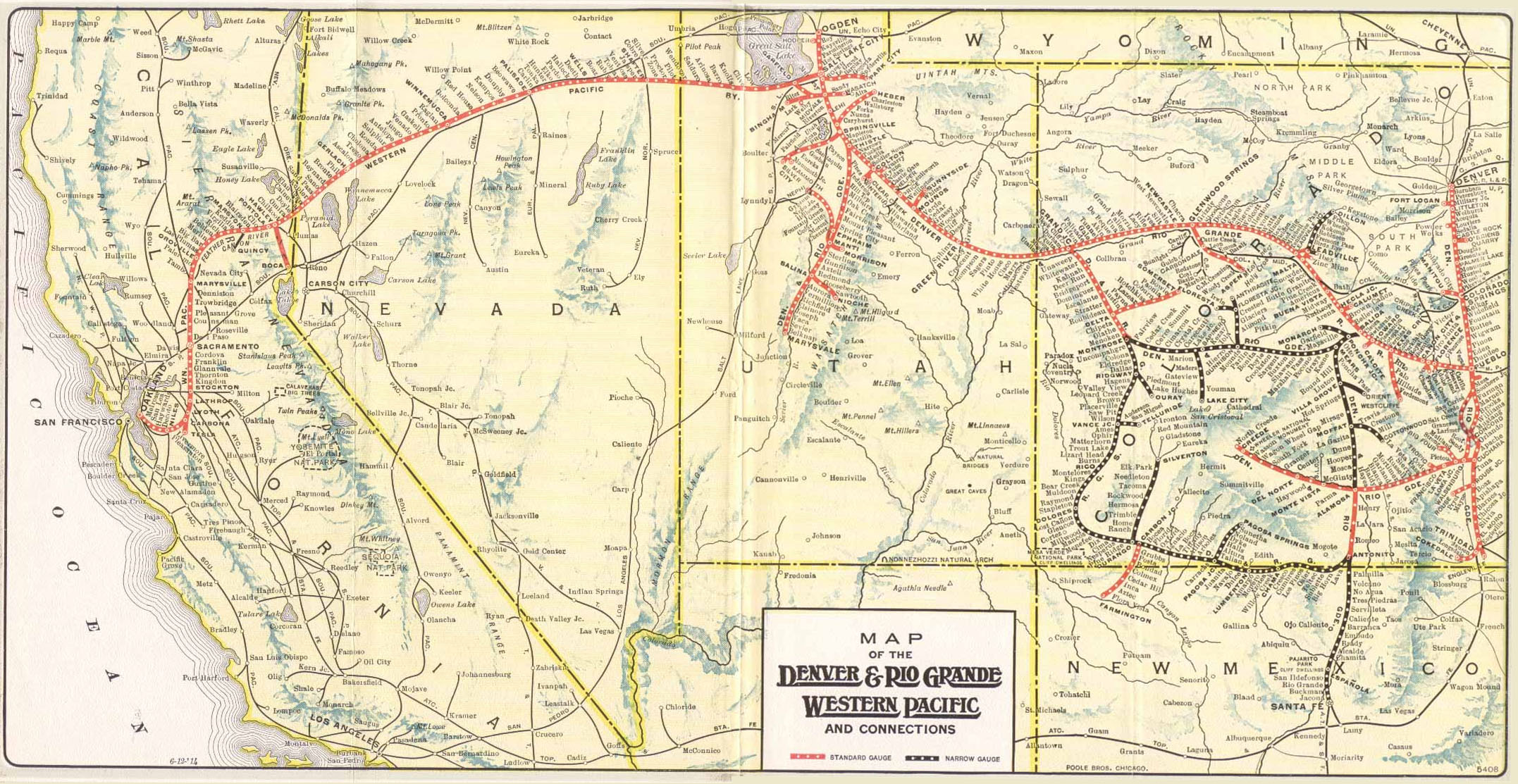
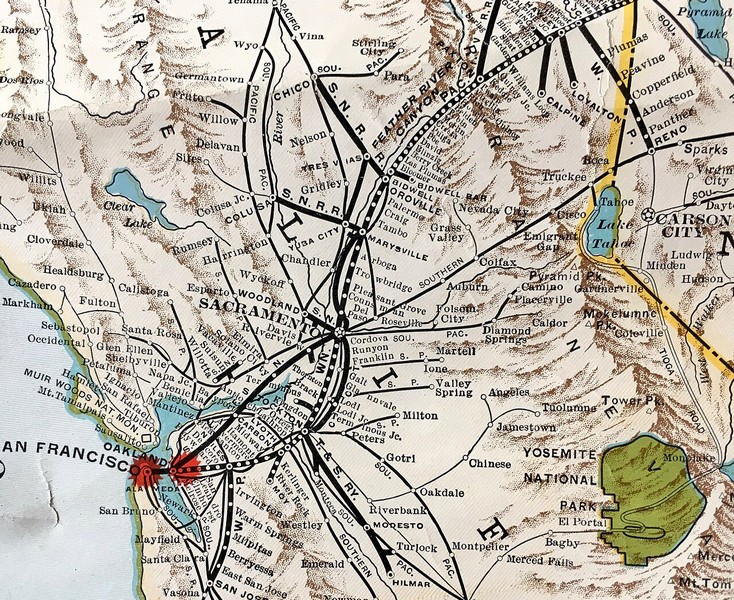
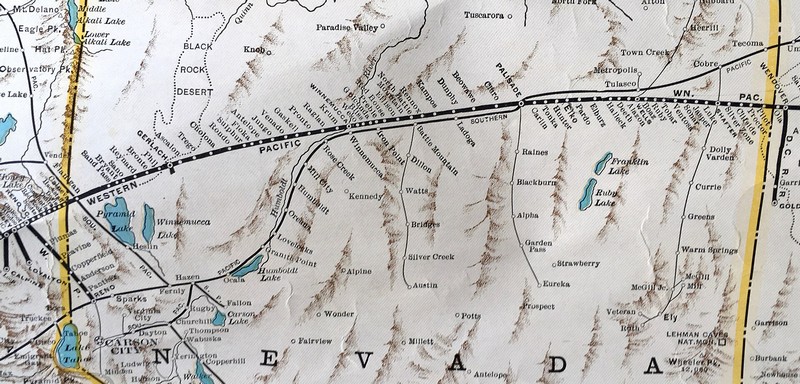
The second company to use the "western pacific" appellation was the Western Pacific Railway Company, founded in 1903. Under the direction of George Jay Gould I, the Western Pacific Railway proposed to build a standard gauge track connection to the Pacific Coast for his aspiring Gould transcontinental system. Construction was financed by the Denver and Rio Grande Western Railroad, a company in the Gould system, which had lost access to California due to the attempted acquisition of the Southern Pacific Railroad by the Rio Grande's main rival, the Union Pacific Railroad. The Western Pacific Railway acquired the Alameda and San Joaquin Railroad and began construction on what became known as the Feather River Route. Completed in 1909, it was the last major rail line connected to California. After Western Pacific Railway Company defaulted on mortgage bonds, its assets were sold in 1916 to The Western Pacific Railroad Company.
The original line used 85 lb/yd rail on untreated ties, with no tie plates except on curves over one degree; in 1935 more than half of the main line still had its original rail, most of it having carried 150 million gross tons.
In 1931 Western Pacific opened a main line north from the Feather River Canyon to the Great Northern Railway in northern California. This route, today part of BNSF's Gateway Subdivision, joined the Oakland - Salt Lake City main line at the Keddie Wye, a unique combination of two steel trestles and a tunnel forming a triangle of intersecting track. In 1935, the railroad went bankrupt because of decreased freight and passenger traffic caused by the Great Depression and had to be reorganized. Western Pacific (WP) operated the California Zephyr passenger train with the Denver and Rio Grande Western Railroad and the Chicago, Burlington and Quincy Railroad. The WP handled the "Silver Lady" from Oakland, California, to Salt Lake City, Utah from 1949 to 1970. The Western Pacific owned several connecting short-line railroads. The largest was the Sacramento Northern Railway, which once reached from San Francisco to Chico, California. Others included the Tidewater Southern Railway, the Central California Traction, the Indian Valley Railroad and the Deep Creek Railroad. In December 1953, the Railroad retired its last steam locomotive from revenue service. At the end of 1970, WP operated 1,187 miles (1,910 km) of road and 1,980 miles (3,190 km) of track, not including its Sacramento Northern and Tidewater Southern subsidiaries.
