

Reporting mark VT
Locale Nevada
Dates of operation 1870-1950
1976-present
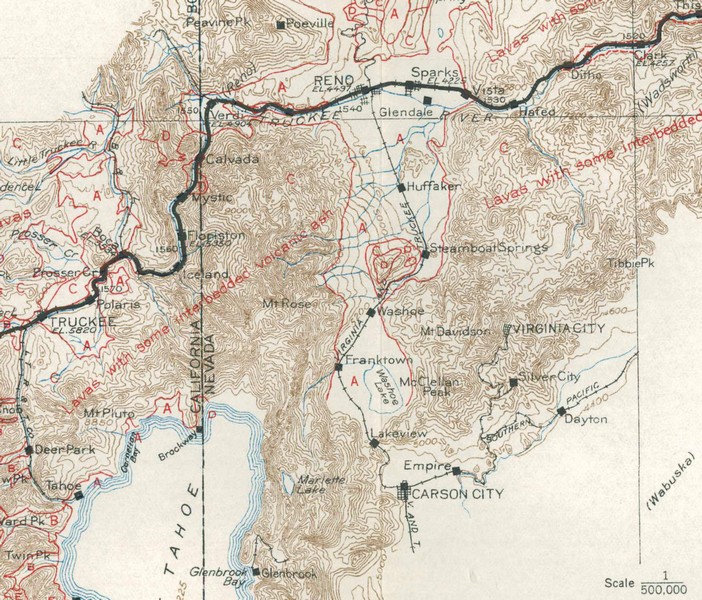
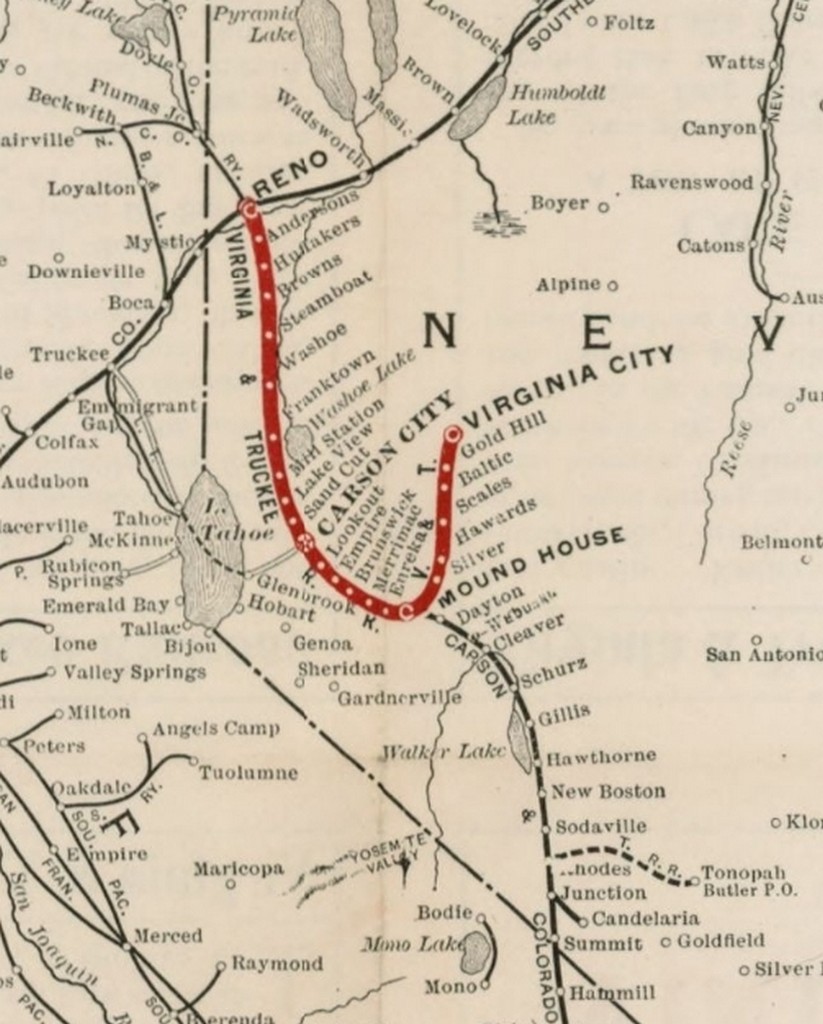
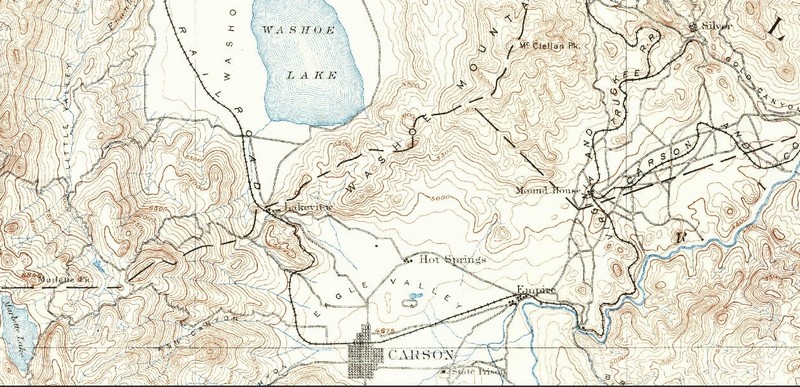
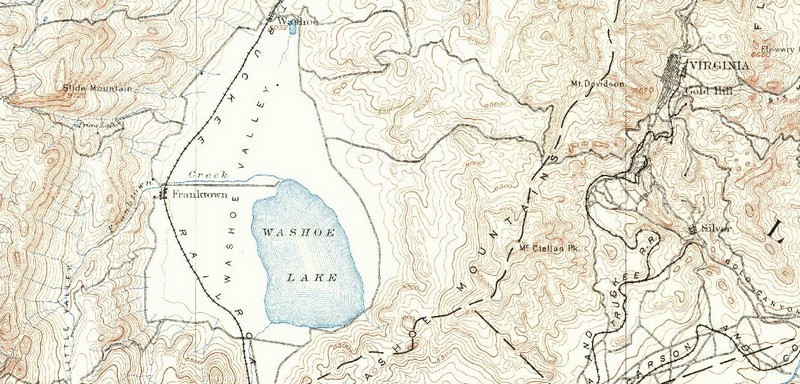
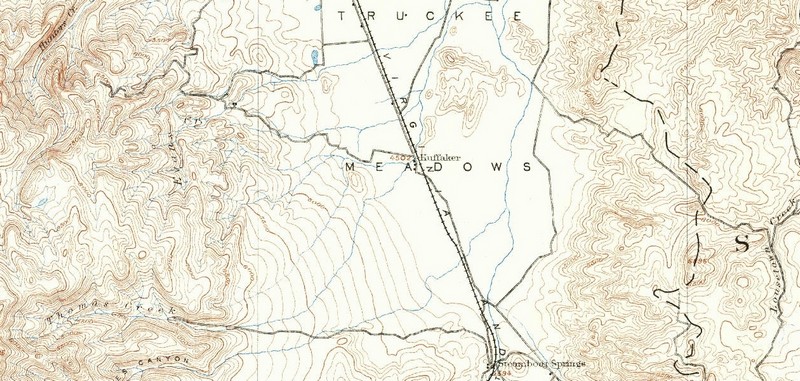
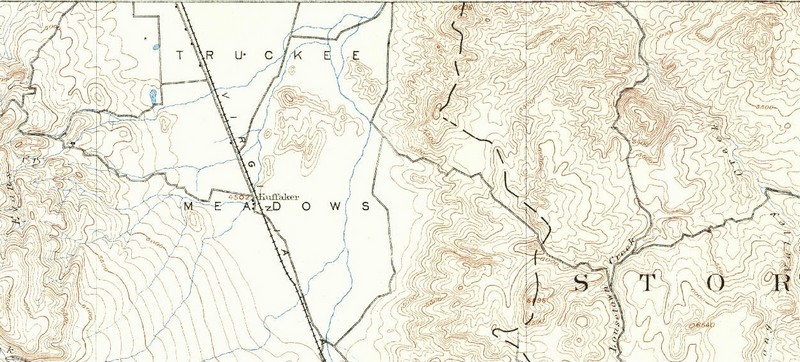
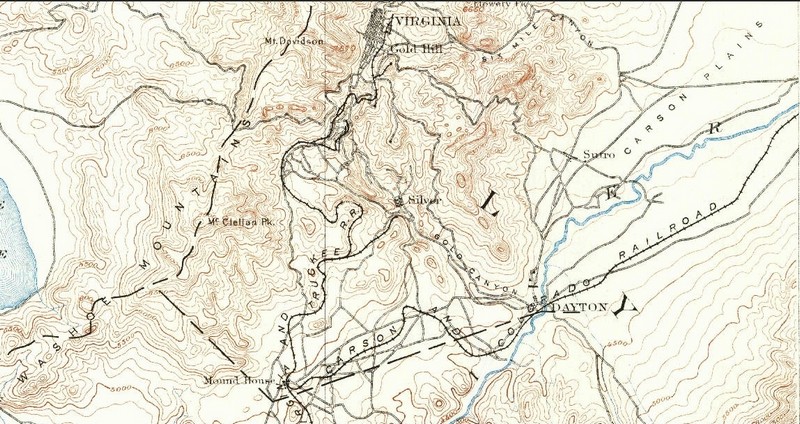
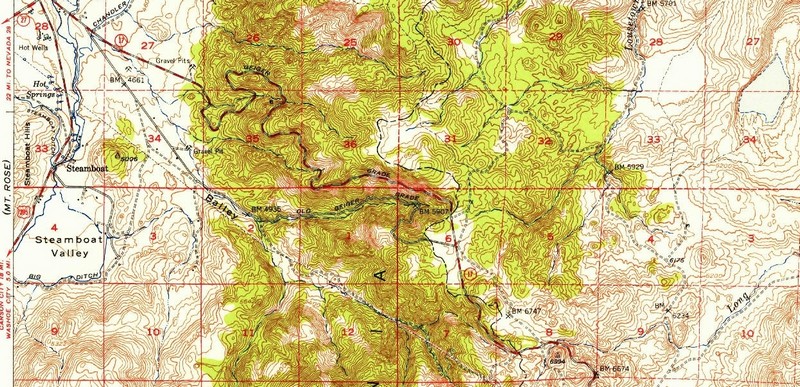
At its height, the railroad's route ran from Reno south to the state capital at Carson City. In Carson City, the mainline split into two branches. One branch continued south to Minden, while the other branch traveled east to Virginia City. The first section from Virginia City to Carson City was constructed beginning in 1869 to haul ore, lumber and supplies for the Comstock Lode silver mines. After the federal and state governments began competing with the railroad with highways that operated at a loss, the railroad was abandoned in 1950 after years of declining revenue, constrained by the requirement to turn a profit. Much of the track was pulled up and sold, along with the remaining locomotives and cars. In the 1970s, with public interest in historic railroads on the rise, efforts began to rebuild the line. The portion from Virginia City to Gold Hill has been rebuilt by private interests, and is operated separately from a portion from Gold Hill to Mound House, that was rebuilt with public funding and private donations.
Prior to the building of the Virginia & Truckee Railroad, the lower grade ore that was mined was dumped, rather than processed, because of the high cost of shipping it to the mills by wagon. The railroad brought lower cost transportation ($2.00 per ton for transporting ore, versus the previous $3.50 per ton by wagon), which resulted in the leaner ores going to the mills, rather than to waste. The cost of lumber shipped in for mine timbers and other construction also dropped significantly as a result of low-cost rail transportation. Bank of California agent William Sharon estimated that the railroad would produce a savings of nearly a million dollars a year on freight charges.
Fuel costs on the Comstock dropped by about 30% as result of the lower cost of rail transportation to get it there, and Virginia City entered into a soaring period of prosperity.
Comstock Lode
Numerous mills appeared along the Carson River from Dayton to Brunswick (toward Eagle Valley (Carson City)) to process the ore from the Comstock Lode. Low interest rates enticed mine and mill owners alike to finance through the bank. Many of these mills and some mines were built with loans from the Bank of California, whose Nevada agent, William Sharon, would foreclose upon the mines or mills when their owners defaulted on payments. The bank gradually came into possession of many important mining and ore-processing facilities. Sharon, along with business partners Darius Ogden Mills and William Ralston, formed the bank-owned Union Mill & Mining Company to process the ore from the mills that had been foreclosed upon.
Initially, the Comstock Lode was a boon for the Virginia City area, as the city grew to over 25,000 inhabitants at its height, and was among the largest and wealthiest towns in the West. However, from the beginning, the costs to transport Comstock ore to the mills from points on the Lode (as well as to return wood and lumber to supply the mines) became so great that many mines were closed, and only the higher quality ores were worth processing in the mines that stayed open. Being in control of mines and mills with his partners, Sharon realized that a cheap form of transportation between the mines, the mills, and the cities would allow the banks holdings to be more profitable.
In 1875, the railroad was earning a profit of over $100,000 per month and started paying annual dividends of $360,000 (or $30,000/month) to investors.
Virginia & Truckee Railroad Right of Way, Reno, Nevada Historical Marker No. 248. This grade was constructed in 1871 and in use until 1950. In 1880, the V&T built a three-foot narrow gauge railroad called the Carson & Colorado (C&C). The railroad ran from Mound House, just east of Carson City, to the southern part of California, and supposedly to the Colorado River where new mining claims were being struck. This never did pan out, and by 1891 those claim sites were all but forgotten. A liability to the V&T, the "slim princess" was sold to the Southern Pacific Railroad in 1900. In the words of Ogden Mills, "Either we built this line 300 miles too short or 300 years too early", reflecting V&T's attitude towards the railroad.
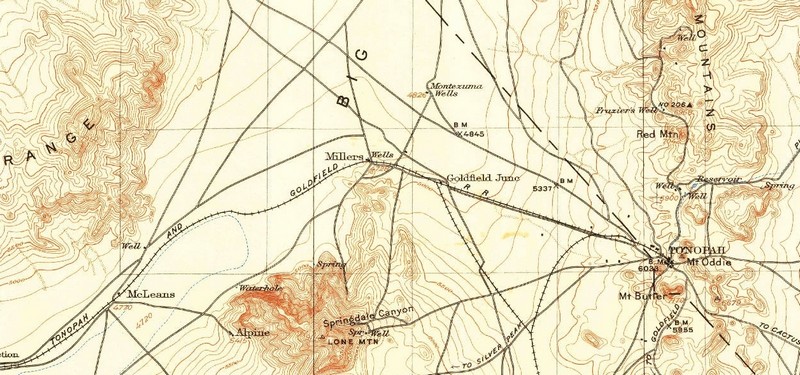
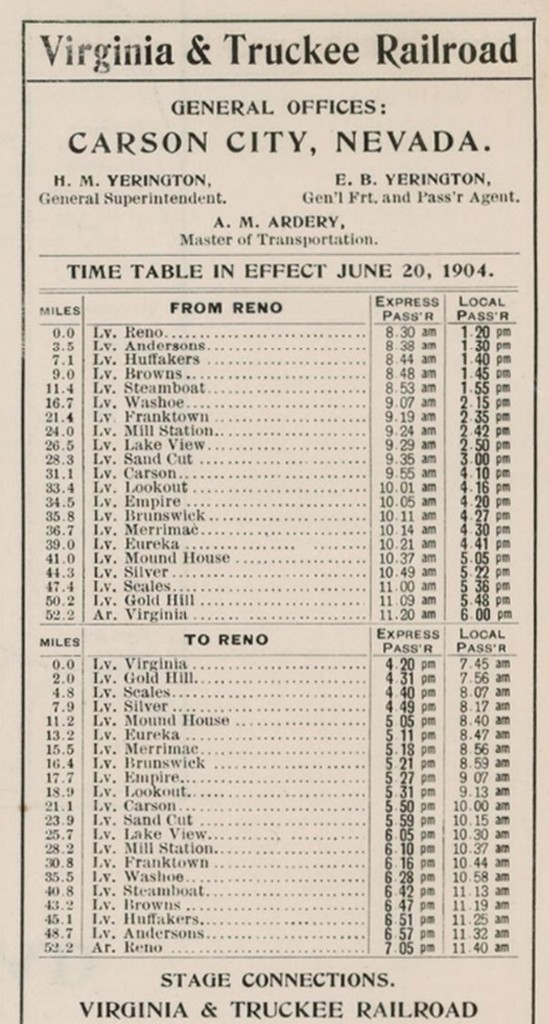
Shortly after the sale of the C&C, silver was discovered at Tonopah, Nevada. The C&C became prosperous for the Southern Pacific (as well as the V&T, which had intermediate rail access), as wagon trains would run for miles through the desert to reach the narrow-gauge line, or later on the Tonopah and Goldfield Railroad which would then carry it back to the V&T at the Mound House junction. Because of the break of gauge between the Carson & Colorado and Virginia & Truckee, the Tonopah ore had to be unloaded by hand from the narrow-gauge cars and into the standard gauge cars at the C&C northern terminus, causing a backlog of traffic, as cars waited to be transferred. The problem caused by this was also apparent in delivering mining equipment and materials to the mines and the town of Tonopah which was in a building boom. Southern Pacific officials did not like this arrangement, so in 1904 they converted the narrow gauge C&C to standard gauge from Mound House to Mina, renamed the Nevada & California Railroad. This allowed Southern Pacific trains to run along the V&T through to Mound House to the Nevada & California, and on down to Tonopah. In addition, the Southern Pacific (controlled at the time by the Union Pacific Railroad) offered to buy the Virginia & Truckee, but the V&T officials set their price too high (according to Union Pacific president Harriman). Instead, the Southern Pacific built their own line from the closest available intersection with the former C&C. The line ran 28 miles from Hazen to Fort Churchill and connected their own main lines, thus bypassing the V&T entirely.
In 1904, the corporation changed its name to the Virginia and Truckee Railway. In response to agricultural and cattle ranch concerns, the V&T built a short branch line to Minden, about 26 miles south of Carson City, in 1906. This branch line brought in increased freight traffic. As a result, the V&T purchased three new ten-wheelers from Baldwin: (the first) No. 25, 26, and 27, in 1905, 1907, and 1913, respectively.
V&T train near collapsed Tunnel #1, around 1940, and the same view in 2014, both photos showing the shoofly (detour) around the collapsed tunnel The sole owner of the railroad in 1933 was Ogden Livingston Mills, grandson of original co-founder Darius Ogden Mills.[28] He personally paid the deficits in the railroad's operating costs as a nod to the past and his family's involvement in the early days of Virginia City. In 1938, a year after Mills' death, the railroad went into receivership, and its management began making plans to cease operations, with the Virginia City branch already having been dismantled during that year. At the time of the railroad's closure, it had only three locomotives operating, the second No. 25 as well as numbers 26 and 27 (all 4-6-0's built by Baldwin in 1905, 1907, and 1913, respectively). No. 26 was originally scheduled to haul the last train, but after making its run on May 1, 1950, the single-stall locomotive shed it was stored in on the banks of the Truckee River in Reno caught fire. No. 26, deemed a total loss, was scrapped, and the road instead restored No. 27 for the occasion. On May 31, 1950, No. 27 pulled the Virginia and Truckee's final train.
Lucius Beebe, a noted railroad historian, settled in Virginia City with Charles Clegg, a photographer, and helped to revitalize the town and interest in the railroad by writing books about the Virginia & Truckee as well as other narrow gauge railroads, such as the Carson and Colorado Railroad, Denver and Rio Grande Railroad, and Rio Grande Southern Railroad.
Officials with the public Nevada Commission for the Reconstruction of the V&T Railway held a "silver spike" ceremony on January 3, 2006, in Carson City to commemorate the completion of two miles of track near Gold Hill. The construction, completed in September 2005, was part of an effort to restore the V&T's mainline from Virginia City to Carson City for operations. Then-Senate Minority Leader Harry Reid (D-Nev), who was instrumental in securing $10 million[j] in federal funding for the project, and Nevada Lieutenant Governor Lorraine Hunt, who secured an additional $1 million[k] in state funding for the project, both spoke at the ceremony. The completion of the first phase of the extension saw the last train of the day venturing beyond Gold Hill and to American Flats, over a massive fill of the Overman Pit, near the Crown Point Ravine. This practice has been abandoned in recent years, though. In June 2008, #29 returned to operation after a significant overhaul.
The Commission subsequently rebuilt the line from Gold Hill (connection with the current V&T Railroad) to Carson City, running the first train over the line in 68 years on August 14, 2009. The ceremonial first run from Virginia City to Mound House (referred to as "Carson City Eastgate" in official material) occurred for VIPs. On the 15th and 16th the line opened to the public.
In 2006, it was estimated that completion of the line from Gold Hill to downtown Carson City would cost in excess of $55 million, and it was planned that the line, which was originally abandoned in 1938, would be completed and fully operational once again in 2012. However, as of 2024, trains only go as far as Eastgate Station, in eastern Carson City.
