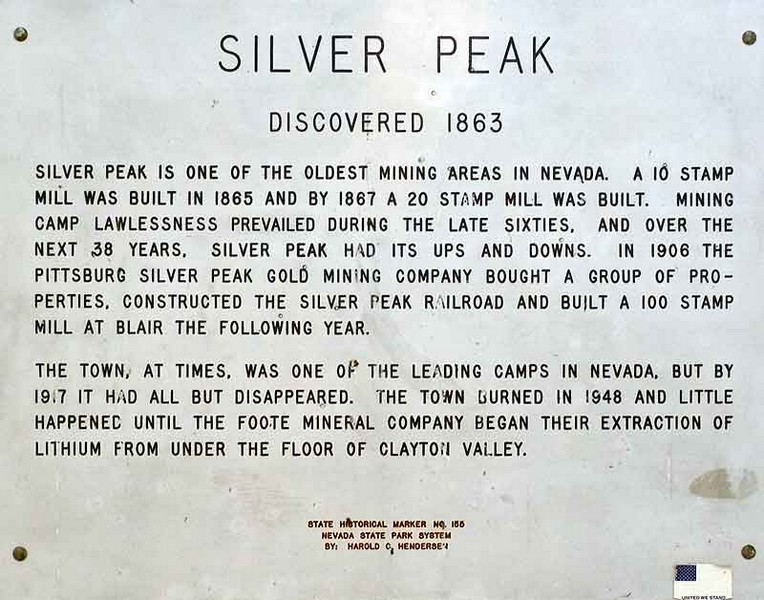
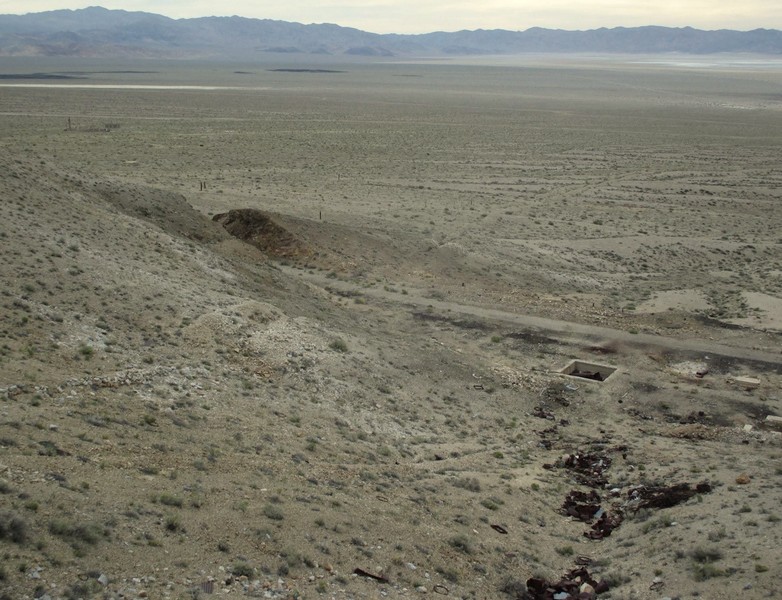
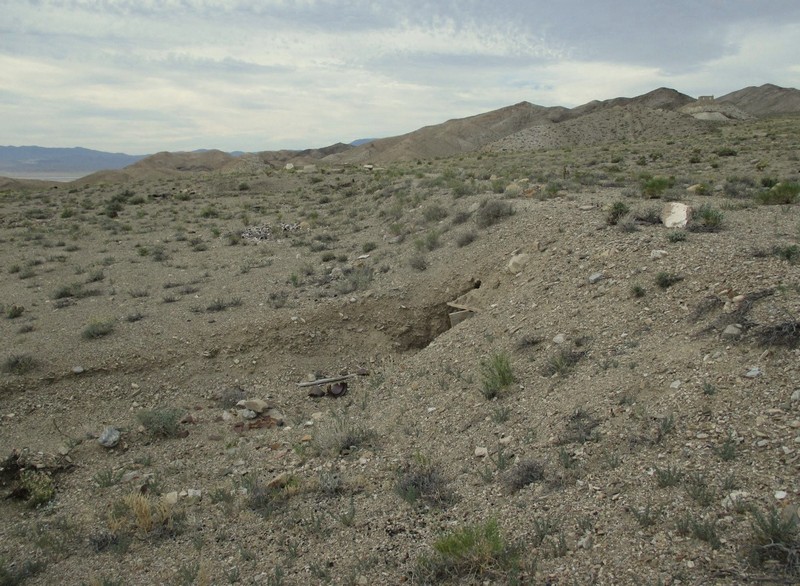
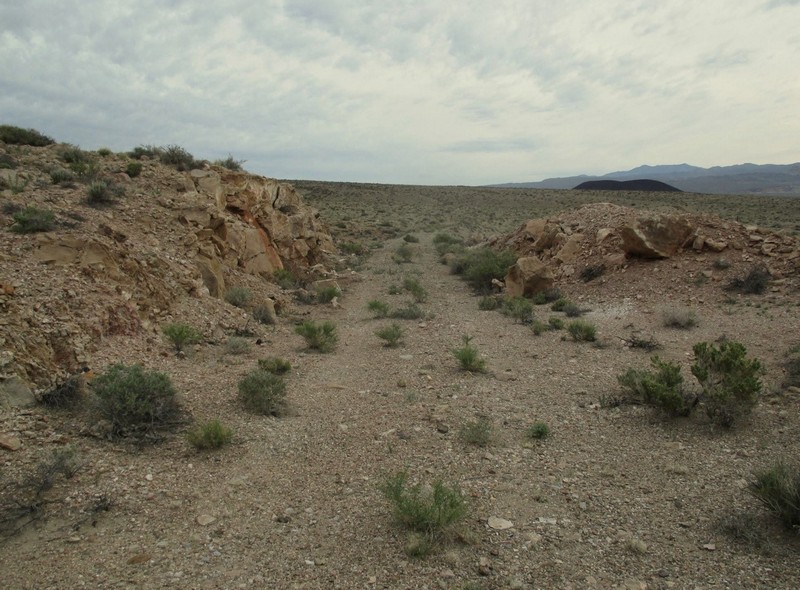
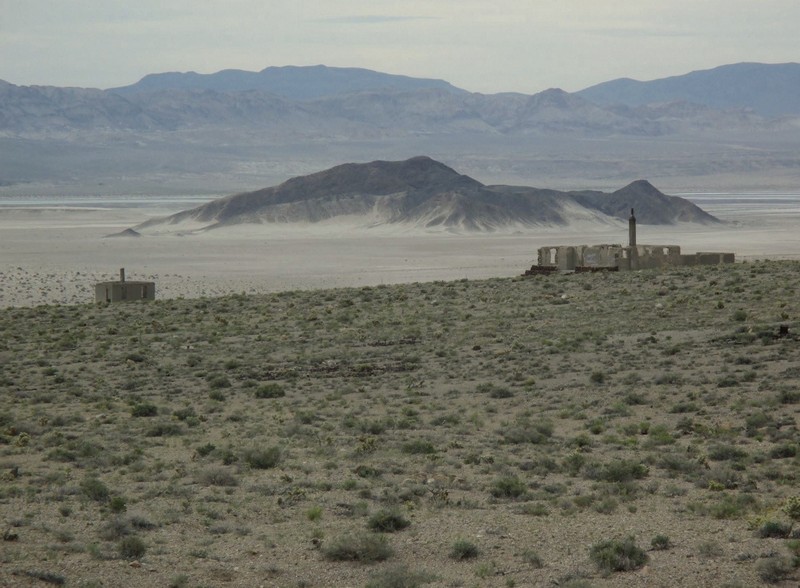
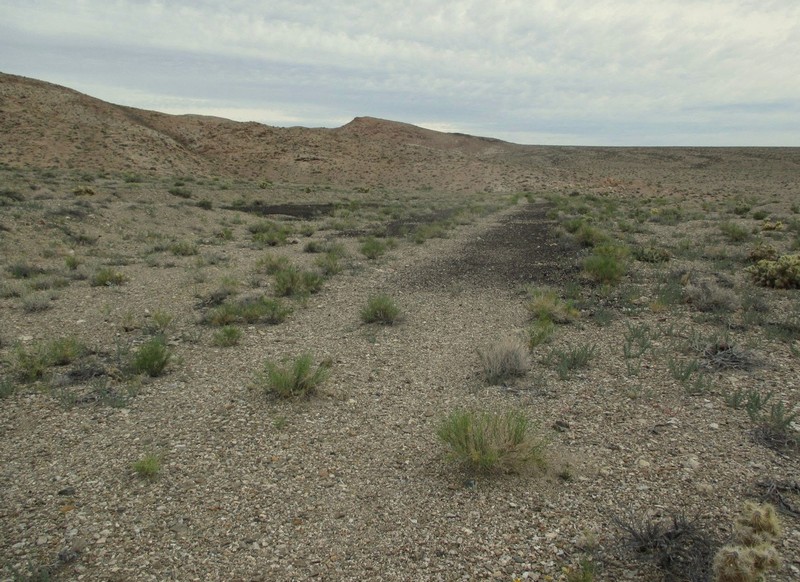
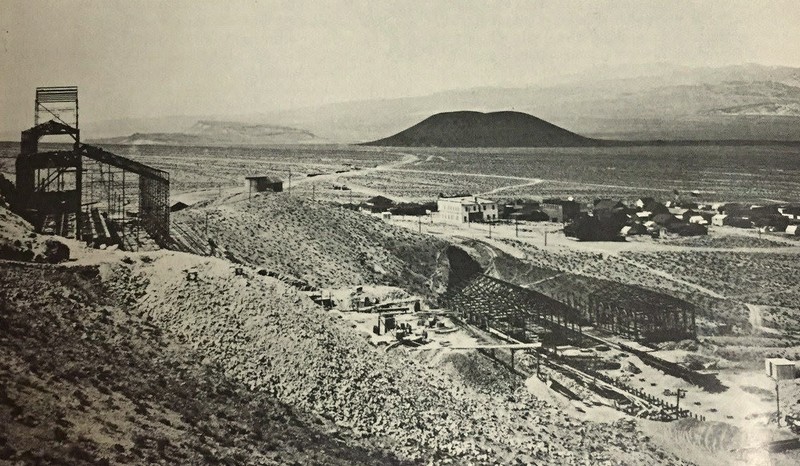
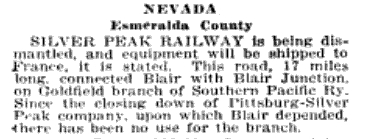
The railroad was dismantled by the end of 1915, though The Engineering and Mining Journal states that in October, 1918, the equipment was being dismantled and sent to France and that since the Pittsburgh Silver Peak Company had closed, the branch was no longer needed.
Throughout the early 1920's, prospecting and limited production continued at Mohawk (often in conjunction with the neighboring Sanger/Francis Mine in the Argentite camp). The Esmeralda County commissioners funded a wagon road into the Argentite camp in 1921 to improve access. Even so, recorded production from the Mohawk during this period was minimal - no substantial ore shipments are documented in the 1920's. By 1922, a few tons of rich silver ore were likely shipped directly to smelters (via rail at Coaldale) from the camp, but low silver prices soon curtailed operations. For the next few decades, the Mohawk property saw only intermittent work.
The focus in the 1930's was largely on the Sanger (Francis) mine, which had British investors and development efforts, while the Mohawk vein lay mostly dormant awaiting more favorable economics. A 1947 report noted the Argentite area had seen considerable underground development (multiple shafts retimbered and ore showings exposed) but remained idle in winter due to deep snow at the 8,300 ft elevation. In short, the Mohawk's rich silver vein was known, but it would not be fully exploited until the silver market and capital investment aligned in the 1950's.
To develop the mine at full scale, Avery Brundage formed Bruhi (Brundage-Hines) Enterprises in 1953 and oversaw a major expansion program. That year, Bruhi optioned the Mohawk to the Sunshine Mining Company of Idaho (a prominent silver producer), but Sunshine withdrew within a year after some evaluation drilling. Brundage then decided to proceed on his own. In 1954, work began to modernize the mine and to construct a processing mill at Silver Peak, since no nearby mill was available. By 1955 the new mill was completed in Silver Peak town, and it treated Mohawk ore continuously until 1956. This mill was likely a cyanide leaching plant or flotation mill designed for silver ore, with an initial capacity around 100 tons per day.
Underground, the mine was developed with a vertical shaft (in addition to the old incline) and multiple levels of drifts and stopes. By the late 1950's, Mohawk had one main shaft, one incline shaft, six levels, and about 1 mile of underground workings, including several large stoping areas (with names like the Hines, Luft, Burgess, Elree, and Brundage stopes). Surface infrastructure at the high-altitude camp grew to include a power plant (generators), hoist house, workshops, and living quarters for the workforce. Electricity, mechanized drills, and mine carts/locomotives were used to extract and transport ore, reflecting mid-century mining technology. During 1955-1956, dozens of miners were employed and Mohawk became a major silver producer for the region.
Following the disaster, Mohawk operations were suspended, and that section of the mine was abandoned. For a time the shaft and workings remained closed as a tomb. However, the mine was not entirely given up on - after sealing the caved area, USM&M resumed mining in other parts of Mohawk by early 1960. Limited production and development continued into 1961, but the mine closed again by June 1961, ending the first full-scale era of Mohawk. The 1959 cave-in remains one of Nevada's notable mining tragedies, and to this day the victims bodies are entombed in the collapsed stope deep inside the mountain.
The collapsed area above the Hines 202 stope where Bill Delorme, Jimmy Roberson, and Sam Sickles remain entombed today.
The next significant revival came in the 1970's, amid a sharp rise in silver prices. Around 1974-1975, a small operator known as Spring Creek Mines (headed by Jack Zane and Mark Gavard, local mining promoters) leased the Mohawk and brought it back into production on a modest scale. Uniquely, Mohawk at this time retained the flavor of an old-time mining camp. The operation was so remote that miners lived on-site in company housing rather than commuting. Three large wooden bunkhouses (one for each shift: day, swing, and graveyard) were refurbished at the camp, along with a "humongous" cook shack where a hired camp cook prepared ample meals daily. As miner Ben Viljoen recalled, the Mohawk in 1975 was "about the last of the old-type mines" with a traditional bunkhouse-camp setup - a way of life that was fast disappearing in American mining by the 1970's. The underground workings were rehabilitated, and mining resumed on some of the ore left behind from earlier years. Spring Creek Mines reportedly shipped small batches of high-grade ore for custom processing (since the Silver Peak mill was no longer available) and may have conducted trial runs. This revival was relatively brief; by the late 1970's the operation slowed, possibly awaiting further investment. Nonetheless, the mid-'70s episode demonstrated that substantial silver remained in the Mohawk vein, and it kept the mine in the local headlines once again.
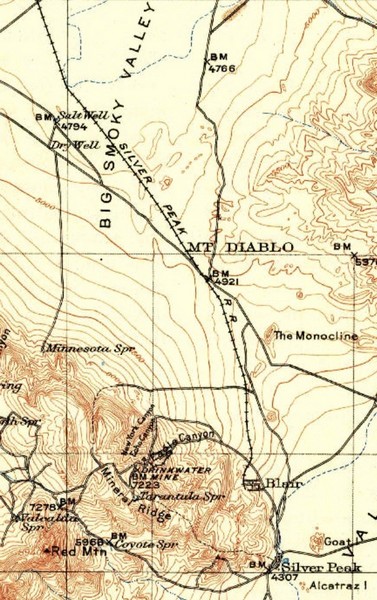
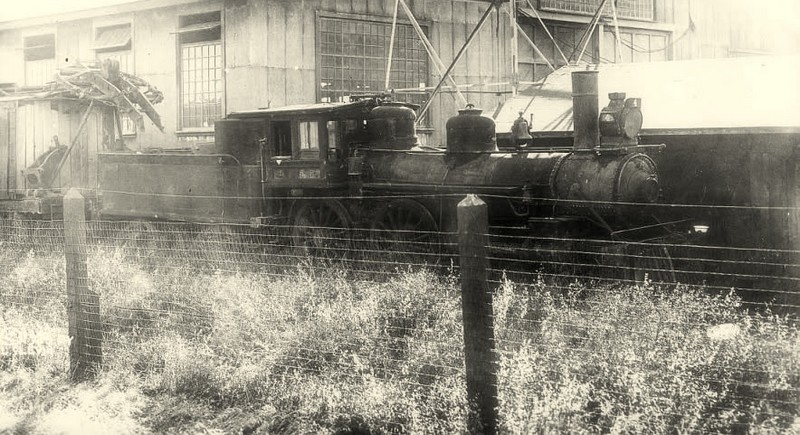
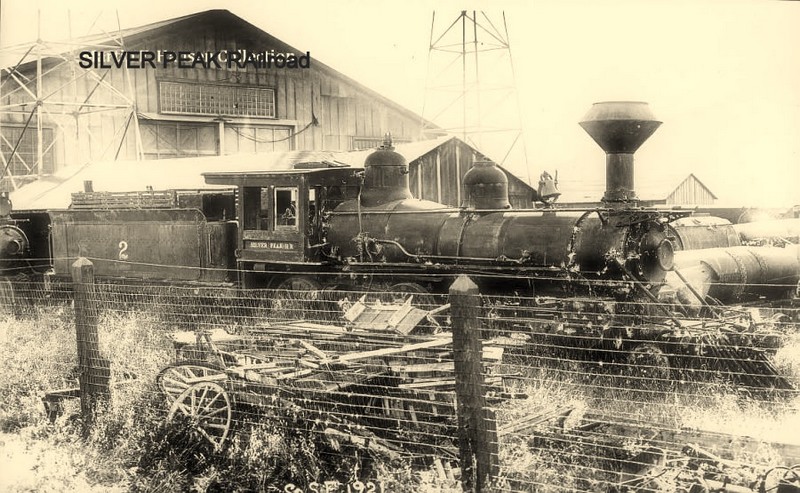
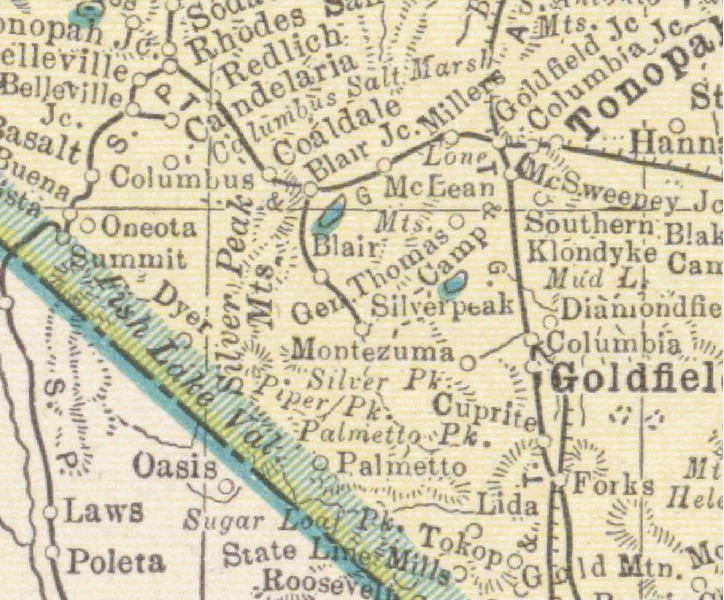
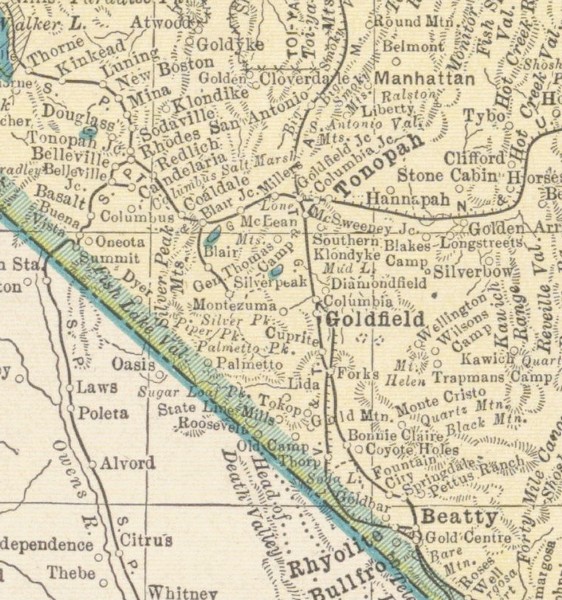
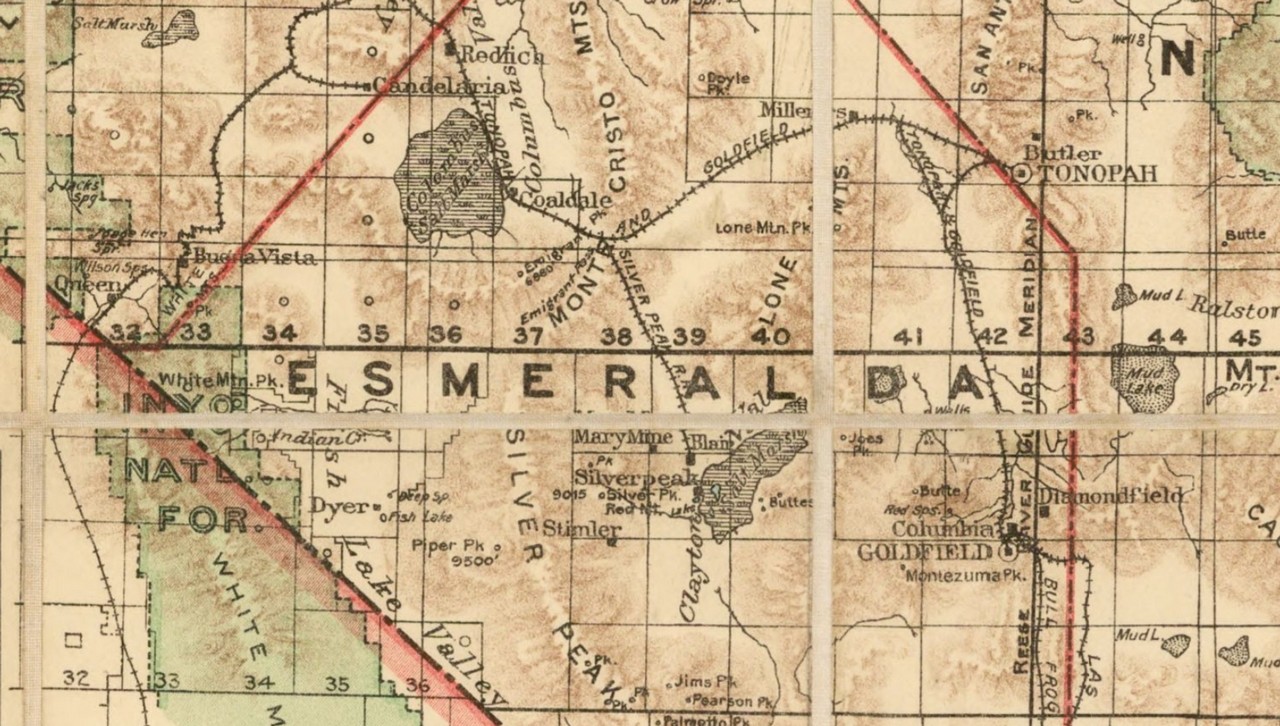
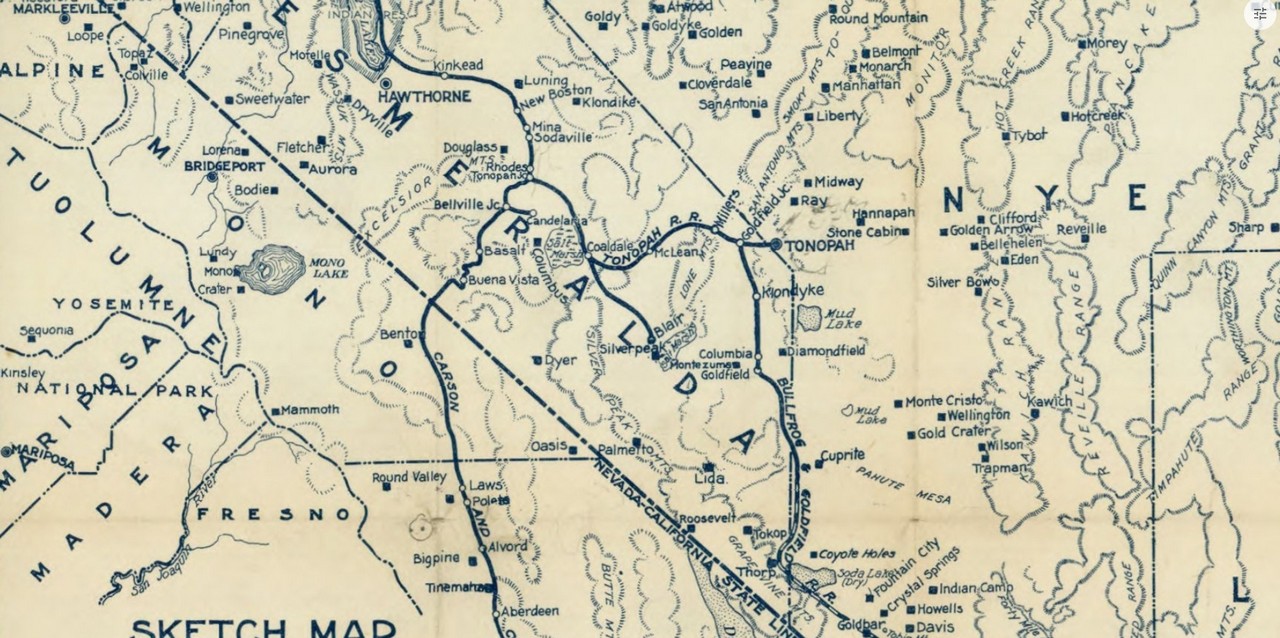
This shortline was built in 1906 of the Tonopah & Goldfield RR between Mina and Tonapah, Nevada. The railroad was named after the Silver Peak Mining District that it was built to service. The connection with the T&G was named Blair Junction on account of the town at the end of this line 17 1/2 miles away, Blair, NV.
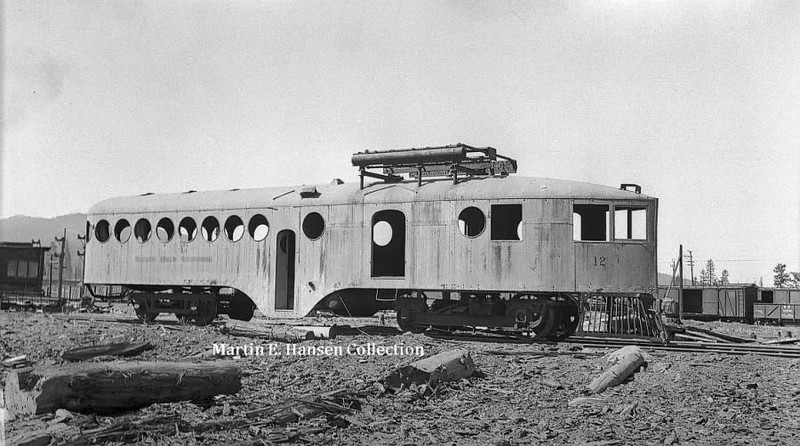
Like so many shortlines built to service mining areas in the far West, the fortunes of the railroad rise and fall with the prices of the ore being mined along the line. The Silver Peak Railroad never had a successful year despite all their efforts to become profitable. The line even depended on a McKeen railcar for it's passenger service in an effort to reduce costs.
Despite the owners attempts to make the line profitable, the Silver Peak Railroad was abandoned in 1918, just 12 years after it was built.
Finding any photos of the Silver Peak Railroad equipment is very difficult as the line was abandoned long before most Railfans came into existence.
We are lucky that at least a few images have remained to remind us this shortlived shortline that tried to make a go of it in the Nevada desert over 100 years ago.
