
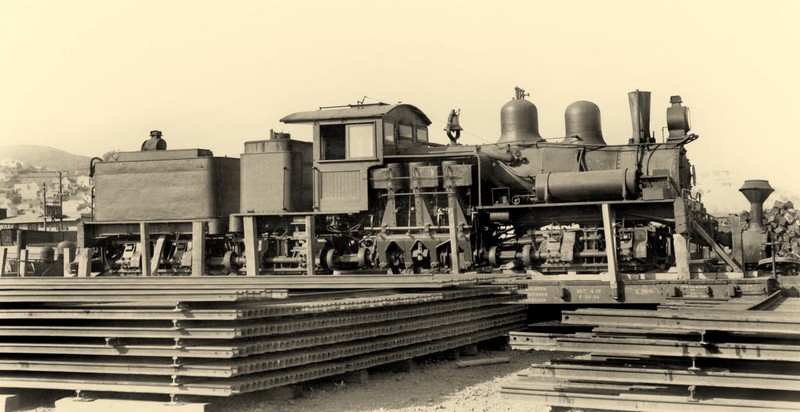


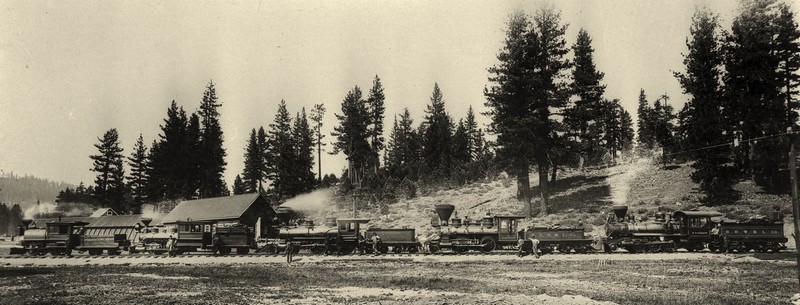
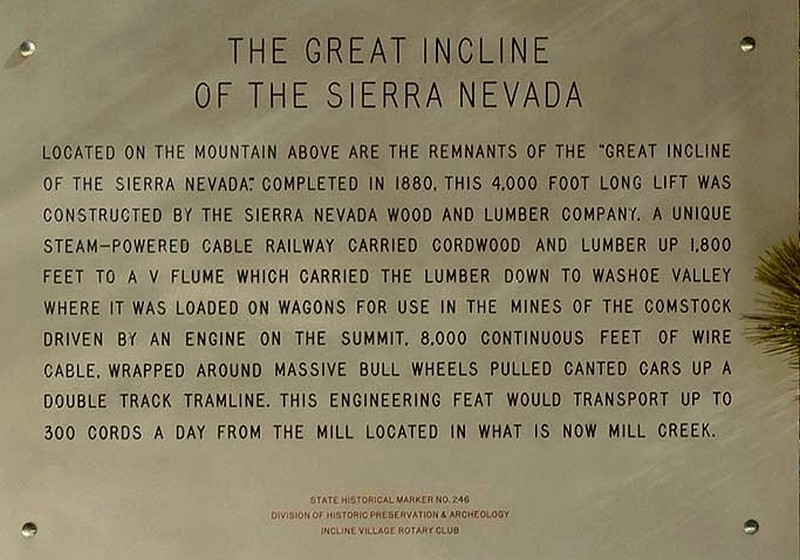
Once the lumber was sawed, it was loaded on to small railcars, and these cars were lifted up the mountain by the famous Incline Railroad. The incline was built in 1880, with the 8,000 feet of cable weighing 14,000 pounds, taking almost a week to haul and ship from Truckee. The lift was 1,400 feet vertically and the rail line 4,000 feet long.As four loaded cars were being hauled up on the endless cable by the steam engine located at the top, four empty ones were let down the other rail, adding to the efficiency of the operation. The trip took about 20 minutes with one and a half cords of wood or 1,500 board feet of lumber being hauled each trip.Within two months of the inclines opening, the first major accident occurred. Two loaded cars were being hauled uphill, when suddenly, a loud noise startled the mill workers. The cable on the twelve foot bullwheels hummed and shook, and the lumber cars that were nearing the top, stopped their uphill climb.Slowly at first, then picking up speed quickly, the cars flew downhill. There was nothing to be seen but a streak of fire and smoke streaming out behind the cars. They held the track, thanks to the cable, but that meant they were going all the way to the bottom. There, mill hands scrambled to get away, stumbling and tripping in their haste.The cars hit the bottom of the incline, smashed up the head frame, then launched into the air, and burst into a stand of pine trees with an earth shattering explosion. Metal and wood were splintered into small pieces, with boards piercing the trees to a depth of 8 inches. The cause of the wreck was attributed to the operator over winding the wrought iron clutch. Apparently Overtons clutch design was less than perfect, as seven cars ran away and were wrecked before a new ratchet and cog system was installed preventing any car from dropping further than four inches.At the top of the incline, the lumber was dumped into a large wooden V flume that carried it south to the Virginia & Gold Hill water tunnel. There the lumber floated through the mountain in its own flume in the 3,994 foot long tunnel, then down into Little Valley, landing on the Virginia & Truckee Railroad at Lakeview Station, on the divide between Washoe Valley and the Carson City.
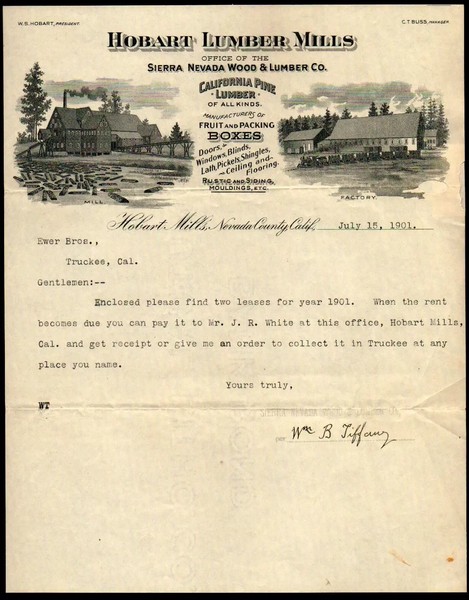
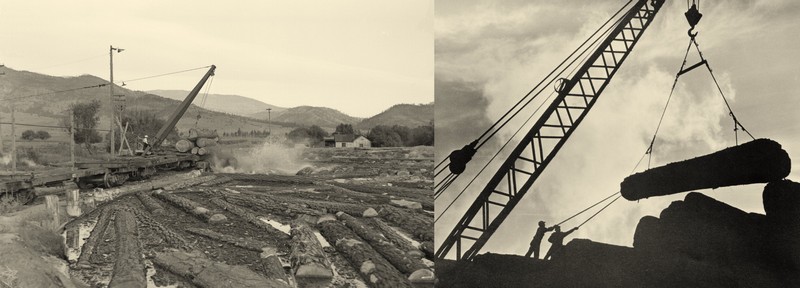
Hobarts operation hired experienced loggers from all over the west, including many from Truckee. Charley Barton, a master logger who logged for many lumbermen in the 1870's, started logging on contract for SNW&L in 1883, and started a family relationship with the company that would last for decades. Working as a contractor for the SNW&L was veteran Tahoe-Truckee lumberman Gilman Folsom, who had been a partner in a sawmill at Clinton below Boca from 1870 to 1880. In 1880 Folsom partnered with Sam Marlette and they took up a 40,000 cord a year wood cutting contract that employed over 400 men year round, and starting contract logging for the company the following year. The SNW&L also hired Chinese workers, mostly for menial tasks and wood cutting. As Truckee area lumbermen were being boycotted by white laborers for hiring Chinese workers and were responding by firing the Chinese, SNW&L took the opposite approach and hired more Chinese and fired the whites. By 1883 SNW&L owned 70,000 acres north of Truckee in the Prosser, Sagehen Creek and Little Truckee River. Rumors constantly circulated around Truckee in the 80's and early 90's that Hobart was going to buy an existing sawmill or build a new one and start logging these forests. While the Carson Range lands were the center of Lake Tahoe operations, Walter Hobart continued to invest in timberlands on the north and west shores of Tahoe. Enough timber had been purchased to last to 1900, if all went according to plan. The future looked very bright. Gordon Richards is the historian for the Truckee Donner Historical Society. Please visit the Truckee Donner Historical Society website at http://truckeehistory.tripod.com. Past articles by Gordon Richards are available at Sierra Sun. Com in the archives.
