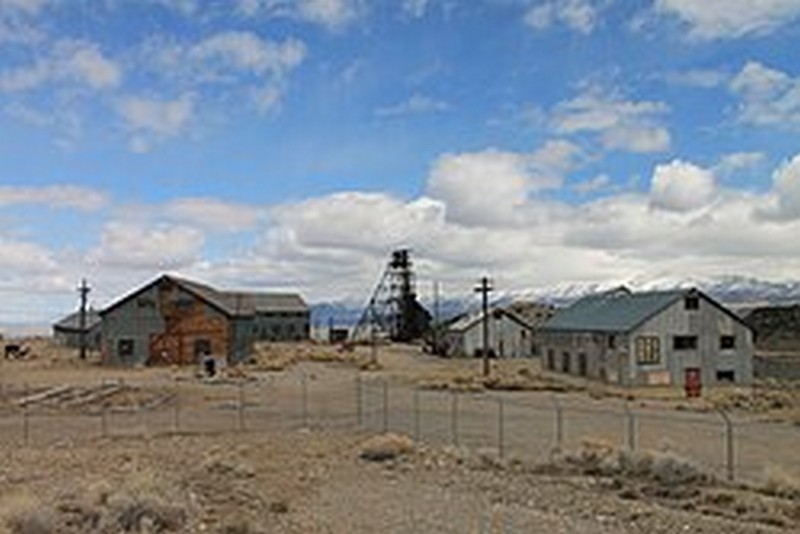
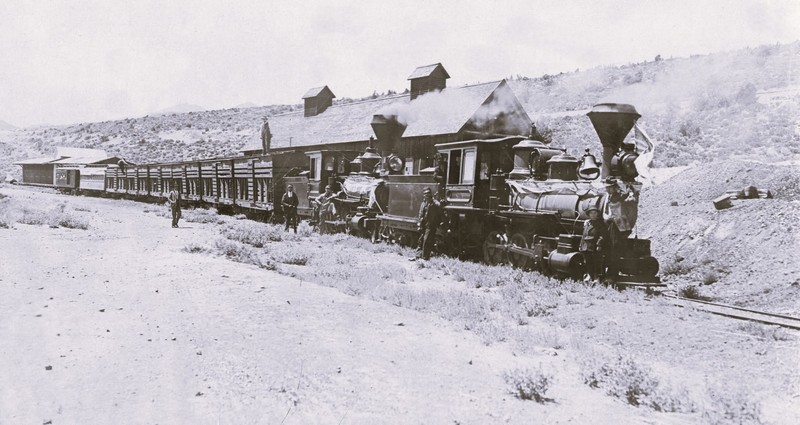
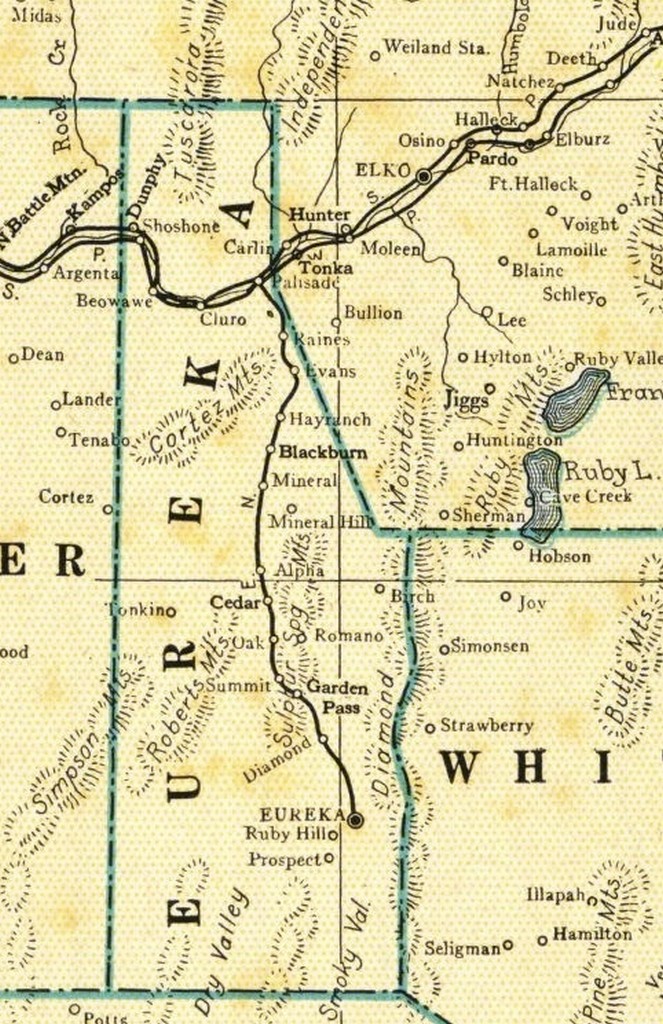
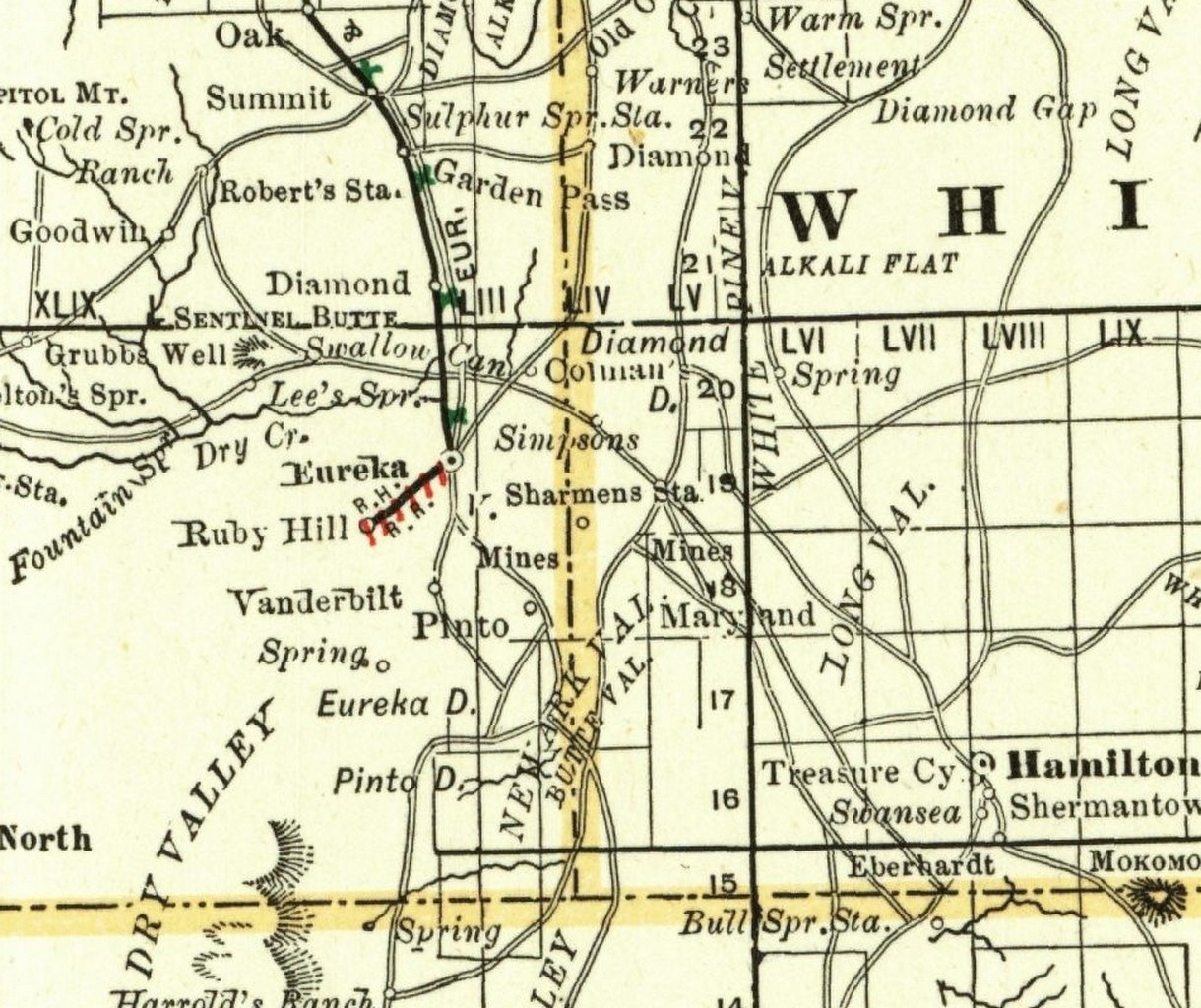
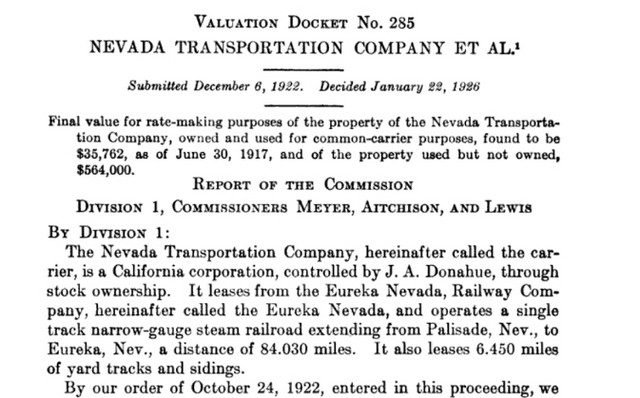
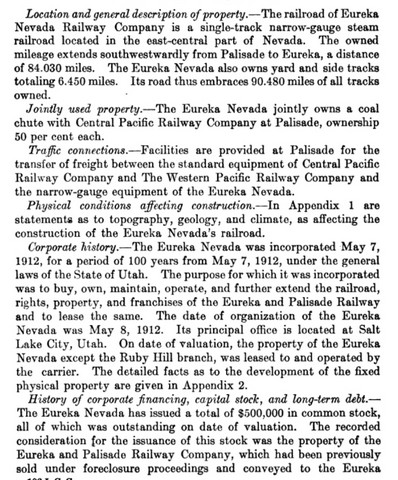
When viewed from the air, the Eureka & Ruby Hill (more commonly known as the Ruby Hill Railroad) trackplan much resembled the twisted X of a chromosome viewed through a microscope. Its history is just as intertwined with the Eureka & Palisade Railroad. With the E&P construction paused at Alpha during late 1874 to June of 1875, the Ruby Hill managed to become the first railroad in Eureka with construction beginning just months before the E&P finally reached town. Originally the line ran from the Eureka Consolidated mines atop Ruby Hill, down to the company's furnaces at the north end of town. Operations consisted of daily trains made up of 10 six ton ore cars feeding the furnace and of course empties returning to the mines. Power was provided by a Baldwin built 0-6-0T, another Baldwin 0-6-0T being added later. Residents quickly took to riding the new faster style of transportation inspiring the company to purchase one small coach for mainly safety reasons. The rest of the X was added after the Eureka & Palisade purchased the line in 1875 when lines were built to the competing Richmond Consolidated mining company and its furnaces. From here to the end, the line was operated as the Ruby Hill branch of the E&P and its prosperity ebbed and flowed following along with that of the E&P and the mines served. As the mines were playing out, 1890 saw the Richmond smelter shut down with the Eureka following the next year. The Ruby Hill was abandoned in 1893. It first locomotive going to the West Side Lumber Company in Tuolumne, California and the second going to Pacific Wood and Lumber Company near Truckee California. This was not the complete end of the Ruby Hill however.

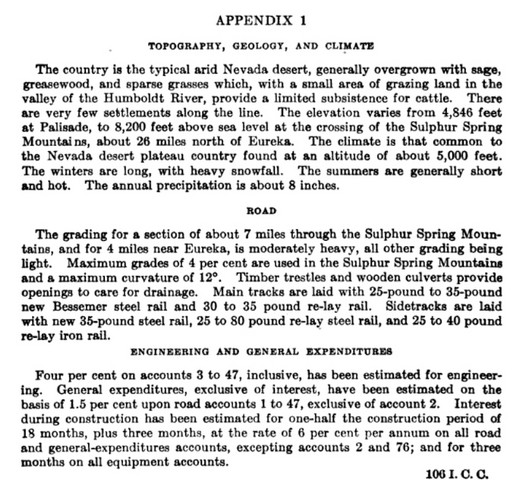
In 1902 the US Smelting, Refining & Mining Co purchased the old mines and helped the E&P pay for the rebuilding of the line. This time the route was shortened from the original 7 miles to only four. E&P cars were loaded directly and made the whole trip across the entire railroad to Palisade to be cross loaded onto Southern Pacific trains. These operations ended shortly though in 1910 with floods wiping out the E&P. For further history one should refer to the story of the Eureka & Palisade and its successor the Eureka Nevada Ry.


The Ruby Hill Railroad was a historic 3-foot narrow-gauge line completed in 1875 to transport precious silver-lead ore from the booming mines at Ruby Hill down to the smelters in Eureka, Nevada. Spanning about 7 miles, the rugged route played a key role in Nevada's 19th-century mining economy. The railroad's prosperity fluctuated directly with the yield of the local mines. When production declined in the 1880s, the town's population dwindled from its peak of 2,500 in 1878, leading to the railroad's abandonment in 1893. The line was briefly rebuilt and shortened in 1902 to haul ore to the main line, but it ultimately ceased operations permanently following devastating floods in 1910.Today, Ruby Hill is a ghost town and an act Eureka & Palisade Railroad (the main line that connected Ruby Hill to the rest of Nevada)? Ruby Hill, Nevada Mining boomed in Ruby Hill around 1878 when the population grew to its maximum of 2,500 residents The majority of the 900 reside... Eureka & Ruby Hill Railroad From here to the end the line was operated as the Ruby Hill branch of the E&P and its prosperity ebbed and flowed following along...

Throwing it back to Nevada's rugged mining days with these double-header locomotives from the Ruby Hill Railroad, early 1890's! When locals got their first taste of rail travel here, they didn't just stick to ore cars they got a coach for passengers too, even if it was mostly for safety's sake. Imagine Eureka in its heyday: the tracks of the Ruby Hill Railroad twisting like an "X" from the mines atop Ruby Hill to the bustling smelters below. When the line became part of the Eureka & Palisade Railroad in 1875, it connected even more of Eureka's booming mining operations. But, like all good things, this line had its sunset: operations wound down in the early 1910's, but the memories (and a few engines!) lived on.


Disclaimer: We search for HISTORY as a hobby. Endless souces. Much can come from others neverless endless sources. Does this website sell anything ? NO Donations ? NO. This is non-commercial. I consider my websites under copyright. Again..no money here !! Educational.


go back