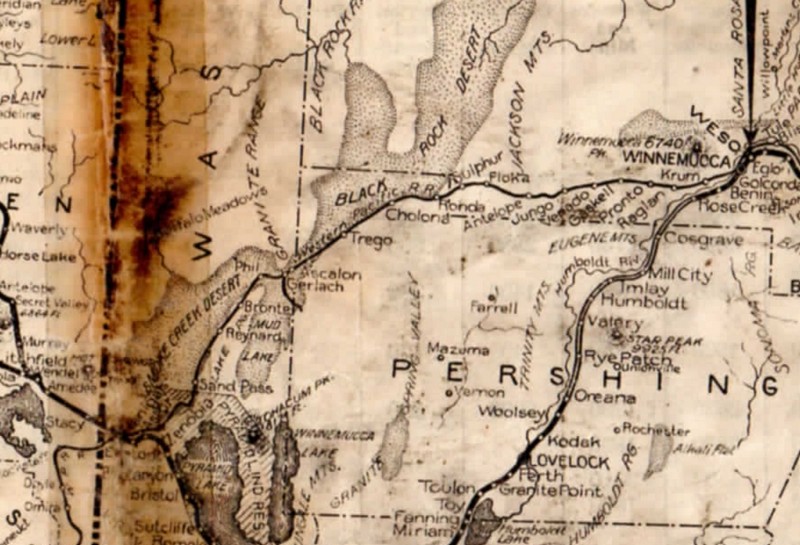
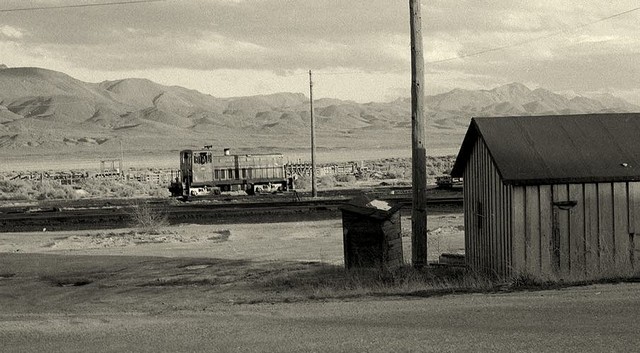
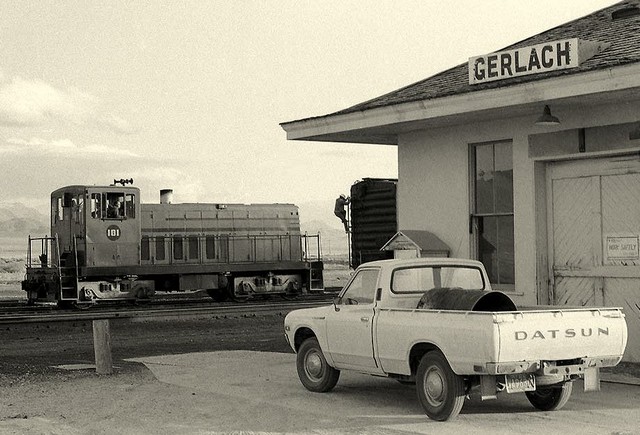


Empire is located about 145 kilometres (90 miles) north of Reno, just south of the Black Rock Desert where the Burning Man arts festival takes place.
Today, the town is home to a general store, a gas pump, a storage business and the gypsum mining operations, which - true to the movie’s plot - closed in 2011. The operations resumed in 2016, but not to the level of their heydays in the 20th century.
Travelers can best mark their arrival in Empire when they see the company factory.
The plant "rises like a giant white frosted cake from the desert," a journalist from the Nevada State Journal wrote in 1953.
In the early 1920s, the Pacific Portland Cement Company operated the gypsum quarry and mine. Gypsum is commonly used for plaster board, or Sheetrock, used in construction.
Empire was said to be home to one of the "finest gypsum deposits in the world," the Nevada State Journal reported at the time, and the US Gypsum Company bought the operation for more than $2 million in 1948.
By 1950, the town was booming with workers mining around the clock, the Journal reported, and adding housing to support about 200 people, including workers and their families.
The town of Gerlach, best known today as the last stop before Burning Man, was just a few miles north. Gerlach townspeople called Empire simply "the camp." "Nearby Gerlach is experiencing a small boom of its own as a result of the growth of Empire, as is reflected in the advent of electric power and neon signs in that community during the last year," the Journal reported in 1950. "Gerlach is Empire's play town to some extent, although it is probable if things go on as they are now that Empire will be bigger than Gerlach soon."
At the time, neither community had telephone service still, but residents were said to love life in Empire. They described a tight knit community where the kids ran free and swam all summer in the community pool. The parents enjoyed golf at the course in town and tennis at the courts. The entire community would gather for basketball tournaments, and the children would go rabbit hunting after school since the desert was only "five feet 5 feet (1.5 meters) from our backyards," a former resident, Steven Lambert, once told the Reno Gazette Journal.
USG shut down all operations, both mining and Sheetrock production, in early 2011 after the economic downturn tanked the construction industry. At the time, USG employed about 100 people and ran the town of Empire, which had about 300 residents when it closed.
While surrounded by a chain link fence, the facilities suffered neglect. Two llamas -- named Tony Llama and Llama Bahama -- were placed inside the perimeter to keep the weeds at bay. Bushes entirely engulfed basketball hoops, swing sets and laundry lines left behind by the former residents. Inside the homes, many which were left unlocked, walls had the faint outline of frames that once hung. Bedrooms still had glow-in-the-dark stars, murals and kitten-shaped light switch covers left behind.
"Some of the old mill offices, if you go over there, the calendar is still on that date, the day that it shut down in 2011," said David Hornsby, president and chief operating officer of Empire Mining Co. when he moved to the site in 2016. "Still half-full coffee cups, all their files still on their desk. It's kind of like a bomb just went off and they all evacuated. It's pretty weird."
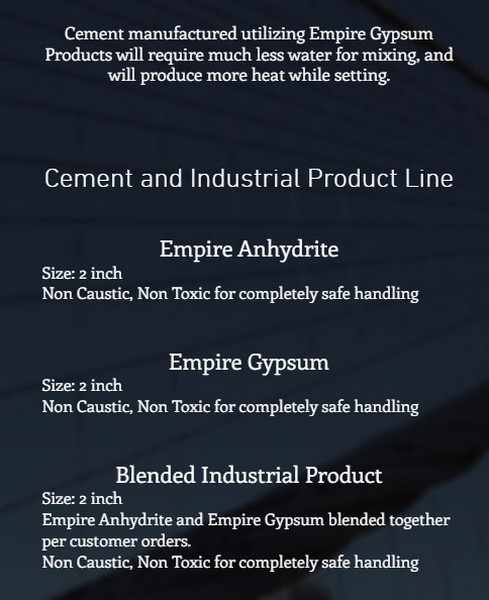
Empire Mining Co., based in Las Vegas, bought the town, plant and mine in 2016 for nearly $11.4 million. Unlike USG, Empire Mining Co. does not have manufacturing on-site. The gypsum is today shipped to companies that make fertilizer and cement.
Today, the town is home to about 70 residents altogether, including workers and their families. While many of the facilities have not reopened, about two dozen houses have been remodeled.
Wilber said, though the town still might look abandoned from afar during the winter, it regains some of its vitality in the summer. No matter the season, though, the llamas still roam the town and greet her each morning at her window for oats. She’s nicknamed them Mo and Jo.
The company last year additionally purchased the Empire Market, formerly known as the Empire Store.
"I would have loved to have seen the town back in the day, but I think a lot of people that live in Empire now have that same feeling: We love this place," Wilber said.
Unincorporated community
Country United States
State Nevada
Population (2020) • Total 47
ZIP codes
89405
For 63 years, from 1948 to 2011, Empire was a company town of the US Gypsum Corporation, a manufacturer of gypsum-based construction sheetrock, and once had a population of more than 750 people. US Gypsum closed the mine and the town in 2011; the mine and town were bought in 2016 by the Empire Mining Company (EMC), a manufacturer of gypsum based agricultural and construction additives. In 2016, the town again became a company town under the new auspices of EMC. Since that date, both the town and the mine have been partially reopened by the new owners.
Amid a slump in the construction industry, the gypsum plant in Empire closed its doors on January 31, 2011, eliminating 95 jobs. Residents with children were allowed to continue inhabiting their company homes through June 20, 2011, the end of the school year. After that date, Empire had empty homes and a large shuttered plant that made it seem almost like a ghost town. The ZIP Code, 89405, was also discontinued. During the years that the mill and town were both closed (2011-2016), U.S. Gypsum first erected a large fence around the entire town and plant complex; it then retained two employees to patrol and maintain the property. It also brought two llamas onto the property to keep the grass trimmed.
In mid-2016, U.S. Gypsum sold the town and the mine to the Empire Mining Company, thus workers began to move back into the town to work under the new mine owners. Since 2016, both the mine and the town have been partially reopened by the new owners of the mine, with a total population of 65 (2021).
During its heyday under U.S. Gypsum, the town had a church, a public pool, a nine-hole golf course, an airport, and a post office. There was also a day-care facility for the employees of Empire, and a convenience store with a gas station, the only store for more than 50 miles (80 km). When EMC partially reopened the town in 2016, the store and gas station were transferred to new management. The Catholic Church of Empire also holds services on a monthly basis.
The economy of Empire includes serving tourists heading to the nearby Black Rock Desert and hunting. Since 1991, Burning Man, a week-long experimental festival with 78,850 participants (as of 2017), has been held nearby. The event is responsible for around 20% of the sales at the few commercial establishments in the area, which include the closest permanent fuel and grocery stops to the event site. The Black Rock Desert is also the site of many other recreational activities throughout the year. After the closure of the plant in 2011, the grocery store remained the only source of provisions within 100 miles (160 km) of the Black Rock Desert.
Empire Airport is a dirt airfield suitable only for light planes.
Someone's been taking good care of the runway ! It was freshly rolled. Back behind the town is the airport, with one old Navion aircraft on jacks. The airport was my ticket into the town, as I thought I would walk through the town and if stopped just say I was walking from the airport to the store which I was. As it turns out I didn't run into anyone.
Tumbleweeds in a zombie-like mass attack on the town It is amazing how homes desperately need caring homeowners or they rapidly deteriorate. Seven years doesn't seem like a terribly long time, but many of the homes are already beyond repair.
To be fair, it is really a semi-ghost town. The town, mine and plant were sold for $10mm in 2016 and it was obvious the plant was running when I was there. It looked like a pocket of inhabitants live on the south end, but then there are a few random residents throughout (except for the most rundown section). It looks like the boss said, "You want a home while you are here ? Go find one, sweep out the rodent crap, push the tumbleweeds onto the lot next door, and its yours." After a nice walk through the town an afternoon wind started to pick up, so I got back in the plane for the one hour flight back home. Very interesting. Didn't know there were any "full time" employees for burning man near the actual location. That $25 million budget takes away from the desired vibe, as far as I'm concerned. How long has it been since you've been to Sierra hot springs, and that airport? Also curious if you ever do any airplane camping at any of the 8-10 airstrips in the Siskiyou mountains from Gravelly Valley to Hayfork to Happy Camp? Good times.
How was the runway at empire? My brother (a professional photographer) is trying to convince me to take im there in my Bonanza.
The runway was fantastic. Best dirt runway I've landed on. Someone rolled it and smoothed it out not long before I got there. Unfortunately you'll need to tell your brother that the best photos have already been taken there.
Country United States
State California
County Solano
Established 1902
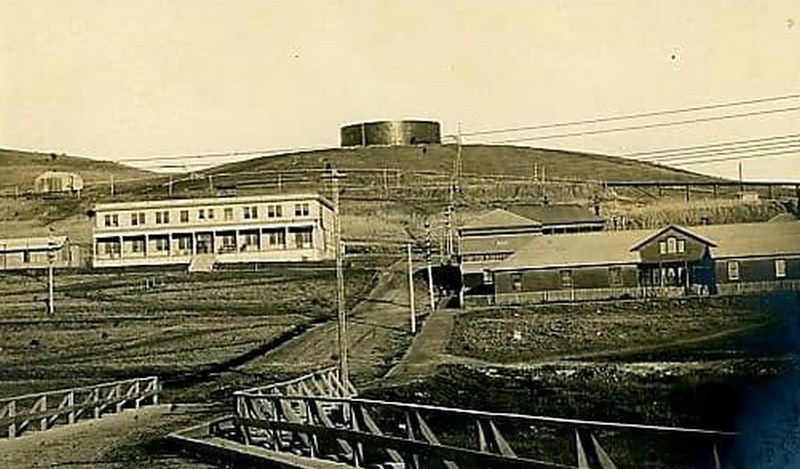
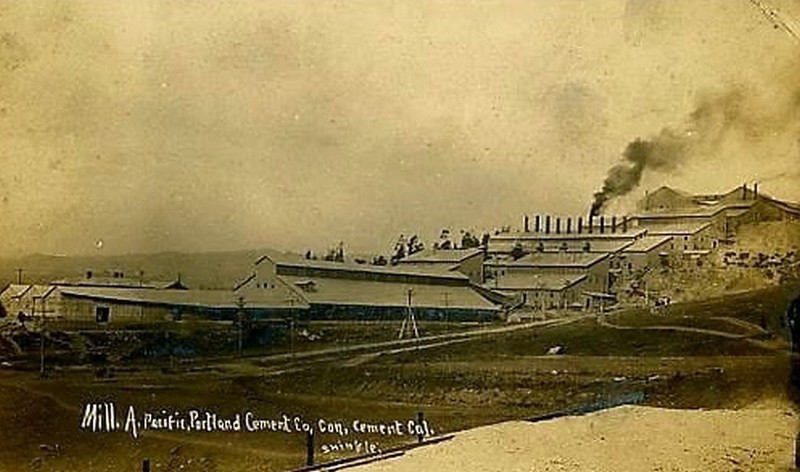
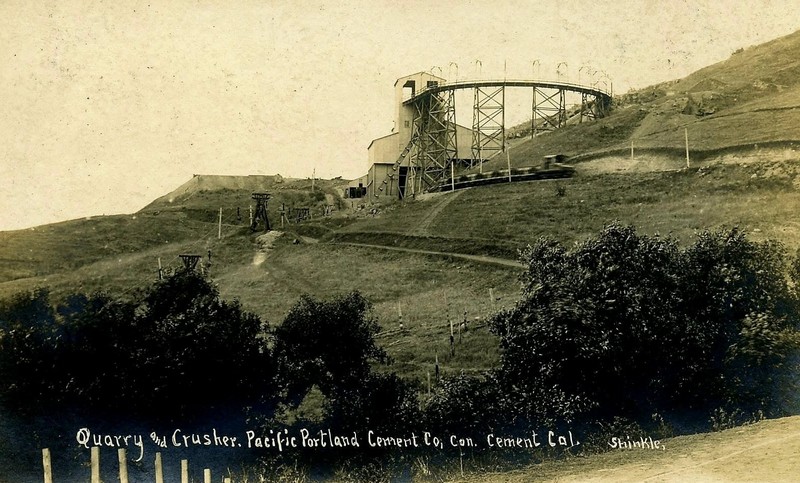
Enormous conveyors, rock crushers, tube cement mills, and rotary kilns were created to process the raw quarried limestone.
The town also had its own open pit clay and gypsum mines with clay and gypsum being necessary components in the finished Portland cement the plant produced.
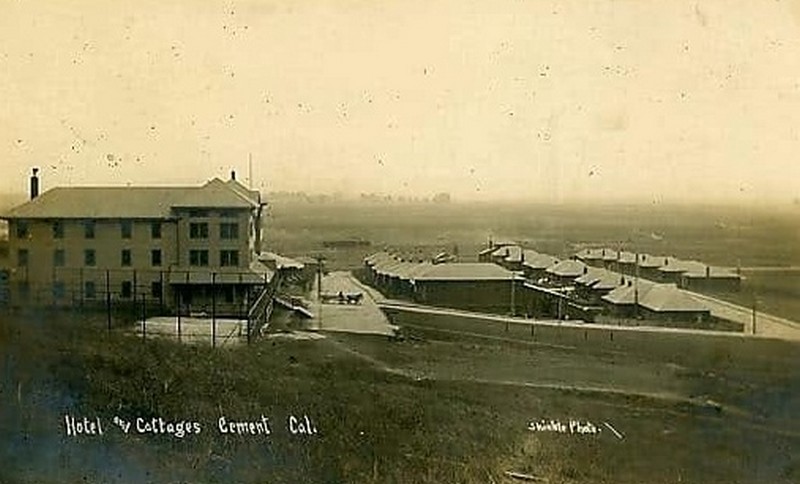
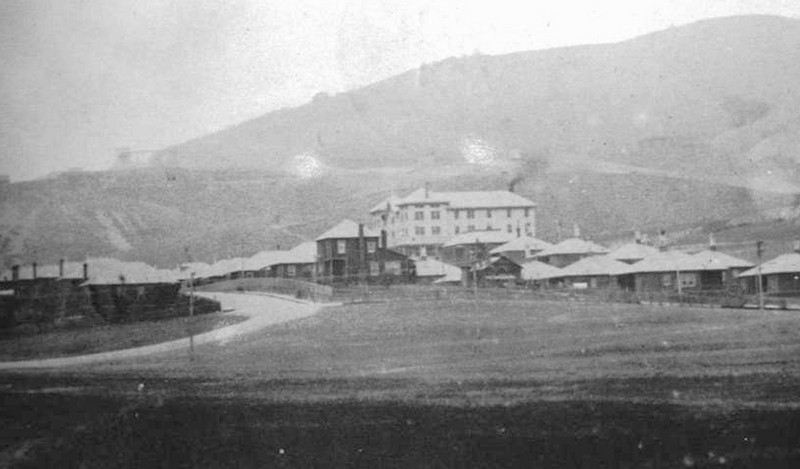
The establishment of the cement industry in Cement brought a large influx of workers to the area, and the town quickly grew into a thriving community of people with a strong economy. It became more populous than the three nearest cities combined - Fairfield, Vacaville and Suisun City.
The cement industry was the lifeblood of Cement for many years, and the town prospered as a result. The population of the town grew steadily to 500 people, and businesses and services were established to support the needs of the growing community. This included the three-story Golden Gate Hotel, hospital, restaurant, bar, livery stable, post office, telephone exchange, park, baseball diamond, general store, fire station, churches, and a grade school.
Cement is privately owned land and the owner's permission is required to visit the property that is approximately 600 acres (240 hectares).
