LINK TO ANOTHER PAGE ON THE GOLCONDA AREA AND RAILROADS


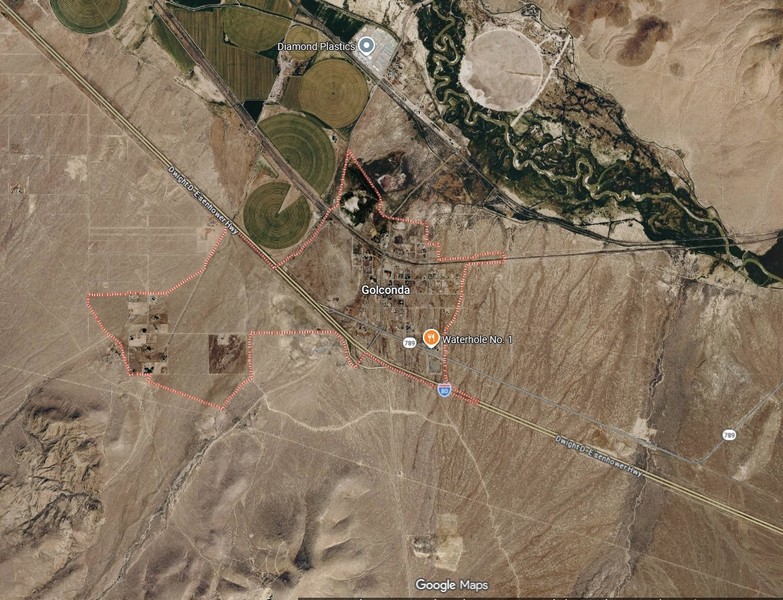
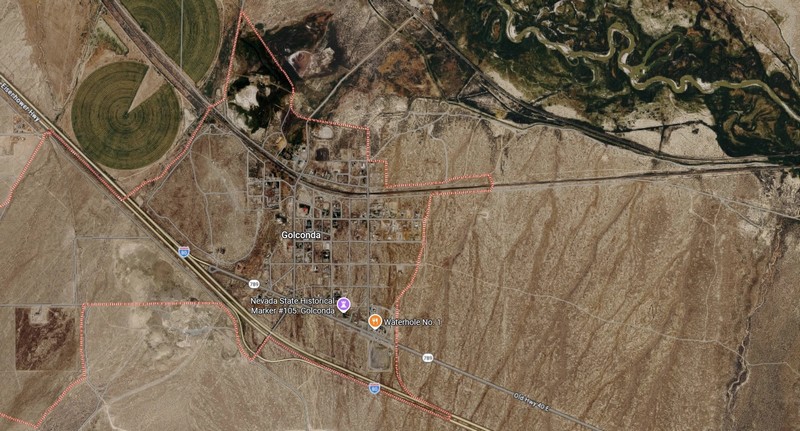
Golconda

Humboldt County

Golconda Post Office

Dec. 23, 1869 to Present


The location of Golconda was first noted by emigrants for its hot springs during their westward move to California. In 1868, the Central Pacific Railroad established the station called Golconda (after an ancient Indian city) as a shipping point for the Gold Run district to the south, which developed two years earlier. A small resort was also opened at the hot springs, but the town remained small until near the end of the century.

In 1897, the Glagow & Western Exploration Company began ambitious new development at Adelaide, connected to Golconda by the new narrow gauge Golconda & Adelaide Railroad. The Company also laid out a new Golconda townsite and built a ninety-ton concentrating plant and smelter. The town's population grew to 500, with six hotels and a newspaper. Unfortunately, by June 1900, it was determined that the smelter wasn't properly suited for the ore from Adelaide, and it only operated intermittently before closing in 1905, causing the town to decline. Two years later, the smelter was overhauled, but again proved to be problematic and operations were suspended after a year and a half. In 1911, the smelter was dismantled, followed by the G&A Railroad in 1914.

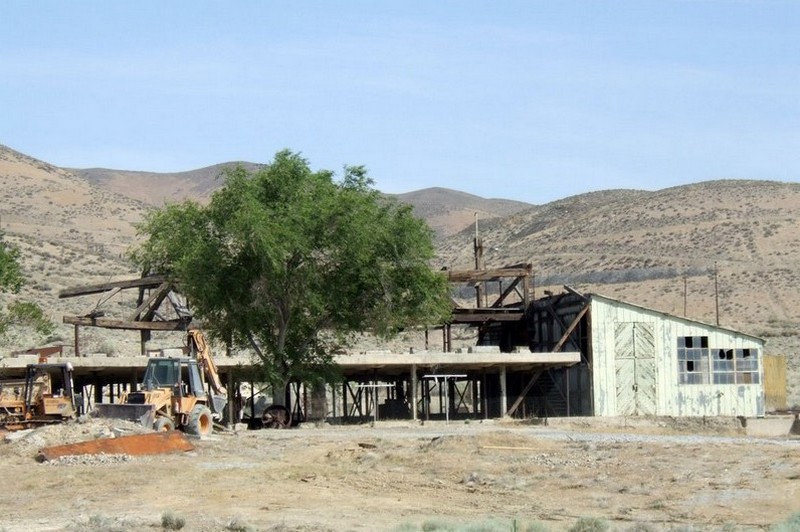
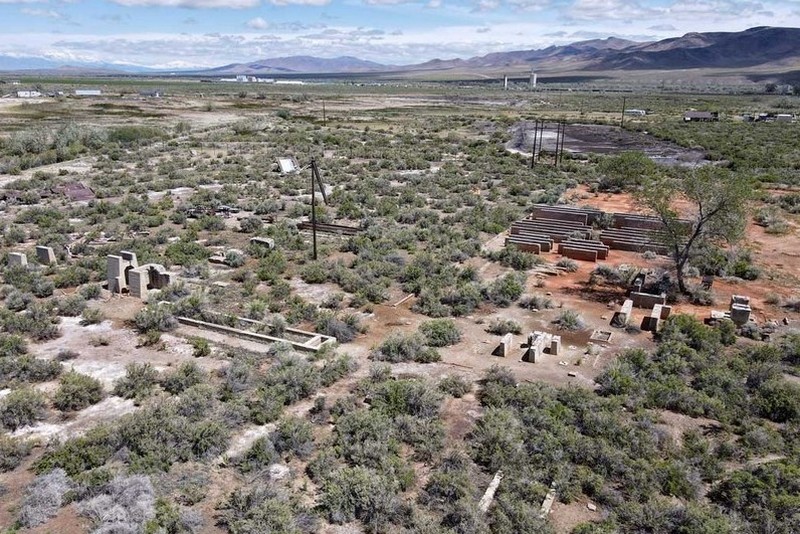
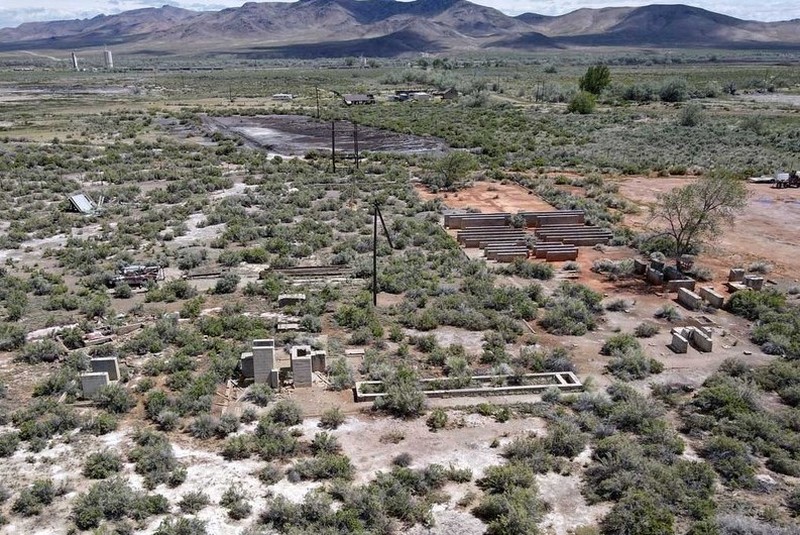
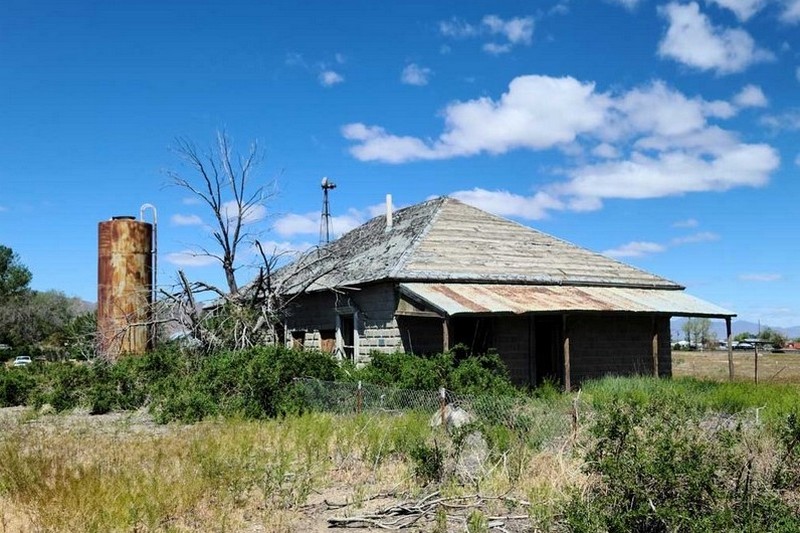
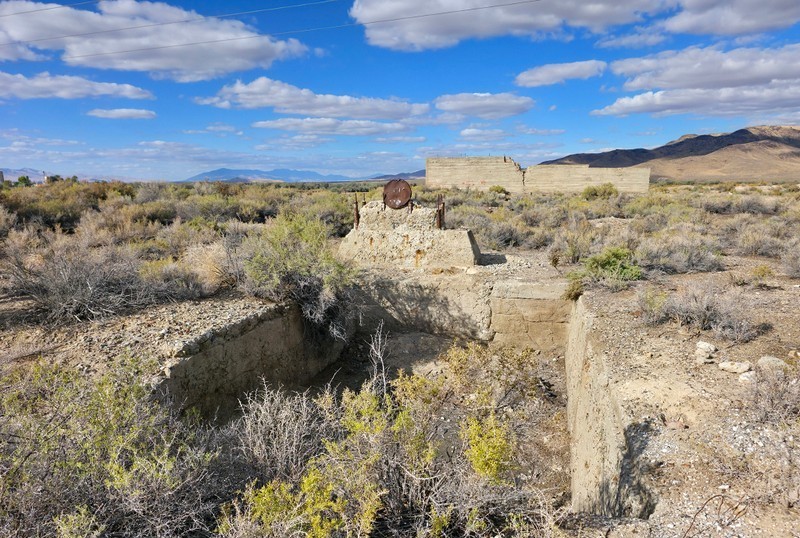
The last major activity to occur in Golconda began in 1939, when the Nevada Massachusetts Company erected a 100-ton chemical plant. Due to losses during World War II, however, it too was closed and dismantled in 1952. Today Golconda is a sleepy little hamlet of around 75. It has served as a stop along the Victory Highway and continues to do so along Interstate 80, although many of the original buildings are no longer around. The Hot Springs Hotel burned in 1961. Glasgow & Western Exploration Co. concentrating plant and smelter, built 1897 to treat ore from Adelaide. It ceased operation in 1905 and was scrapped in 1911.


DIRECTIONS Take US 95 south from Fallon past Hawthorne and Mina for 112 miles; turn west on local road for 6.4 miles.

The tungsten deposits in the Excelsior Mountains were discovered in 1916 by Charles W. Noble on claims he originally located for silver. Shortly after the discovery of tungsten the Noble property was sold to Atkins-Kroll Co., who operated it until the mine was sold to Noonan, Bean, and Beck of Sodaville in December of 1917. A mill and power line was constructed in the early 1930's. Water was piped in from a well below the mill and, later, from across the valley in 1935. The Depression lessened the need for tungsten but World War Two brought the industry out of the slump.

You know they're serious when they start buying towns.

Atkins, Kroll and Company, the San Francisco tungsten producers, have bought the entire town of Sodaville from "Bob" Stewart and have a force of 100 men employed in the preparations for the construction of a concentrating plant for the treatment of tungsten ores from the Noble mine, 11 miles from town. 1916 May 23, Reno Evening Gazette

The mill has been started on the Wagner and Silver Dyke Tungsten properties, near Sodaville and nine miles south of Mina. Those properties are under lease to C.W. Poole, well known tungsten operator of Lovelock. Alex Ranson is in charge of operations as superintendent. A big body of uniformly high grade scheelite ore was recently opened in the Silver Dyke, which is being worked through a drift run from the Wagner shaft. The Silver Dyke was operated up to the entrance of the United States into the world war, by the Atkina-Kroll company, which made record production of over one million dollars in twelve months. 1925 August 1, Reno Evening Gazette

They're starting to get serious now

WILL DRIVE LONG TUNNELS ON TUNGSTEN MINES

A compressor has been installed, a pump provided, and a water line laid to a well seventeen hundred feet below the mines at Silver Dyke and Wagner tungsten properties near Sodaville recently purchased by C.H. Segerstrom and today the latter and Ott F. Heizer are on the ground to receive bids for the driving of a thousands foot tunnel which will tap the big ledge and which made a large production during the war period at depth. 1929 June 4, Reno Evening Gazette

When you operate in a steep canyon in Nevada, you're going to have problem with roads...

MINE MAROONED BY CLOUDBURST

Marooned at the Silver Dyke mine, Alex Ranson, superintendent of the property, is unable to get out of his property because of the cloudburst of Monday which washed out the roads. It is expected several days will be required before the road is cleared of the boulders and debris which cover it in places and the washed-out portions are repaired. Telephone communications are unimpaired and Mr. Ranson reported today that he expected to clear the roads soon. He has his entire crew at work on the job. 1929 August 7, Reno Evening Gazette.

And again....

WORK IS HINDERED AT SILVER DYKE BY STORMS

Work on the Silver Dyke tungsten property near Sodaville has been retarded for at least thirty days by two cloudbursts which destroyed the road to the mine, but the thousand foot tunnel is being pushed ahead rapidly. In the meantime the old mill on the property is being repaired and will be put into commission soon. Thirty-five men are on the payroll. 1929 September 13, Reno Evening Gazette

Didn't stop them from digging though...

The Nevada Massachusetts company, which is operating the Silver Dyke tungsten mine near Sodaville is in 786 feet from the portal into the vein that was the objective of the present work. A seventy-five ton mill being erected on this ground is about completed and excavations are being made for the installation of an aerial tramway from the tunnel to the mill. L.B. Spences is now engaged in surveying a route for the power line from Mina to tap the Mineral county power system and work on construction of the line will start as soon as material is received. 1929 November 5, Reno Evening Gazette

You gotta do something with all that ore ... let's mill it! That way you don't have so much to haul down that nasty road.

SCHEELITE ORE EIGHT FEET WIDE AT SILVER DYKE

The discovery of a large and rich ore body of scheelite ore in the new deep level at the Silver Dyke mine near Sodaville has finally rewarded the operators. The mine is owned by the Nevada Massachusetts Company and is under the management of Ott. F. Heizer, with Alex Ranson as superintendent. It is reported that the new mill will go into commission March 1. 1930 February 21, Reno Evening Gazette

SODAVILLE PLANT READY TO RUN NEXT WEEK

The milling plant of the Nevada-Massachusetts Silver Dyke tungsten property near Sodaville, on which work has been prosecuted for several months, will be completed within a week, it is reported by Alex Ranson. The plant is of seventy-five tons daily capacity. Since the property was acquired last year a large amount of development work has been performed in addition to the mill-building operations. An electric power line several miles in length has been constructed from the Mineral county system and what is believed to be an ample water supply has been secured by sinking wells in the valley below. A tramway has been completed from the lower tunnel level to the top of the mill and other improvements made. 1930 February 18, Reno Evening Gazette

SILVER DYKE MILL WEST OF SODAVILLE IS IN COMMISSION

The new seventy-five ton mill of the Boston [I believe this was a reporter's brain fart- F.N.] Massachusetts Company installed on the Silver Dyke and Wagner tungsten mines near Sodaville is supposed to have started up yesterday or this morning and it is reported from Mina the W.G. Emminger has accepted the position of superintendent of the plant. 1930 March 14, Reno Evening Gazette

Another storm...

The Silver Dyke has temporary repairs made on its road to the mine and cars and trucks are now able to get through to the mine for the first time since the storm set in. 1930 May 16, Reno Evening gazette

The Silver Dyke is cooking now. All that construction and milling is really paying off! Life is good!

THREE SHIFTS WORK AT SILVER DYKE

The new mill of the Nevada Massachusetts company at the Silver Dyke tungsten property is now being operated on three shifts and treating forty-five tons of ore daily. 1930 May 30, Reno Evening Gazette

Wait, what?

The temporary closing of the Silver Dyke mill has been offset by the reopening of the Lucky Boy mine at Hawthorne, the News of Hawthorne says. It is to be admitted that the tungsten market at present is in bad shape while silver and lead prices have tumbled to the bottom. In spite of this the Silver Dyke mine a tungsten producer is being developed and the mill can be opened on short notice. 1930 July 15

On account of the lack of demand for tungsten at this time, because of the fact that steel manufacturers cannot sell their output, the new mill on the property is not in operation at present. 1930 September 16, Reno Evening Gazette

More road issues, and let's throw in some earthquake issues for good measure! The good news is the economy is picking up.

SILVER DYKE MILL IN COMMISSION MARCH 1

The mill at the Silver Dyke tungsten property out from Mina will be put into commission march 1, after a long idleness caused by low price of the product, it is announced. The plant is in excellent condition. The water supply is lessened by the recent earthquake shocks, which also smashed the pump-house and made junk of the pump. About fifteen men are employed at present and that force would be increased to twenty-five when the mill starts grinding. The company buildings are located at the head of two canyons, in one of which is the road to Mina. The Mine force watched as great boulders bounding down the mountain sides and filling the bottom of the gulches. had a car been parked at any point below the mine [during the earthquake] for a mile, except close to it, they would have been smashed to smithereens. 1934 February 21, Reno Evening Gazette

Sure wish we had some more water to run the mill though.

TO START MILL AT SILVER DYKE

Operations at the Silver Dyke Mine have been confined to the mining end for the past six months, but milling will be started in the next two or three days, and continue as long as the melting snows furnish the necessary water. 1935 April 20, Reno Evening Gazette

Hey, there's some water on that hill yonder! Let's get it!

NINE-MILE PIPELINE TO SILVER DYKE PROPERTY

Work has started with a large crew on a pipeline which will bring water to the Silver Dyke mill nine and one half miles southwest of Mina from Spearmint Springs, it was learned this week from resident os the town. A ditch-digging machine which is expected to complete a mile of the ditch each day is ont he ground and commenced operations yesterday. Four inch pipe is to be used. Spearmint Springs is on Pilot PEak, east of Sodaville, and is one of the oldest water rights in the state, being located by the late "Bob" Stewart along about 1850. One hundred gallons of water a minute will be delivered to the mill. 1935 August 10, Reno Evening Gazette

Ahh, that's better! Let's crank up that mill again!

SILVER DYKE MILL SOON TO BE IN COMMISSION

Completion of the new pipeline will permit the mill to run steadily. The water is piped from Spearmint Canyon in the Pilot range for a distance of 53,370 feet across the desert valley, to the mountains opposite. Six carloads of four inch spiral welded asphalt-dipped pipe was used in the line, which was laid in a ditcher-excavated trench three feet deep and later covered with a caterpillar and blade. Three pumping stations, powered with two and three-stage Ingersoll-Rand centrifugal pumps force the water from the gravity terminal to the four large storage tanks which serve the mill. The water system is protected with elaborate alarm units designed warn workmen of any decrease in the flow due to leaks, freeze-ups, or any other causes. 1935 November 20, Reno Evening Gazette

Awww, gimme a break, willya?

MILL FREEZES AT SILVER DYKE

The seventy-five ton mill at the Silver Dyke tungsten mine was frozen up Thursday and operations will not resume until warmer weather prevails, according to word received in Reno. 1937 January 9, Reno Evening Gazette

OK, the mill's thawed and... wait... what?

The Nevada Massachusetts Company has discontinued operations at the Silver Dyke tungsten mine near here for an indefinite period, it is reported. 1938 April 27, Reno Evening Gazette

You know things are bad when the digging stops and strangers are looking through your tailings.

LEASE NEGOTIATED ON TAILINGS AT SILVER DYKE

It is reported in Mina that Coleman Harcourt and Clyde Barcus, well-known mining men of the Mina district, are negotiating a deal with the widow of the late Joe Beane to obtain a lease on all the tailings at the Silver Dyke tungsten property. The Nevada Massachusetts Company suspended operations at Silver Dyke several months ago. 1940 April 6, Reno Evening Gazette

Bad time to sell, Mrs. Bean! Don't you know what's coming?

The Silver Dyke tungsten mine, formerly operated by the Nevada Massachusetts company, has been sold by Mrs. Bean of Los Angeles interests who plan to operate the property. 1941 July 15, Reno Evening Gazette

WAR! What is it good for? Apparently tungsten mines!

TWO PLANTS RUN AT SILVER DYKE SCHEELITE MINE

More than 100 tons daily milling capacity is expected to be reached early in July at the Silver Dyke tungsten mine by the Nevada Silver Dyke Tungsten company which which Magnus G. Thorne is President, says the Mining and Industrial News. The company now has its thirty-ton mill operating and reconditioning of its seventy-five ton mill is nearing completion. A large tonnage of good milling ore has been developed and tailings from earlier operations, now being put through the first mill unit, are reported to be yielding an excellent grade of tungsten concentrates. 1943 July 3, Reno Evening Gazette

SILVER DYKE MILL NEARLY COMPETED

The U.S. Machinery and Supply co., Salt Lake City, is completing the installation of a 100 ton tungsten mill near Mina for the Nevada Silver Dyke Co, and operation is scheduled for October 15. 1943 September 4, Reno Evening Gazette

POST OFFICE

None

NEWSPAPER None

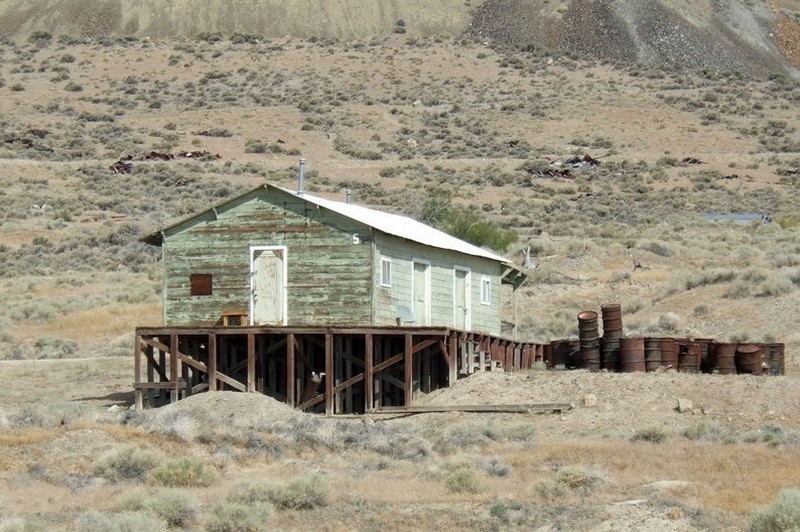
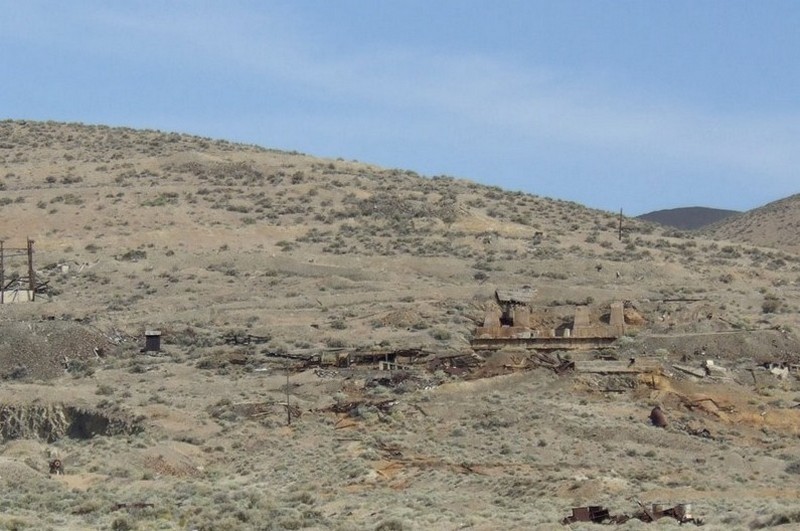
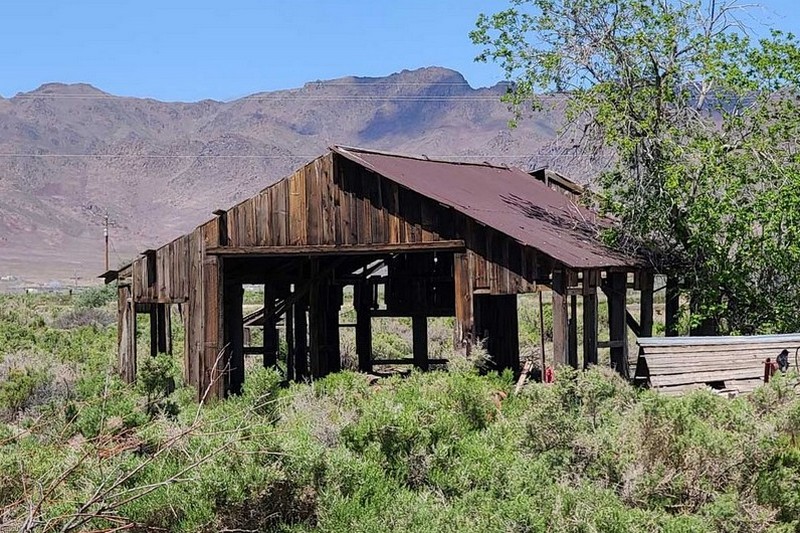
The road to this site starts off good but gets rockier the closer you get. You can really see the effects of landslides and rock falls as you are constantly dodging rocks on the road. The road is nearly impassable as you get close to the mine. Several buildings still stand here, and the ruins- clinging to the sides of the canyon-- are worth carefully exploring. We did find this link to a movie of a guy exploring inside the mine. Would not recommend going into old mines, and certainly wouldn't recommend going into one alone, but he did, and here is his movie. By the way, he talks about the mining of tungsten and then says they found scheelite and started mining that. Scheelite is a tungsten ore.


Identification

THIS IS A NEW RECORD ENCOMPASSING INFORMATION FROM MANY EARLIER RECORDS FOR INDIVIDUAL SHAFTS OR PROSPECTS ON THE TUNGSTEN DEPOSITS OF THE CENTRAL MILL CITY DISTRICT.

Development

ALTHOUGH THE EUGENE MOUNTAINS WERE MINED FOR SILVER AND GOLD BEGINNING IN 1862, TUNGSTEN WAS NOT DISCOVERED THERE UNTIL EMIL STANK HAD A SAMPLE ANALYZED THAT HE HAD COLLECTED WHILE SILVER PROSPECTING A FEW YEARS EARLIER. THE ONSET OF WORLD WAR I HAD INCREASED DEMAND FOR TUNGSTEN, AND STANKS DISCOVERY WAS RAPIDLY BROUGHT INTO PRODUCTION BY THREE COMPANIES WITHIN MONTHS OF THE CLAIM LOCATIONS. PACIFIC TUNGSTEN COMPANY TOOK OVER STANS CLAIMS, THOMAS SUTTON FORMED THE MILL CITY TUNGSTEN MINING COMPANY TO WORK HIS CLAIMS EAST OF, AND L. T. FRIEDMAN FORMED THE NEVADA-HUMBOLDT MINING COMPANY TO MINE THE DEPOSITS ON HUMBOLDT HILL. TWO OF THE COMPANIES WERE OPERATING MILLS BY THE END OF 1918, BUT THE END OF THE WAR BROUGHT THE CESSATION OF TUNGSTEN MINING AT MILL CITY IN 1919. BY 1925, THE NEVADA-MASSACHUSETTS COMPANY UNDER CHARLES SEGERSTROMHAD PURCHASED AND CONSOLIDATED ALL OF THE MAIN DISTRICT PROPERTIES AND WAS THE SOLE OPERATOR AT THE TUNGSTEN CAMP UNTIL 1958 WHEN PRODUCTION CEASED. THE PROPERTY WAS MAINTAINED ON STANDBY UNTIL 1962, AFTER WHICH IT SLIPPED INTO DISREPAIR. IN 1969, HOWEVER, SEGERSTROMS HEIRS, OPERATING UNDER TUNGSTEN PROPERTIES LIMITED PARTNERSHIP, AGAIN ACQUIRED THE PROPERTY AND IN 1971 NEGOTIATED A DEAL WITH GENERAL ELECTRIC CO. TO RE-EVALUATE THE PROPERTY. AFTER EXTENSIVE EXPLORRATION AND DEVELOPMENT, GE CONSTRUCTED A $55 MILLION MINE, MILL, AND PROCESSING PLANT, WHICH OPERATED FOR LESS THAN A YEAR IN 1982, AT WHICH TIME DEPRESSED PRICES FORCED CLOSURE AGAIN. FOR MORE THAN 20 YEARS, THE MINE HAS BEEN KEPT IN MOTHBALLS WITH A CARETAKER TO MAINTAIN EQUIPMENT IN WORKING CONDITION. A BUYER WAS BEING SOUGHT (2005) TO REOPEN THE MINE SINCE IT IS IN A TURNKEY STATE READY TO BE BROUGHT BACK INTO PRODUCTION WILL MINIMAL RENOVATION.

Workings

CONNECTS AT 300 LEVEL WITH SPRINGER MINE.

THE MINE AREA IS DEVELOPED BY MANY UNDERGROUND WORKINGS: SHAFTS, DRIFTS, STOPES, AMSWELL AS BY OPEN PITS AT THE SURFACE. THE STANK MINE WORKINGS CONNECT AT THE 300 LEVEL WITH THOSE OF THE SPRINGER MINE.

PRODUCTION FROM 1925-1944 TOTALLED 1, 049,714 TONS OF ORE WITH AN AVERAGE GRADE OF 1.17% WO3, YIELDING 1,100,773 UNITS WO3. FROM 1944 TO 1958, PRODUCTION TOTALLED 2,073,565 TONS OF ORE GRADING 042% WO3, FOR A TOTAL YIELD OF 685,365 UNITS WO3. THE SHARP DROP IN ORE GRADE WAS DUE TO A CHANGE FROM MINING THE RICHER ORE OF THE STANK AND HUMBOLDT ORE BODIES TO THE LOWER GRADE SUTTON ORE BODIES IN 1944 AND THE ADDITION OF LARGE LOW-GRADE TONNAGES FROM OPEN PITS IN THE 1950'S WHICH AVERAGED 0.22-0. 25% WO3. THE TOTAL RECORDED PRODUCTION FROM THE MILL CITY DISTRICT MINES FOR THE PRODUCTIVE YEAR BETWEEN 1917 AND 1958 WAS 3,258,135 TONS OF ORE YIELDING ABOUT 2.2 MILLION UNITS OF WO3. IN 1982, GENERAL ELECTRIC ANNOUNCED 13-15 YEARS WORTH OF ORE RESERVES AT THE MILL CITY MINES, WHICH WERE NOT DEPLETED BEFORE THEY CLOSED OPERATIONS IN OCTOBER OF THAT YEAR.


The Nevada-Massachusetts Company was a major 20th-century mining enterprise that operated primarily in the Mill City Mining District of Pershing County, Nevada. For decades, it was the largest individual producer of tungsten ore in the United States, fueling industrial and wartime production.

History and Operations -- Establishment:

Began active mining operations around 1925, consolidating local claims near Mill City. Peak Production: Produced the vast majority of the nation's tungsten supply through the 1930's, 1940's, and 1950's, supporting operations at the company town of Tungsten, Nevada. Decline: Operations scaled back and eventually closed after federal stockpiling and purchasing programs for tungsten ended in the late 1950's.


AKA: Nevada Massachusetts Tungsten Mine

Silver was worked in the area in the 1860's and early 1870's, but nothing substantial came out of the effort. Tungsten discoveries were made in the area in 1916. Emil Stank discovered what would become the largest tungsten deposit in history. I have pulled many USGS Reports for mines in the area. It appears that Stank also discovered what was known as the Stank and Forge Lease just to the south of here in 1914. According to the story told first-hand by Stank, he and George McCormick set out on a prospecting trip with two mules and a wagon. They spent several days moving around, camping and taking ore samples. While studying McCormick's samples at camp, they found that one contained rich tungsten. McCormick was unable to remember where he had collected the sample. Stank also discovered that one of his samples was very rich. Fortunately, he was able to remember where he had collected it. Fifteen separate claims were made. Seven of which were named the "U.S." for Uncle Sam. This mine would later become known as the Nevada Massachusetts Tungsten mine, AKA: "The Big Tungsten". With the onset of World War I, tungsten was in large demand. Three companies began operations in the area. The Pacific Tungsten Company took over Stanks's claims. Thomas Sutton formed the Mill City Tungsten Mining Company (See USGS Report for the Sutton II Mine). L.T. Friedman formed the Nevada-Humboldt Mining Company. By the end of 1918, two of these companies had built mills in the area. The camp of tungsten was soon formed. Tungsten was considered an orderly, company town that employed as many as 250 men at a time during high production periods. The camp had a store, school, boarding house and in later years, a post office. The period after World War I saw a brief decline in the area. By 1925, the Nevada Massachusetts Company had purchased sole interest in the mines at Tungsten. Their company maintained full ownership and continued to operate at Tungsten until 1958 when operations ceased. Basso stated that tungsten prices fell too low. Paher stated that the government stopped purchasing tungsten. Maybe it was a combination of both. Between 1917 and 1958, the Tungsten mines produced 3,258,135 tons of ore that yielded 2.2 million units of Tungsten. In 1982, an assessment was made that there were still 13-15 years of ore reserves left in these mines.

Other USGS Reports for mines in the Tungsten area include: Baker Workings; Florence Group; Humboldt-Springer; Mill City Tungsten; Orphan Workings; Sutton; Tom Cat; Uncle Sam. According to excerpts from these USGS Reports, many of these mines were interconnected. For example, the Baker Working was connected to the Sutton Mine. An excerpt from the Humboldt-Springer Mine Report reads "The Humboldt mine is part of the Nevada-Massachusetts Co. workings. This mine is connected to the Springer at the 300-ft level." Etc.


Post Office: May 26, 1944 to October 12, 1962.


Historic Minerals in Nevada: Tungsten

How Wartime Demand Shaped Nevada's Tungsten Industry

Geologists have known that tungsten is present in the Nevada since the mid-1860's. Found in scheelite or huebnerite veins, the mineral was not sought by prospectors during the 19th century. Its use was limited; as a result, the ore was essentially worthless. The development of steel alloys and the proliferation of their use made tungsten more valuable as Nevada went into the turn of the 20th century. The first recorded production came from the lively Tungsten Mining District in White Pine County as vividly described by The White Pine News on January 11, 1900. Huebnerite was discovered at the base of Wheeler's Peak in January 1899 by Charles W. Gaby, and the Tungsten Mining District of ten square miles was established. A fledgling town popped up about 12 miles south of Osceola and was named Tungsten. This new production caught the attention of miners across the country, and in July 1901, the district was featured in New York Engineering and Mining. That same year, the U.S. Geological Service (USGS) published its first bulletin on tungsten production in Nevada and focused on the White Pine deposits. As the price fluctuated and other deposits were located, Tungsten boomed and busted through the early years of the 20th century. In 1910, it was still large enough to stand as an election precinct in White Pine County with 24 voters, and a 50-ton concentrating mill was constructed. But this first town of Tungsten was soon eclipsed by Tungstonia also in White Pine County and a later Tungsten in Pershing County. Tungstonia was located in White Pine's Eagle Mining District, which dates back to 1859. Tungston was discovered in that district in 1910, and mills produced concentrates until at least 1916. Newspaper articles indicate that people were still living in Tungstonia in the 1940's, and production picked up on occasion during the 1950's and the 1960's.

In Pershing County, the town of Tungsten anchored the mining district in which the Nevada-Massachusetts Company was the largest corporate owner of tungsten mines and mills. By 1927, the company was the principal producer of tungsten in the country and would hold this position well into the 1950's. The accompanying town of Tungsten was the second largest community in Pershing County. According to a brief history penned by Donald Segerstrom whose family ran the company, Tungsten consisted of "a post office, general store, large single-men's boarding house, elementary school, community hall, library, service station and more than 110 one-family dwellings." The White Pine towns of Tungsten and Tungstonia were never as large as Pershing's Tungsten. After the nearby mines and mills were closed in the late 1950's, Tungsten became "the youngest ghost town in Nevada," according to the Reno Gazette-Journal. When the area was revived in 1981, according to the Reno newspaper, the town did not reappear. Instead, miners and their families lived in nearby Imlay or commuted from Winnemucca.

In the 20th century, the demand for tungsten was driven mostly by the country's military activities during the two world wars and in eastern Asia. The primary domestic use was in incandescent lighting; tungsten is still found in light bulbs, although it is being rapidly replaced by LED. Advertisements for tungsten lights were common in Ely and Tonopah newspapers throughout the 1910's and could be found in the Reno Evening Gazette as late as May 1992. By the turn into the 21st century, Nevada newspapers carried ads for golf clubs strengthened with tungsten.

When demand was high, prices would rise and so would the number of tungsten discoveries. Nevada newspapers reported major discoveries near Goldfield in 1905, Round Mountain in 1907 and heralded it as the next big thing for Tonopah in 1907. Discoveries continued across the state. By 1988, the Nevada Bureau of Mines and Geology published a bulletin about the 375 deposits known to be in this state. According to Frances Church Lincoln, Nevada's primary mineral contributions during World War I were tungste antimony, manganese. During that time, Nevada produced 1,785 tons of tungsten from operations in Churchill, Mineral, Humboldt (Pershing), Nye, and White Pine Counties. Tungsten concentrates were valued at $3,650,485, roughly $88 million today. According to annual production statistics compiled by USGS, Nevada produced about one-fourth of the country's total. Most was used domestically and supplemented by international imports. According to USGS statistics, international production already far exceeded U.S. production by 1905, and since then, the U.S. contribution to world production has remained relatively minimal. Small though it may be by international comparison, the U.S. production of tungsten has depended heavily on Nevada. By 1918, Nevada produced one-third of the country's tungsten and was the second largest producer behind Colorado. At that point, most of Nevada's ore came from the Eugene Mountains in what is now called Pershing County. (Pershing was the last county created by the Nevada Legislature. It was carved from Humboldt County in 1919.) Prices crashed after 1918 but efforts to revitalize began in 1924 in Pershing, Lincoln, and Mineral Counties. By the 1930's, war in Europe was driving a demand that continued to grow through the World War II period and into the Korean War era. Nevada was the country's major producer of tungsten. In particular, the Nevada-Massachusetts Company at Tungsten in Pershing County was the largest individual source of tungsten in the U.S. for many years. Nevada did not produce much gold or silver during World War II. In 1942, the Federal Government demanded that precious metal mines be closed across the country in an attempt to push mining efforts toward industrial minerals. In Humboldt County, the Getchell Mine near Golconda fortunately discovered a tungsten ore body next to its gold ore body; as a result, Getchell was the only Nevada mine that could commercially produce gold during World War II. Nevada was the leading tungsten-producing state in the nation during the 1940's and again in the 1950's. In 1951, production increased 90 percent over the previous year mostly due to the adaptation of open-pit mining methods. Previously, scheelite and huebnerite veins were mined through underground tunnels and shafts. Government purchases also stimulated the demand for tungsten, and Nevada was the largest tungsten-producing state in the country from 1953 through 1955 with more than 30 operations. In 1954, Nevada's mineral wealth came primarily from copper and tungsten production. Tungsten was just over $20 million, which is roughly $240 million today.

The last major tungsten mine was shut down in 1958, according to a 1964 publication. But never say "never again" in Nevada mining. Newspaper searches found numerous references to related mining activity after 1964. At the end of 1979, as Nevada entered a new decade, the President of the Nevada Mining Association, Robert Warren, announced Nevada's latest "mining renaissance" with the expected opening of 15 new operations producing "tungsten, molybdenum, silver, gold, and uranium."


Disclaimer: We search for HISTORY as a hobby. Endless souces. Much can come from others neverless endless sources. Does this website sell anything ? NO Donations ? NO. This is non-commercial. I consider my websites under copyright. Again..no money here !! Educational.


go back