Thompson Smelter

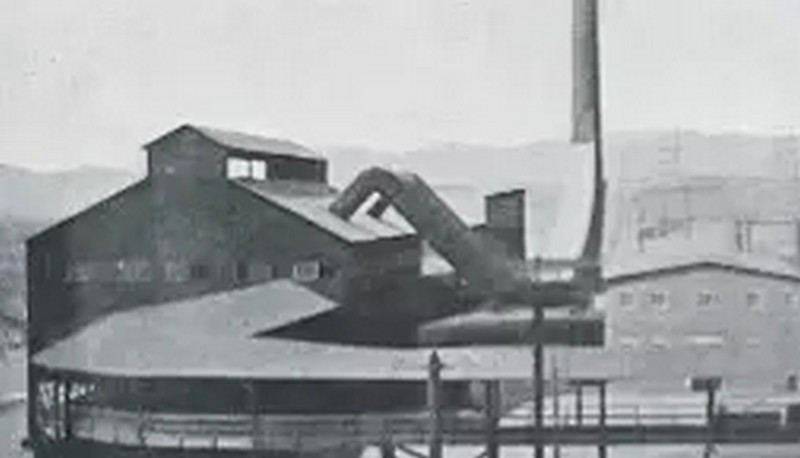
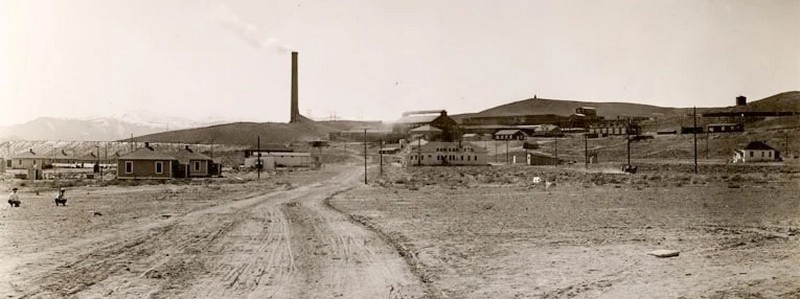
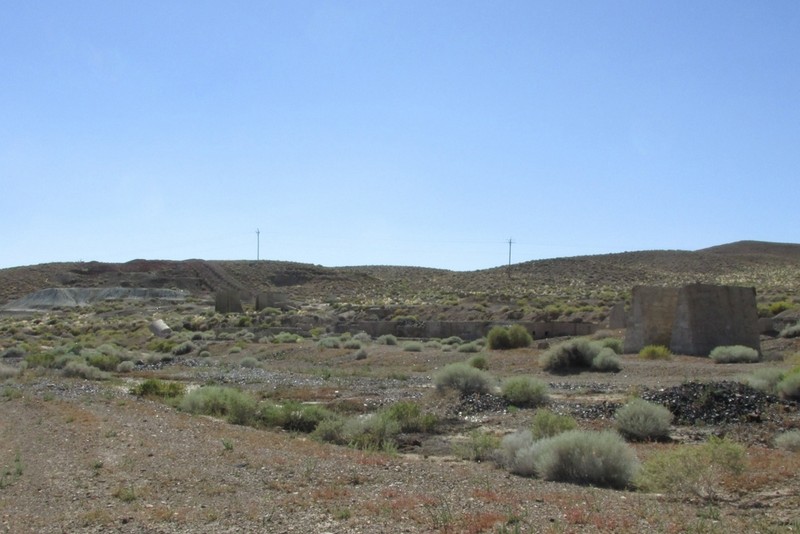
Big copper strikes in Mason Valley in the early 1900's generated excitement. Although the smelter wouldn't open until early 1912, news of the smelter was being reported as early as 1909. An article from the Yerington Times on November 13, 1909 read, "News Plans for Mason Valley - Preliminary Work of Grading and Well-Boring on Gunn-Thompson Smelter Site Near Wabuska Started Friday Morning." In November, the Copper Belt Railroad completed track to the Thompson Smelter site. Building materials for construction of the smelter were soon being delivered. They expected completion of the railroad track to Nordyke by December of 1909, and to Smith Valley by February of 1910. On February 11, 1911, the Yerington Times reported that a telegraph line was being run from Wabuska to Hudson. As soon as that line was completed, "a wire will be run to the new smelter town of Thompson." In 1911, articles continued to appear in newspapers all over the state. To include the Carson Daily Appeal and the White Pine News. These papers ran headlines such as: "Mason Valley Smelter Well Under Construction" and "Thompson Town and Smelter Progress". By April of 1911, the Nevada-Douglas Mine was ready to produce ore as soon as the track to the mine was completed and the smelter was ready to receive ore. Other copper mining operations were also making plans to ship ore to Thompson as soon as the smelter was completed. By May, a twenty-room lodging house was under construction. The purpose was to provide rooms to those that the new hotel couldn't accommodate. A store and three new homes were also being built. A tennis court and several other large projects had already been completed. Newspapers continued to print stories about the progress of the smelter through 1911. They also reported on the growth of the actual town of Thompson. On July 11, 1911, a Yerington Times article included the line, "No doubt of the permanency of that town." This was very common in those days. Newspapers often reported glowing reviews of a new boom town. The purpose was to bring attention and interest to the area. But like an overwhelming majority of Nevada towns and camps built around mining and milling, there would be no permanency. By July, it was being reported that the smelter was expected to open in November. The railroad was also laying the last ten miles of track to Ludwig and the Nevada-Douglas Mine. 45 steel cars for hauling ore had been ordered and were enroute from Pittsburgh, Pennsylvania. Machinery was also being installed at the smelter. The smokestack was said to be 200-feet tall and contained over 1,000,000 bricks. It was said to be the largest smokestack in Nevada. On October 31, 1911, the Yerington Times headline read: "The Copper Belt Drives Last Spike - Is Now Prepared To Handle Ore and Produce From Mason Valley". The article also reported a December 1'st opening for the smelter. I believe this meant that the smelter was ready to receive and store ore, but not necessarily ready to process it. On December 1st, the Nevada-Douglas mine sent a few carloads of ore to the smelter by way of the now completed Nevada Copper Belt Railroad. The Nevada-Douglas had a contract to provide 333 tons of ore per day, or 10,000 tons per month. On or near New Year's Day of 1912, the furnace was finally blown in at the smelter. It had the capacity to process 800 tons of ore per day and was expected to produce 12,000,000 pounds of copper per year. A headline in the Tonopah Bonanza on January 16, 1912 read: "New Smelter At Thompson Said To Be Doing Good Work- Everything In Connection With the New $1,000,000 Mason Valley Plant Is Working Beautifully". The smelter stayed busy receiving ore from several mines. This included slag from the dumps at Sodaville. This wouldn't last. On October 24, 1914, a Yerington Times headline read:"Fires Drawn In Mason Valley Smelting Plant." Thompson Smelter was officially closed. Many employees had already left the area. One line read, "It was not a pleasant site to see the fires in the big plant go out, and it is devoutly to be hoped that conditions will soon attain that will allow of the resumption of operations." A letter was also published from President W.H. Aldridge of the Mason Valley Mines Company to the stockholders. Aldridge stated that low copper prices and canceled shipments from several mines that were under contract were the reason for the closure. I have found articles that speak about the smelter reopening in 1917. This coincides with the information provided by Stan Paher. I have not yet read those articles from 1917 forward. Paher stated that smelter shut down again in 1919. Paher also stated that the smelter operated on a smaller level between 1926 and 1928. It did not run again after 1928. It was eventually dismantled.


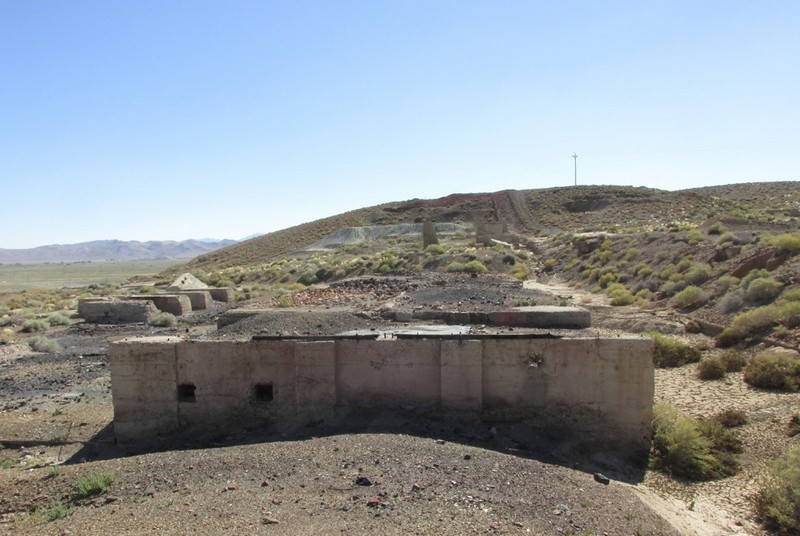
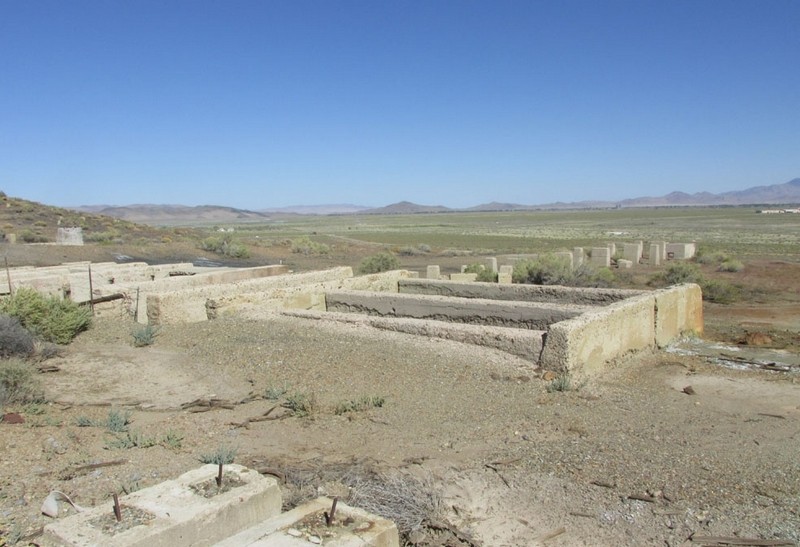
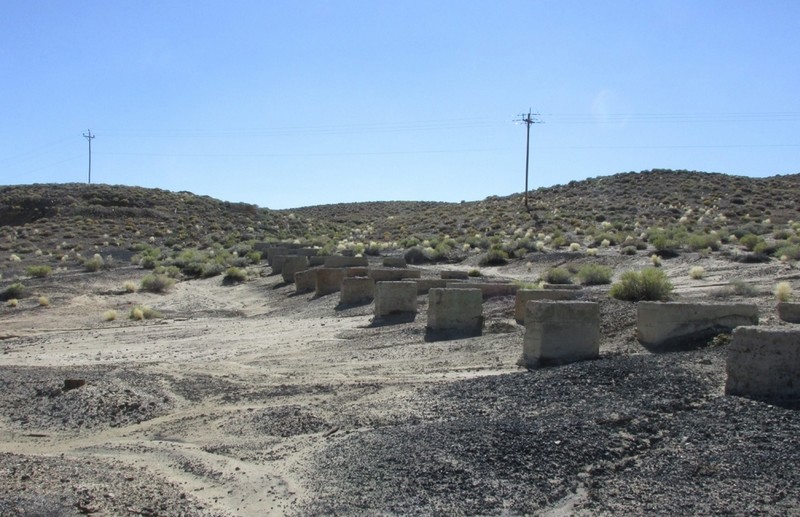
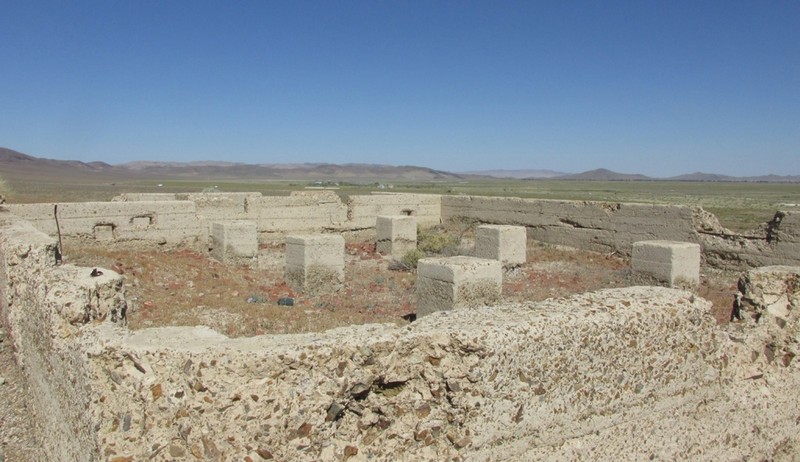
Concrete remains that supported the Nevada Copper Belt Railroad. This section was a spur serving the Thompson Smelter, northwest of Yerington, Nevada. The Copper Belt was in service from 1910 until 1947, and led from the copper mine at Ludwig to the main line of the Carson and Colorado railway. The smelter was a huge wooden building; the area is covered in cinders today.


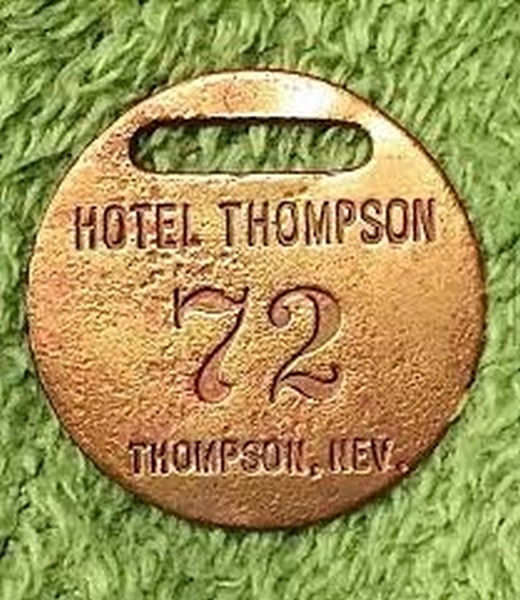
Thompson Post Office Jun. 28, 1911 - Jun. 30, 1920


Thompson Smelter

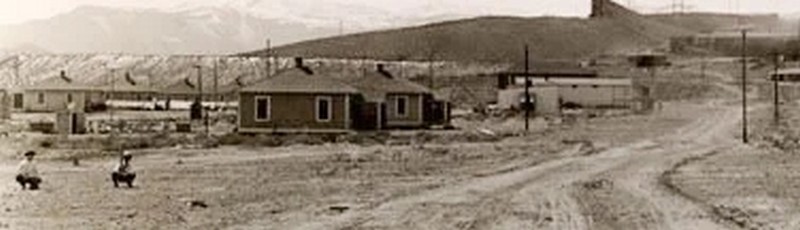
Following the development of copper mines west of Yerington, the Mason Valley Mines Company began construction on a large smelting complex at the north end of the valley. The first smelter, which was served by the newly completed Nevada Copper Belt Railroad (of which Thompson was the northern terminus), went to work in 1912, and was capable of treating 700-1000 tons of copper each day. A small two-block townsite, known as Thompson, was created to house workers. In 1913 or 14, a second furnace was added to the smelter and the Thompson townsite grew to nearly 350, with several residential blocks, stores, saloons, and an auto repair shop. Workers also lived in nearby Wabuska and further down in Mason Valley. This prosperity was short lived, however, and the smelter closed in late 1914. It reopened in 1917, lasting only until 1919. It opened one final time at a reduced capacity from 1926 until 1928.


Thompson, Nevada

With the mining boom in Mason and Smith Valleys, a smelter was needed to process copper ore. The location was selected at the north end of Mason Valley to the east of the Sigatse Range.

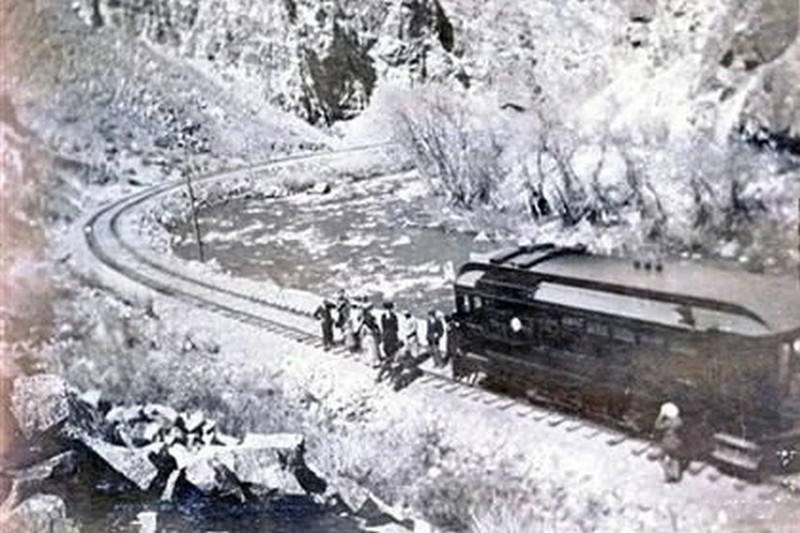
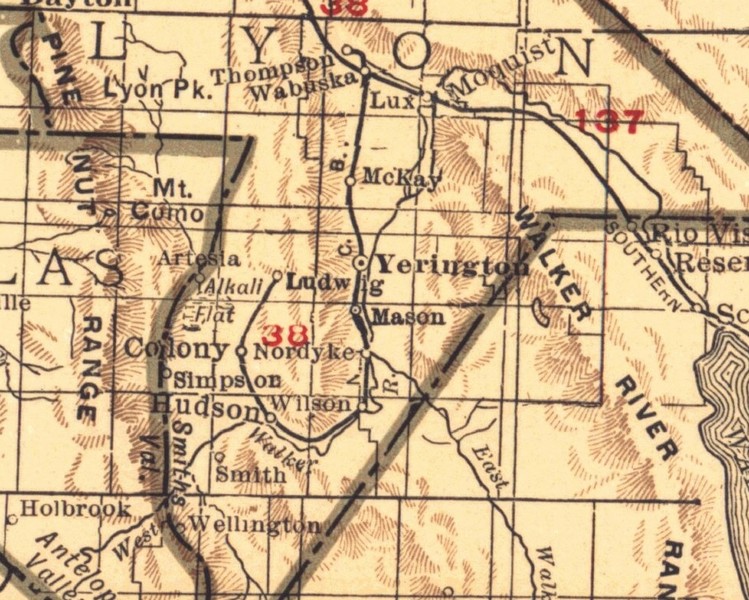
Mason Valley Mines Company began construction in 1910. The first smelter went online in 1912 and could process 700-1000 tons of copper ore per day. A second 500 ton smelter was constructed in 1913-14. The smelter was named in honor of co-owner, William B. Thompson. The small town of Thompson was developed to house smelter workers. Originally the town consisted of two blocks of houses. It later grew to contain 350 residents and several blocks of stores, homes, saloons and mechanics shop. A post office was open from June 28, 2911 to June 30, 1920. Thompson was connected to the mines by railroads. The Carson and Colorado Railway connected Thompson to Wabuska several miles to the south. The Nevada Copper Belt Railroad then connected Wubuska to the Nevada-Douglas Copper Company mine which extended to Ludwig on the west side of the Sigatse Range.


Disclaimer: We search for HISTORY as a hobby. Endless souces. Much can come from others neverless endless sources. Does this website sell anything ? NO Donations ? NO. This is non-commercial. I consider my websites under copyright. Again..no money here !! Educational.


go back